

That slight ache when you climb the stairs or the stiffness when you get out of bed isn’t just a mandatory tax on turning 50. Most people dismiss early knee pain as normal aging.
You need to know how to spot the 7 subtle, early warning signs of joint degeneration. You will also learn exactly what steps to take to stop the damage in its tracks. Spotting early signs of knee osteoarthritis gives you time to protect your joints.
Ignoring the pain guarantees things will get worse. Orthopedic specialists warn that waiting for severe pain often means waiting until cartilage is completely gone.
1. The 15 Minute Morning Freeze (Lingering Stiffness)

You wake up and your knee feels completely glued together. Fluid pools in the joint overnight while you sleep. Morning knee stiffness is common. But the clock tells you if it is dangerous.
A specific 30 minute threshold helps rheumatologists diagnose the problem. If your joint thaws out in 20 minutes, you might just have normal wear and tear. If it stays rigid for over an hour, it could be rheumatoid arthritis.
Because of this pooling fluid, the pressure causes serious discomfort. You need a fast strategy for knee joint swelling relief before the swelling damages surrounding tissue.
- Red Flag Rule: Time your morning stiffness tomorrow to see if it crosses the 30 minute mark.
2. The Staircase Wince (Load Bearing Pain)
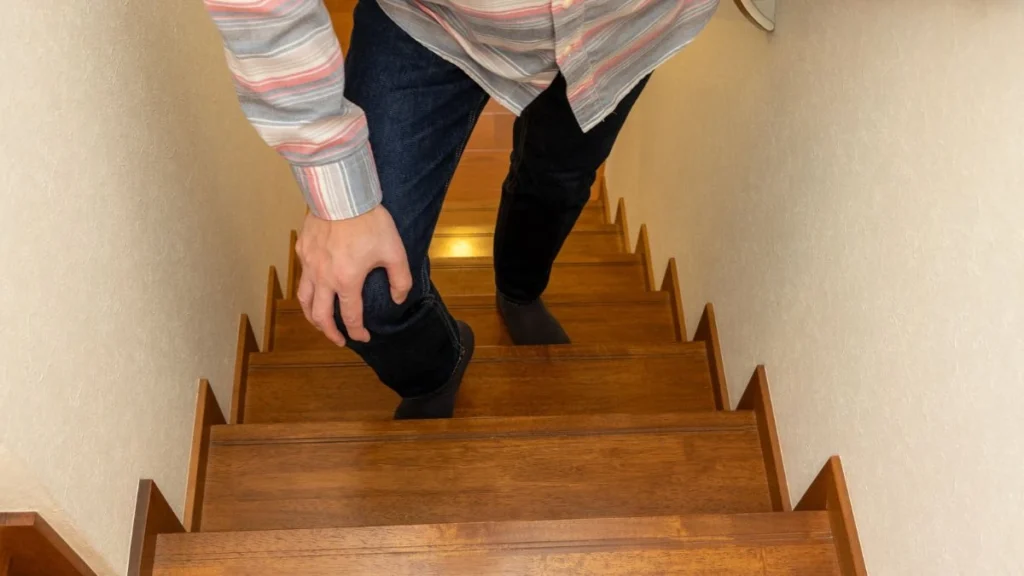
Flat surface walking feels perfectly fine. But the first step up your porch stairs makes you wince. Climbing stairs multiplies your body weight across the patellofemoral joint. This is the joint directly under your kneecap.
The math reveals why stairs hurt so much. Every 1 pound of body weight places 4 extra pounds of pressure on your knee joint when climbing stairs. This targeted stress reveals inflamed and thinned cartilage very early.
Think of your joint cartilage like the brake pads on a car. When the pad wears down, the metal grinds. Knee pain on stairs is one of the most reliable knee cartilage damage symptoms.
- Action Step: Hold the handrail and note if the pain is a sharp pinch or a dull ache.
3. The Delayed Balloon Effect (Post Activity Effusion)
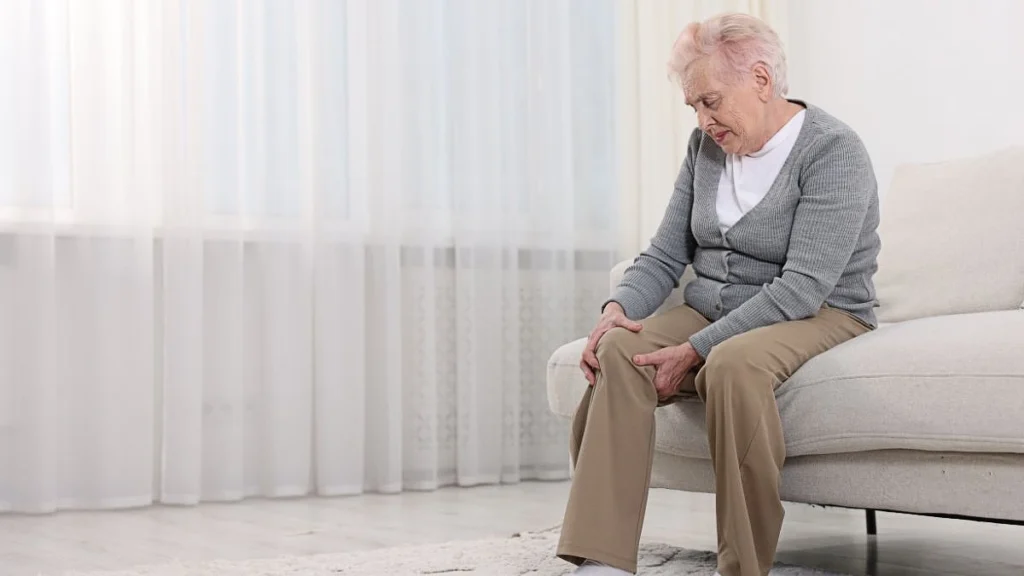
You just finished a Saturday afternoon in the garden. You feel fine until dinner time. Suddenly, your knee feels thick and heavy. This delayed swelling is called effusion.
Your joint lining overproduces fluid to protect frayed cartilage from friction. As a result of the swelling, your knee feels like a tight water balloon. You might not even be able to see the normal bony outlines of your knee.
Compare the swollen knee to your other leg to check. Joint fluid buildup hours after activity is a classic sign of knee inflammation after 50.
- Action Step: Prop your leg up and apply ice 2 hours after heavy yard work.
4. The Gravel Crunch Accompanied by a Catch (Crepitus)
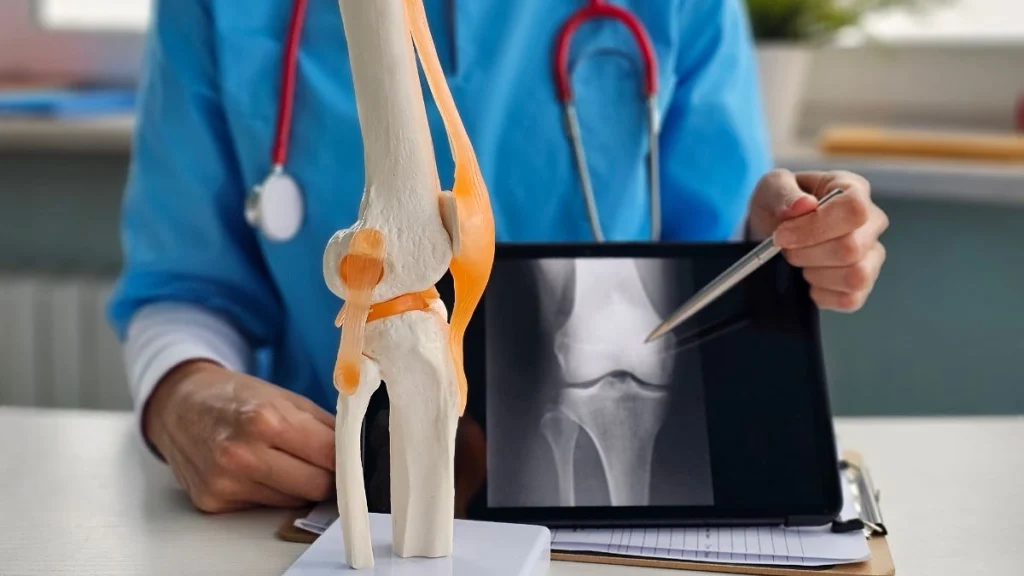
You bend down to pick up a dropped pen and hear a loud crunch. Harmless popping is completely normal. But a grinding knee joint is a major warning sign.
This sound is called crepitus. It feels exactly like sandpaper or gravel inside the joint. If this crunch pairs with pain or a feeling that your knee is catching on something, pay attention.
It means your cartilage surface is no longer smooth. Because of this friction, the protective gliding layer is wearing away. This grinding is one of the most overlooked early signs of knee osteoarthritis.
- Red Flag Rule: If your knee pops without pain, relax. If it crunches and catches, call a doctor.
5. The Bent Leg Sleep (Subtle Loss of Extension)
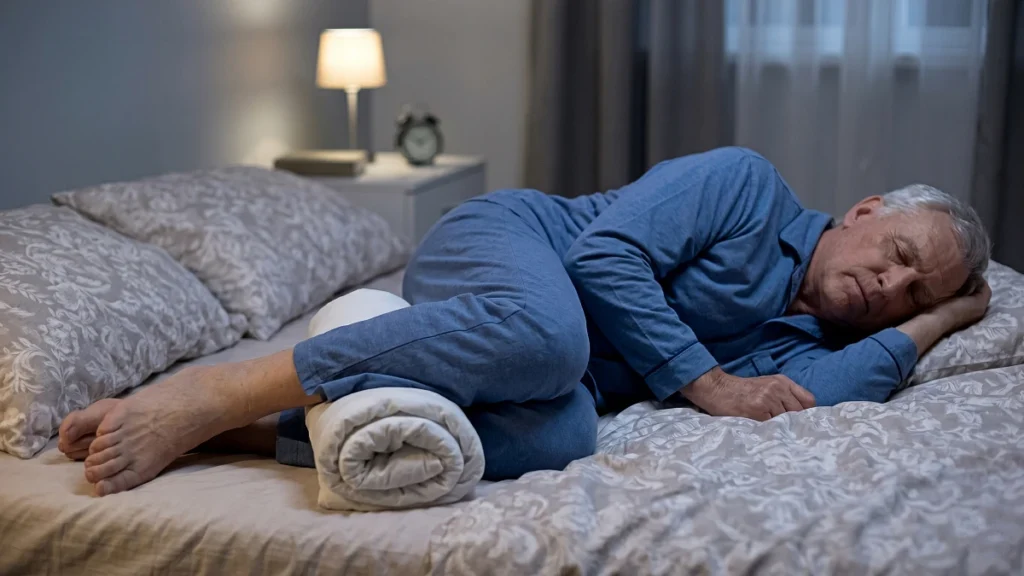
You try to stretch your legs flat in bed. But one knee refuses to touch the mattress. You might find yourself sleeping with a pillow under your knee because laying it flat simply hurts.
You might also have trouble bending your heel all the way to your glutes. This subtle loss of knee mobility happens slowly. Consequently, your body tries to adapt to the restricted space inside the swollen capsule. This limited motion is one of the clear knee cartilage damage symptoms.
- Action Step: Try the wall test today. Stand with your back against a wall and try to push the back of your knee to touch it.
6. The 2 A.M. Deep Throb (Nighttime Aching)

You are fast asleep until a deep throb wakes you up at 2 A.M. Mechanical pain should stop completely when you sit or lie down. If your knee throbs while lying in bed, you have a bigger problem.
Night knee pain signals active and dangerous inflammation within the joint capsule. Disrupted sleep reduces your body’s natural tissue repair processes. This creates a vicious cycle of worsening inflammation.
Nighttime throbbing is a very loud cry for help from your cartilage. Ignoring this knee inflammation after 50 will only speed up the joint destruction.
- Red Flag Rule: Pain that wakes you up from a deep sleep requires immediate professional medical attention.
7. The Uneven Shoe Wear Shift (Gait Compensation)
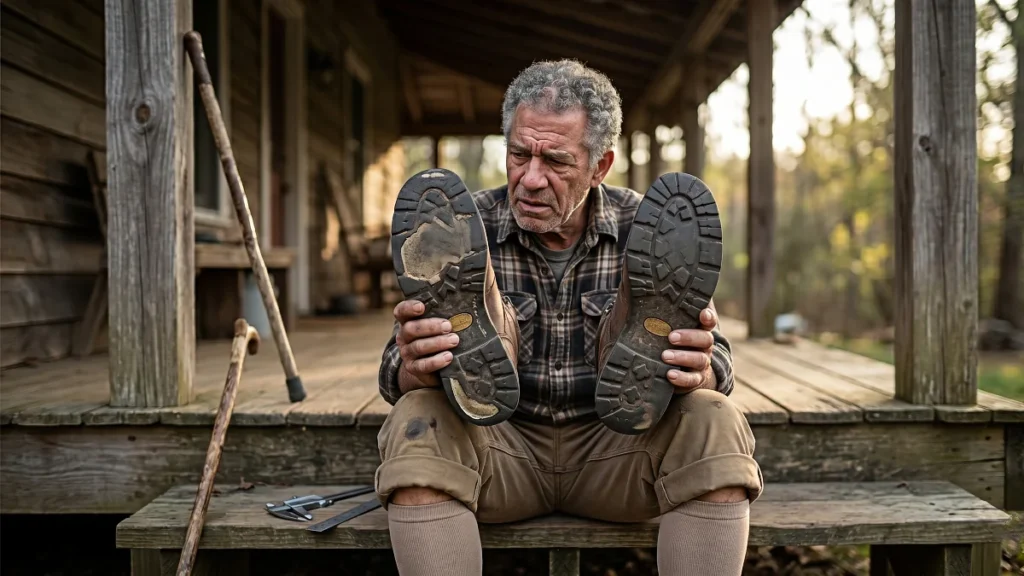
You walk through the grocery store and realize you are leaning heavily to one side. You unconsciously change how you walk to avoid putting pressure on your sore knee.
This subtle limp shifts massive strain to your hips and lower back. Limping from knee pain causes a chain reaction of body aches. You can actually see the proof on your feet. Flip your most worn sneakers over and look at the tread.
Uneven wear on one side is a prime indicator of gait compensation. Your body is desperately trying to protect the joint. This shift is one of the physical early signs of knee osteoarthritis.