

We rely on birth years and blood tests to track our health. But true aging is physical. Declining mobility often creeps in unnoticed.
You might feel completely healthy. Then you suddenly struggle to stand up from the floor without using your hands. This hidden loss of function predicts mortality better than the calendar on your wall.
You can measure and fix this. The 30 second sit and rise test is a clinical tool to find your true biological age. Score yourself right now and learn exactly how to reverse physical aging.
What is the 30 Second Sit and Rise Test?
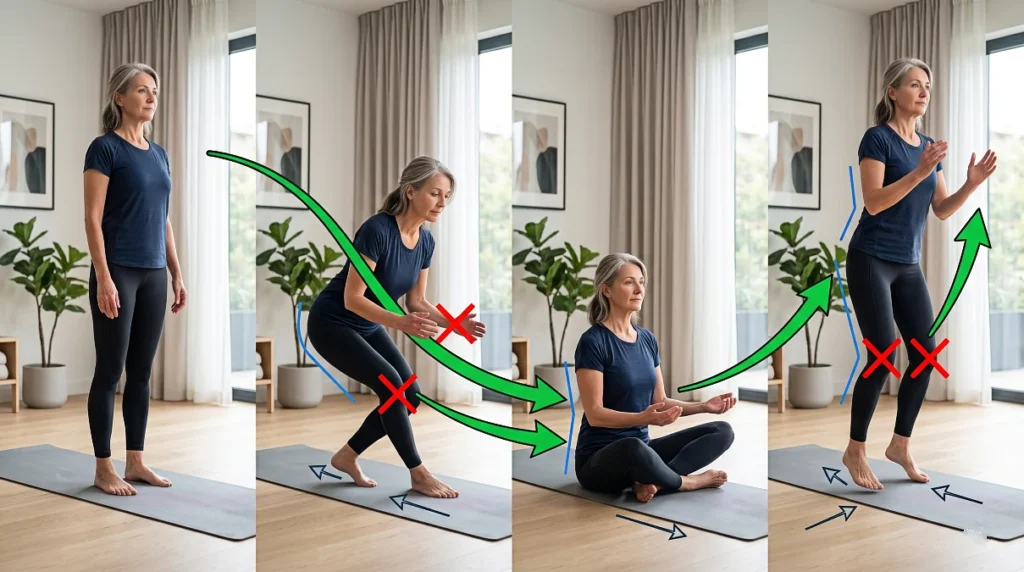
Not all fitness metrics require a lab draw. Brazilian physician Dr. Claudio Gil Araújo created this specific assessment. It is a brilliant way to measure muscle strength and flexibility. It also tests your core stability and overall joint mobility.
Ground to standing transitions require intense coordination. Your muscular system must fire correctly. Your cardiovascular system pumps blood to your brain. Your nervous system keeps you steady.
All these systems must work together perfectly. Physical therapists use this longevity fitness test as a core metric. They look for any loss of muscle and joint strength. Experts view this floor assessment as predictive as clinical lab work.
Muscle mass naturally declines by 3 to 8 percent per decade after age 30. This test identifies if that physical decline is accelerating too fast. Chronological aging is inevitable. But biological aging is highly malleable.
Failing the test today is just a baseline. It is never a life sentence. Now that you know the science behind the score, here is exactly how to execute it without cheating.
How to Perform the Sit to Stand Floor Test Correctly
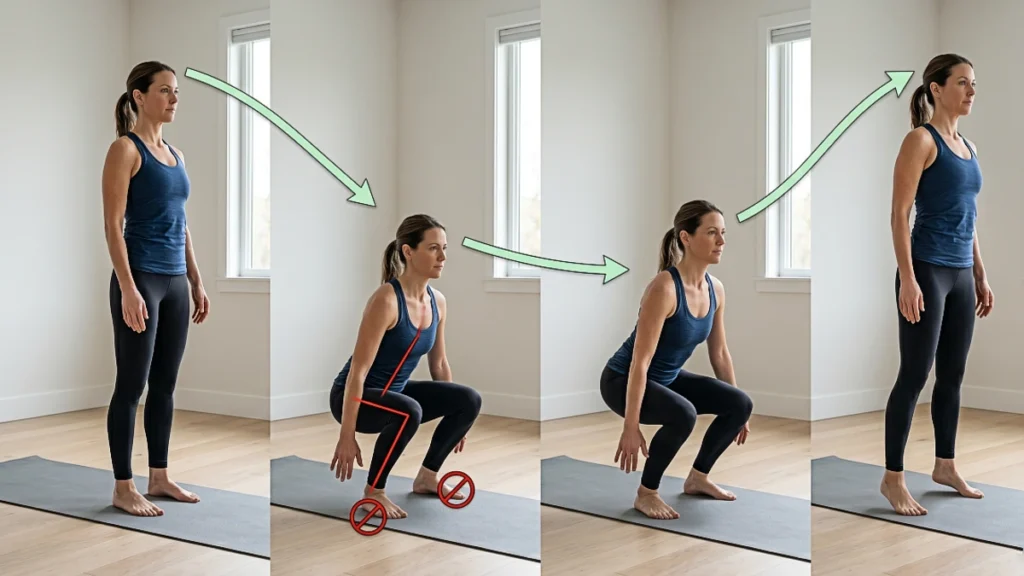
Proper execution guarantees accurate results. You need a safe space and honest grading. Grab your smartphone to record yourself. A video lets you clearly review where you lost points. It also shows where you lost your balance.
Follow these exact steps:
- Set up: Use a non slippery flat surface. A standard yoga mat works best for safety. Stay barefoot during the movement. Wear comfortable clothing that lets you move freely.
- The descent: Cross your legs. Lower yourself to a seated position on the floor in one smooth motion.
- The ascent: Rise back up to a standing position.
- The scoring system: You start with 10 points total. You get 5 points for the descent. You get 5 points for the ascent. Deduct 1 point every time you use a hand or forearm for support. Deduct 1 point if you use a knee or the side of your leg. Deduct 0.5 points for a visible loss of balance.
A perfect score is 10. This means you used zero external support to get up. The sit to stand floor test is very challenging. You might fail on your first try. Do not worry about a low number. Practice makes the 30 second sit and rise test easier over time.
What Your SRT Score Says About Your True Biological Age

The numbers reveal a clear picture of your future health. A major study in the European Journal of Preventive Cardiology proved this fact. Researchers followed over 2,000 adults. These people were aged 51 to 80.
The study lasted for an entire decade. Lower scores correlated to a massive increase in all cause mortality risk.
Here is your biological grading scale:
Biological Grading Scale
Score 8 to 10
You have excellent functional health. Your biological mobility matches optimal aging. You face a very low mortality risk of roughly 3.7 percent.
Score 3.5 to 7.5
You are in the warning zone. You have a noticeable decline in core strength and mobility. You need to start moving more daily.
Score 0 to 3
This is high risk. You show significant functional decline correlating with higher frailty. Participants in this group had a staggering mortality rate of 42 percent.
Failing this biological age test today is a wake up call. Your joints and muscles can recover. Improving your longevity fitness test score is entirely possible. You just need targeted effort and consistency.
4 Actionable Ways to Improve Your Longevity Fitness Test Score
You can build back your strength at any age. Jared Burch is a Doctor of Physical Therapy. He recently noted this test correlates strongly with lifespan and joint control in 2025 literature. He recommends focusing on daily movement habits to reverse aging effects.
Try these specific exercises to boost your score:
- Mastering the Hinge and Squat: Build lower body strength with bodyweight squats. Add reverse lunges to your daily routine. Strong legs are crucial for getting off the floor safely.
- Dedicated Mobility Work: Focus heavily on your ankles and hips. Practice 90 90 stretches on a yoga mat. This improves your overall range of motion.
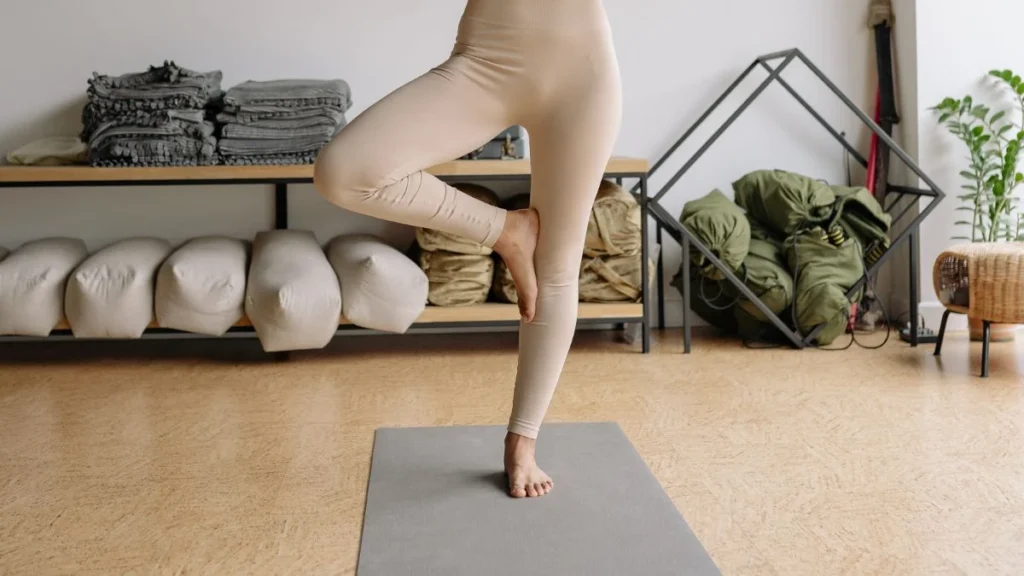
- Single Leg Balance Training: Work on unilateral strength. This helps correct side to side asymmetries. Test both legs separately. This helps identify dangerous structural imbalances.
- Core Integration: Do forearm planks daily. Add rotational movements. This stabilizes your trunk during awkward ground transitions.
Consistency is your best friend. A better sit to stand floor test result takes time. Start small. Practice the movements safely in your living room.
How Often Should You Check Your Biological Age?
You know your current score. Now you need a plan. You might feel tempted to take the floor test every single day. Do not do this. Building new muscle strength takes time. Your joints need rest to adapt to new exercises. Checking your score too often only leads to frustration.
You need a smart tracking schedule instead. A clear timeline keeps you focused on long term health. It stops you from quitting when progress feels slow. Use the chart below to plan your next test. This schedule matches your starting mobility level.
| Your Initial Score | Current Mobility Level | When to Test Again | Daily Action Step |
| 8 to 10 | Excellent Health | Every 6 months | Maintain your current active lifestyle. |
| 3.5 to 7.5 | Warning Zone | Every 4 weeks | Add 10 minutes of daily stretching. |
| 0 to 3 | High Risk | Every 2 weeks | Practice getting off a low chair safely. |
Conclusion
Mobility is the ultimate indicator of longevity. The floor test is not just a party trick. It is a window into your long term independence. Your ability to move freely defines your quality of life as you age.
Clear a space in your living room right now. Grab a yoga mat and take off your shoes. Try the test for yourself. Find out exactly where your body stands.