
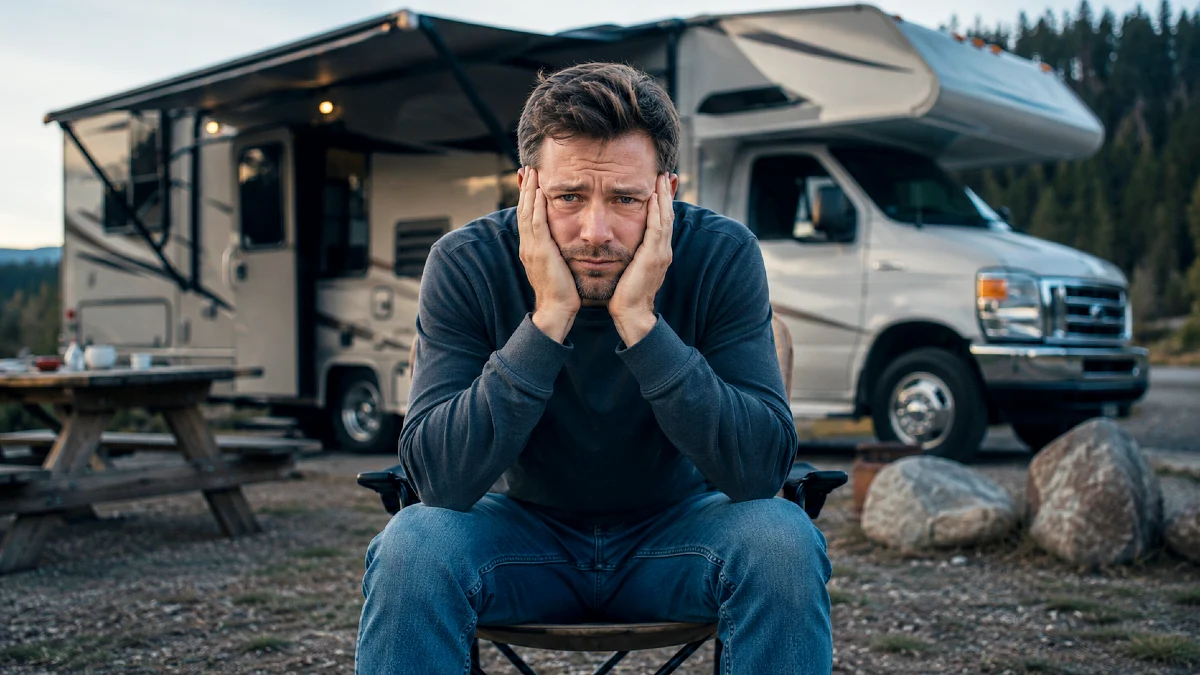
You wake up inside your RV and hear rain tapping the roof. A year ago, that sound felt peaceful. Today, you are thinking about wet seals, muddy hookups, and the next drive.
That does not make you ungrateful.
Full time RV life can offer freedom, beautiful places, and more time outside. It can also bring repair bills, planning stress, small space fights, loneliness, and weeks that feel like work.
Most people do not suddenly decide to quit RV life. The decision starts through small changes. You stop caring about the next destination. You feel relieved when plans fall apart. You begin searching for apartments when no one else is watching.
1. You Feel Relieved When a Travel Day Gets Canceled

A storm closes the highway. Your campground extends your stay. The repair shop says the RV needs another day.
Your first feeling is not frustration. It is relief.
That feeling may be an early sign of full time RV burnout. Moving means checking the route, securing your belongings, handling tanks, pulling slides in, checking tires, driving, leveling, and setting everything up again.
Escapees RV Club warns that covering many miles at a fast pace can cause mental and financial burnout. RV Travel makes a similar point. Living as though every week is a vacation can quickly create travel fatigue.
Before you quit, test a slower pace.
Stay in one campground for four weeks. Do normal things. Cook at home, work, rest, clean, and visit nearby places without trying to fill every day.
You may discover that you still enjoy RV life. You were simply moving too often.
2. You Keep Looking at Apartments and Houses

You tell yourself that you are only curious.
Yet you keep checking rents, yards, kitchens, spare rooms, and homes near family. You picture where the sofa would go. You notice how close the grocery store is.
This does not always mean you hate RV travel. It may mean you want a home base.
Pay attention to the part of the listing that attracts you.
Do you want a larger kitchen? A private office? A fenced yard? A local doctor? A place where your children can make lasting friends?
The answer shows what RV life is failing to provide.
Some full time travelers move into a house but keep their RV for seasonal trips. Others rent for part of the year.
Escapees has shared accounts of travelers returning to stationary housing when work, health, parenting, or personal needs changed. RV Travel also recommends planning for the day when full time travel no longer fits.
You do not have to choose between constant travel and never traveling again.
3. Every Small Repair Feels Like a Personal Attack
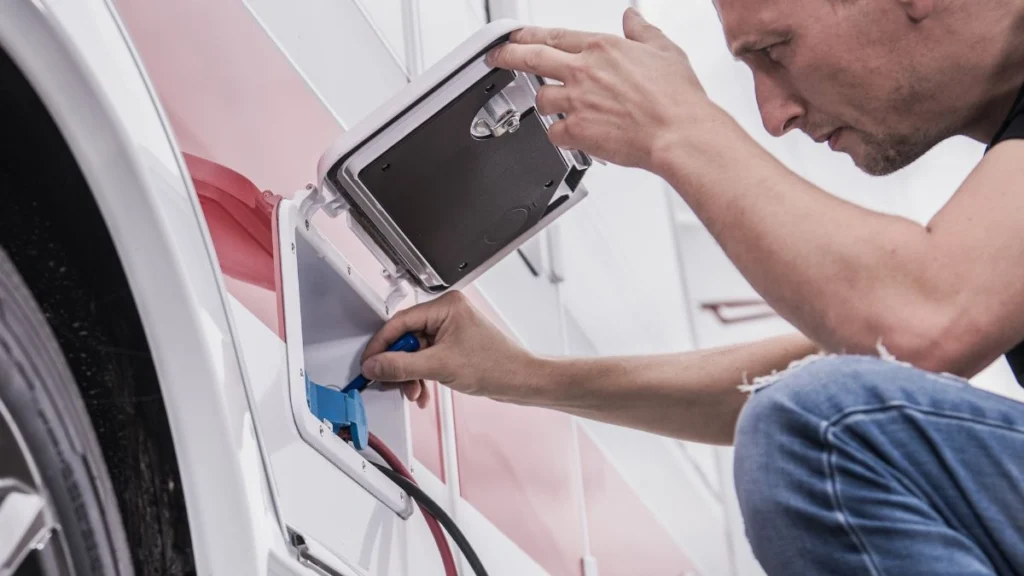
A loose cabinet door ruins your morning. A dripping connection makes you want to scream. A weak battery feels like proof that the entire lifestyle was a mistake.
The repair may be small. Your reaction is the bigger clue.
RVs require regular care because a home, plumbing system, electrical system, and vehicle are moving together. Go RVing advises owners to inspect tires, batteries, caulk, roofs, windows, doors, vents, and seals. These are routine ownership tasks, not rare events.
Burnout lowers your patience for these jobs.
Try three fixes before you make a final choice:
- Create a monthly maintenance fund.
- Keep one written inspection checklist.
- Save the contact details of mobile repair workers in the areas you visit.
Escapees notes that access to a mobile technician can reduce the disruption caused by a repair when the RV is also your home.
If basic care still fills you with dread, RV ownership itself may no longer suit you.
4. You No Longer Care Where You Park
You once researched scenic campsites for hours. Now you choose the first open site with power and acceptable internet.
You arrive somewhere beautiful and leave the blinds closed.
This can happen when travel becomes a list of jobs. The location changes, but your routine remains packing, driving, setting up, shopping, cleaning, and planning the next move.
Stop chasing attractions for a few weeks.
Choose one calm place. Build a normal schedule there. Have set days for work, laundry, exercise, errands, and rest. Visit one local place when you truly want to go.
The goal is to see whether your interest returns after the pressure drops.
If you begin enjoying your surroundings again, your problem was likely speed. If every place still feels the same, you may be ready for a different kind of life.
5. Planning the Next Stop Makes You Anxious

Campground planning can feel like a second job.
You must check site length, road access, hookups, pet rules, arrival times, weather, internet, cancellation terms, and nearby fuel. Larger rigs have fewer choices.
National Park Service campground pages show how much the rules can vary. Denali states that its campgrounds cannot take RVs longer than 40 feet. Some Glacier sites have limits near 35 feet. Desert View at the Grand Canyon has a 30 foot limit and no hookups.
Popular parks can also require early planning. Yellowstone says most campsites are reserved far ahead, and overnight RV parking outside designated campgrounds is not allowed in the park. Yosemite also requires RV travelers to stay in designated campsites rather than parking overnight in lots or along roads.
That pressure can remove the freedom you expected.
Reduce the number of decisions. Plan one region at a time. Stay longer. Use a repeat route or return to parks you already know.
If planning still causes daily anxiety, your need for stability may now be stronger than your wish to roam.
6. You and Your Partner Keep Having the Same Fight

The argument may sound like it is about dishes, clutter, fuel, driving, or the campground.
Look closer.
One person may want to move every week. The other wants to stay for a month. One wants remote land. The other needs neighbors and full hookups. One sees freedom. The other feels trapped.
A small RV gives each person little space to cool down. Problems follow you from the front seat to the bed because both spaces are only a few steps apart.
Do not hold the main talk during a travel day or repair problem.
Leave the RV for a few hours. Each person should answer these questions alone:
- What part of RV life still makes me happy?
- What part drains me most?
- What do I need that I am not getting?
- Would slower or part time travel solve it?
- What am I afraid will happen if we stop?
RV Travel advises clear communication when one partner feels that RV living is no longer right. Escapees interviews also show that real full time life can differ greatly from what travelers expected before leaving home.
The goal is not to prove who is right. It is to find a life both people can live with.
7. You Avoid Checking Your Bank Account

RV life is often sold as a cheaper way to live.
Sometimes it is. Sometimes it is not.
Your costs can include an RV payment, tow vehicle payment, campground fees, fuel, repairs, insurance, propane, internet, laundry, tolls, storage, memberships, mail service, and meals purchased on travel days.
Escapees points out that internet and maintenance can become major full time travel costs. Its current cost guide recommends slowing down, planning fuel use, and tracking spending instead of assuming that life on the road will be cheap.
Kiplinger has also reported examples of full time travelers with very high yearly spending, showing that there is no single RV budget that fits everyone.
Use your own numbers.
Review the last three full months and add every RV related cost. Include repairs and yearly bills by dividing them into monthly amounts.
Then compare that total with three options:
- Renting a home and keeping the RV
- Renting a home and selling the RV
- Staying in the RV but moving less
Avoiding the numbers will not protect you. Clear numbers give you choices.
8. You Miss Ordinary Routines More Than Famous Places

You miss the same grocery store.
You miss knowing your doctor, barber, dentist, gym, library, coffee shop, neighbors, and walking route. You miss seeing the same people without planning a visit weeks ahead.
These wishes can feel boring compared with national parks and coastal drives. Yet routines help many people feel safe and connected.
Full time RV living adds work around healthcare, mail, legal residence, internet, schooling, and community. Escapees covers all of these issues in its current full time living guide because travel affects far more than where you sleep.
Try building a local routine before leaving RV life.
Stay for six weeks. Join a gym. Use the library. Attend a weekly event. Volunteer. Shop at the same market. Learn a neighbor’s name.
If the routine restores your energy, you may need slower travel or a seasonal base.
If you feel sad each time you leave, you may be ready to put down roots.
9. Your RV Feels Smaller Every Month
The walls have not moved.
Your life may have changed.
Perhaps you started working full time from the dinette. Your children need more privacy. Your dog is older. A health issue makes the steps harder. Your hobby needs equipment that no longer fits in a storage bay.
Decluttering can help. It cannot fix every space problem.
The RV Industry Association reports that 8.1 million American households own an RV. Its 2025 profile also found that 36 percent of RV owners were first time owners. Many people are still learning which size and layout fit their real habits.
Before you decide that all RV life is wrong, test the space question.
Spend one or two weeks in a cabin, apartment, or house. Notice what changes. Do you sleep better? Work better? Argue less? Cook more? Feel less trapped?
A larger RV could solve the issue, but it also brings a higher price, more weight, harder parking, and fewer campsite choices.
Sometimes more space helps. Sometimes it creates a larger and more costly version of the same problem.
10. You Are Always Waiting for Real Life to Start
You tell yourself things will feel better after the next stop.
Then it becomes the next repair. The next season. The next state. The next campground. The next RV upgrade.
Months pass while you wait for the lifestyle to match the picture in your head.
This is one of the easiest signs to miss because hope sounds positive. But hope without a clear test can keep you stuck.
Choose a decision date.
Give yourself 30 to 90 days to test specific changes. Move less. Cut costs. Take rest days. Spend time near friends. Repair the issue that keeps causing stress.
Write down what must improve.
For example:
- Travel days no longer cause dread.
- Spending stays within your set limit.
- You and your partner fight less.
- You feel excited about at least some destinations.
- You can maintain the RV without constant panic.
At the end of the test, judge the results. Do not move the decision date because you feel guilty.
11. You Feel Lonely Even in Busy Campgrounds

A campground can be full while you still feel alone.
People arrive, wave, cook dinner, and leave. Short stays make it hard to build close friendships. Remote work can add another layer because you may spend most of the day inside.
Escapees has published guidance for nomadic remote workers dealing with isolation. It recommends building contact on purpose instead of waiting for connection to happen by chance.
Try forms of community that repeat:
- Attend an RV rally.
- Join a club chapter.
- Volunteer at a park.
- Return to the same seasonal campground.
- Take part in a weekly local group.
- Schedule regular calls with close friends.
Escapees describes itself as a support network built around community and practical help for RV travelers. Groups like this can make life on the road feel less temporary.
Still, online groups and campground chats may not replace deep local ties.
Wanting neighbors who remain nearby is a valid reason to change how you live.
12. The Thought of Selling the RV Brings Relief

Picture the RV sold.
The loan is gone. You no longer plan routes or reserve sites. There are no tanks to empty, tires to check, or slides to pull in.
What do you feel?
Sadness is normal. Relief matters too.
Do not rush to list the RV during a breakdown or hard travel day. Give yourself time to separate a bad week from a lasting decision.
Consider several choices:
- Store the RV for three months.
- Use it only for vacations.
- Trade it for a smaller model.
- Rent a seasonal site.
- Buy or rent a home base.
- Sell it and travel in other ways.
Some former full time travelers still camp. They simply stop asking the RV to serve as their home, office, vehicle, storage space, and entire lifestyle.
Leaving the road does not erase the good years.
It means you are paying attention to what you need now.
How to Test Your Decision Before You Sell the RV
You do not need to decide during your hardest week.
Run a simple test first.
Stop Moving for 30 Days
Book one safe place for a month. Do not fill the calendar with attractions.
Live a normal life and watch what happens to your mood. If you feel much better, travel speed may be the main problem.
Track Every Dollar
Record campground fees, fuel, repairs, insurance, internet, food, memberships, payments, storage, and supplies.
Do not compare a full RV budget with rent alone. Compare it with the full cost of each option.
Name the Exact Problem
Write one sentence:
RV life is not working because…
Be specific.
“Everything is bad” gives you no useful answer. “We move too often and spend too much on fuel” gives you two problems you can test.
Ask Each Person What They Want
Partners and family members should answer separately.
Do not assume that everyone wants the same future. One person may want to sell. Another may want a seasonal site. A third may only need slower travel.
Test Stationary Life
Rent a cabin or apartment for a few weeks when possible.
Notice your sleep, work, spending, mood, privacy, and relationships. A test gives you better information than looking at home listings late at night.
Create Three Plans
Do not give yourself one painful choice between full time travel and failure.
Create three plans:
- Continue with a slower route
- Travel part time from a home base
- Sell the RV and choose a new form of travel
Then compare cost, stress, freedom, space, community, and health needs.
The best answer is the one that works in real life, not the one that looks best online.
It Is Okay to Choose a Different Life
You do not have to keep living in an RV to prove that the choice was worth making.
The road may have given you time with family, new friends, useful skills, and places you will never forget. Those experiences remain yours even if you stop.
Pay attention to relief, dread, money avoidance, repeated fights, loneliness, and the wish for a home base. These signs do not order you to sell. They tell you that something needs to change.
Choose one 30 day test before you quit RV life. Slow down, track your costs, and talk honestly with the people traveling beside you.