

You might blame your aching back and stiff neck entirely on aging. But the real culprit could be the way you sit and stand all day. Over the years, subconscious habits cause uneven muscle tension.
Slumping over a laptop or leaning on one leg shifts your center of gravity. This accelerates joint wear and tear. It directly increases your risk of dangerous falls.
Fixing posture mistakes in older adults is crucial for your health. It is the best way to prevent back pain over 50.
1. The Text Neck (Forward Head Posture)

Think about how you sit when reading a tablet. You probably tilt your head forward to look down at the screen.
An adult head weighs 10 to 12 pounds. Tilting it forward places up to 60 pounds of force on your cervical spine, or neck. This heavy load alters the natural curve of your spine over time.
This habit puts immense tension on your neck muscles. It accelerates spinal wear. To fix bad posture seniors must correct this head position daily. Proper alignment prevents tension headaches and shoulder stiffness.
The Fix: Pull your head straight back over your shoulders in a gentle chin tuck without tilting your chin up.
2. Locking Your Knees While Standing
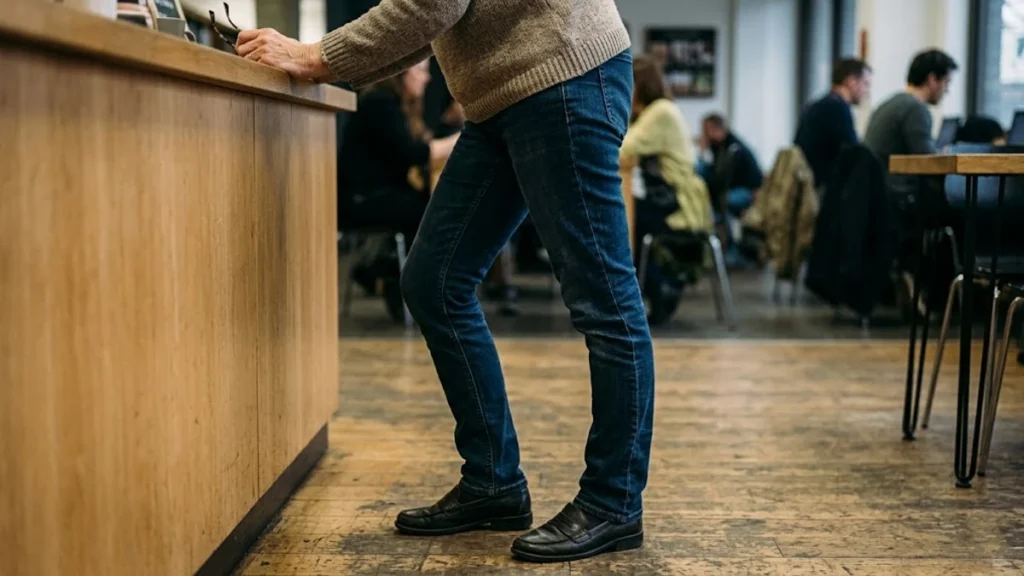
Waiting in line at the grocery store, you probably do this without thinking. You hyperextend your knees backward until they lock into place.
Locking your joints makes your lower body rigid. This freezes joint mobility and strains your ligaments. It shifts a dangerous load directly onto your lower back.
These frequent posture mistakes in older adults lead to chronic aching. Your legs are meant to act as shock absorbers. Rigid legs cannot absorb the impact of walking or standing.
The Fix: Keep a soft bend in your knees to distribute your body weight evenly into your leg muscles instead of your joints.
3. The Upper Back Slump (Kyphosis)
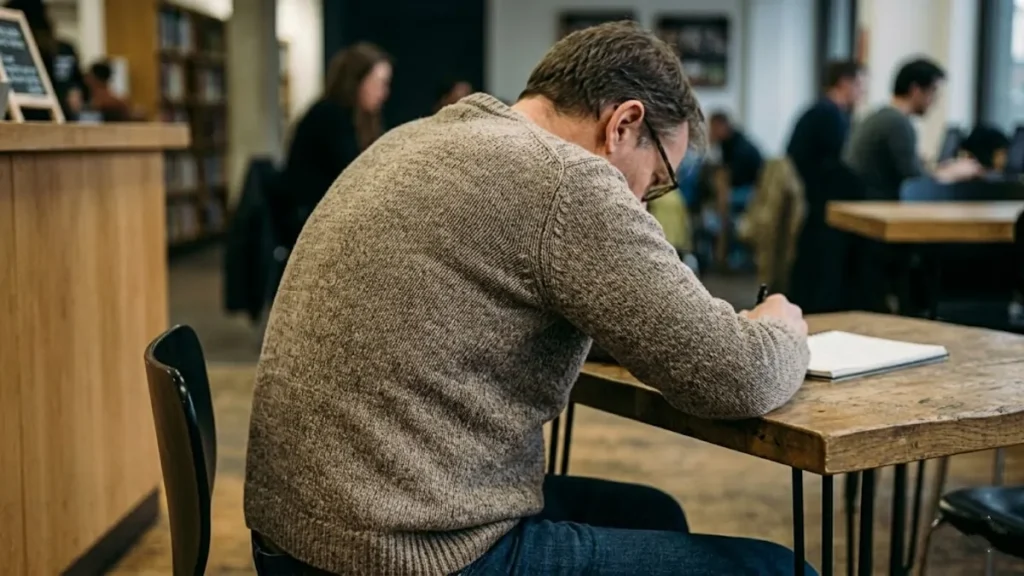
Just as your neck dictates your upper back alignment, your shoulders play a massive role. Years of desk work or driving lead to rounded shoulders.
Gravity pulls your weakened back muscles forward. Orthopedic experts warn this increases the risk of a dorsal kyphosis, commonly called a dowager’s hump. This physical risk is very high for adults with low bone density.
This slump is a major driver of back pain over 50. You need to activate the muscles between your shoulder blades to fight gravity. Strong back muscles pull your chest open and improve your breathing.
The Fix: Squeeze your shoulder blades together while forming the letters W, Y, and T with your arms using resistance bands.
4. Asymmetrical Weight Distribution
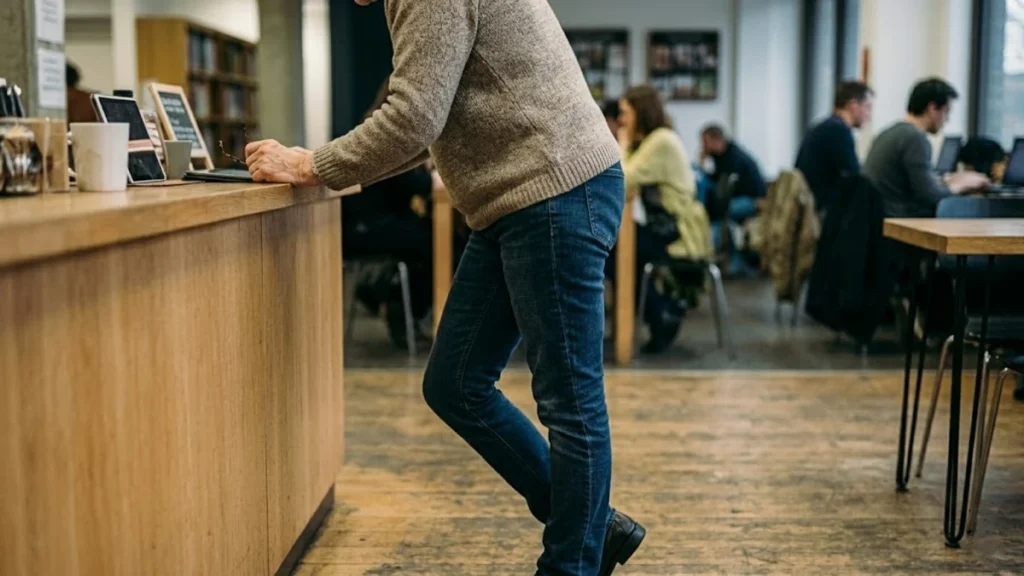
Chatting with neighbors on the sidewalk, pay attention to your feet. You likely lean heavily on one leg. Or you might always carry heavy bags on the same shoulder.
This common habit builds muscle asymmetry over time. It creates an uneven pull on your skeletal system. Your pelvis tilts to one side to compensate.
This lopsided stance strains your lower back and hips. It throws your entire body out of balance. Correcting this prevents joint pain on your dominant side.
The Fix: Stand with your feet hip width apart and consciously press equal weight through both of your feet.
5. Dropped Pelvis (Swayback)

Your pelvis dictates your lower back health. You might let your stomach protrude by tilting your pelvis forward.
This condition is called a swayback, or lumbar hyperlordosis. It aggressively compresses your lower lumbar spine. This poor alignment forces your back muscles to work overtime.
Proper orthopedic posture advice emphasizes correcting this tilt. Doing so will prevent chronic stiffness in your lower back. Finding a neutral spine protects your spinal discs from pinching.
The Fix: Visualize your pelvis as a bowl of water and tuck your tailbone slightly so the water does not spill out the front or back.
6. The Shuffling Gait

Walking to the mailbox, notice how your legs and arms move. You might take short and rigid steps without swinging your arms.
This shuffling gait stiffens your hips and ankles. A forward leaning posture visibly shifts your center of gravity. This directly increases your risk of falls.
Falling is a major concern for adults over 65. You need to restore fluidity to your walking pattern. Fluid movement protects your joints from sudden shocks.
The Fix: Lengthen your stride purposefully and let your arms swing naturally to restore your kinetic vitality and improve your balance.
7. Bending at the Waist to Lift
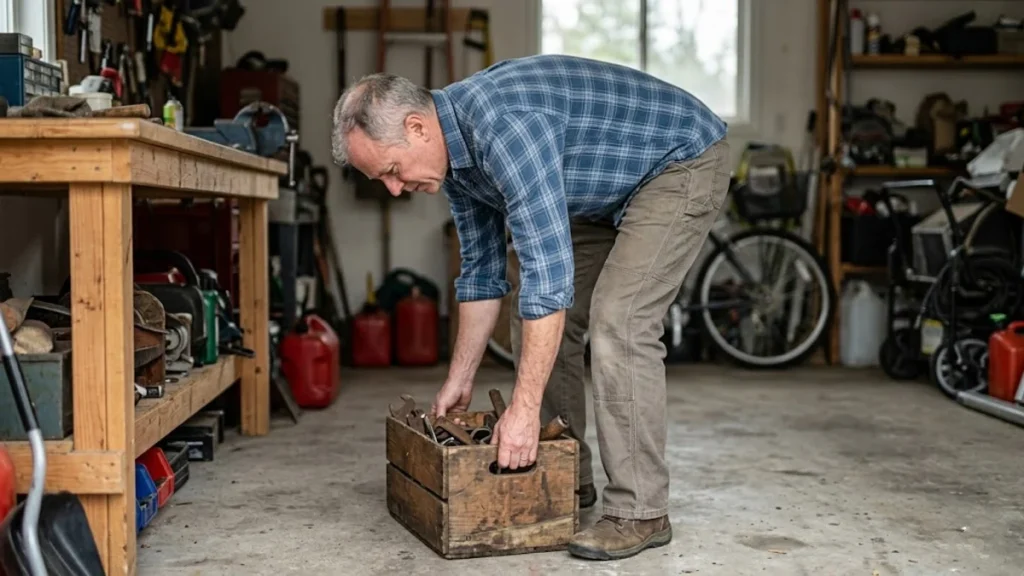
Reaching down to pick up a dropped remote, how do you bend? You likely treat your lower back like a door hinge instead of using your strong leg muscles.
Your spine is not meant to bear heavy loads while curved forward. Orthopedic surgeons note that poor lifting habits cause sudden disc herniations.
This is the leading cause of acute orthopedic injuries in seniors. You must change this habit to fix bad posture seniors deal with daily. Protecting your spine during movement keeps you independent longer.
The Fix: Hinge at your hips, bend your knees deeply, and keep the object close to your chest as you stand.
8. Prolonged Sedentary Slouching

Settling in for an evening of television, consider your chair. You probably sink deeply into soft recliners or couches.
This creates a curved shape in your spine. Sitting like this compresses your diaphragm and your digestive organs. It makes deep breathing very difficult.
Studies tracking patient posture in hospitals show extended reclining rapidly deteriorates mobility. Your muscles essentially forget how to hold you upright. You must support your lower back to prevent this rapid decline.
The Fix: Place a rolled towel behind your lower back for lumbar support and use a footrest to keep your knees level with your hips.
9. Ignoring Core Strength
You probably think posture is strictly a back problem. Because of this, you ignore the abdominal muscles at the front of your body.
Your core muscles are the foundation of your upright alignment. Weak abdominals force your spine to carry your entire upper body weight.
Good posture relies heavily on a strong midsection. A strong core protects your back from injury and fatigue. It also improves your balance significantly.
The Fix: Pull your navel in to your spine during daily activities to create an internal corset that supports your whole torso.