
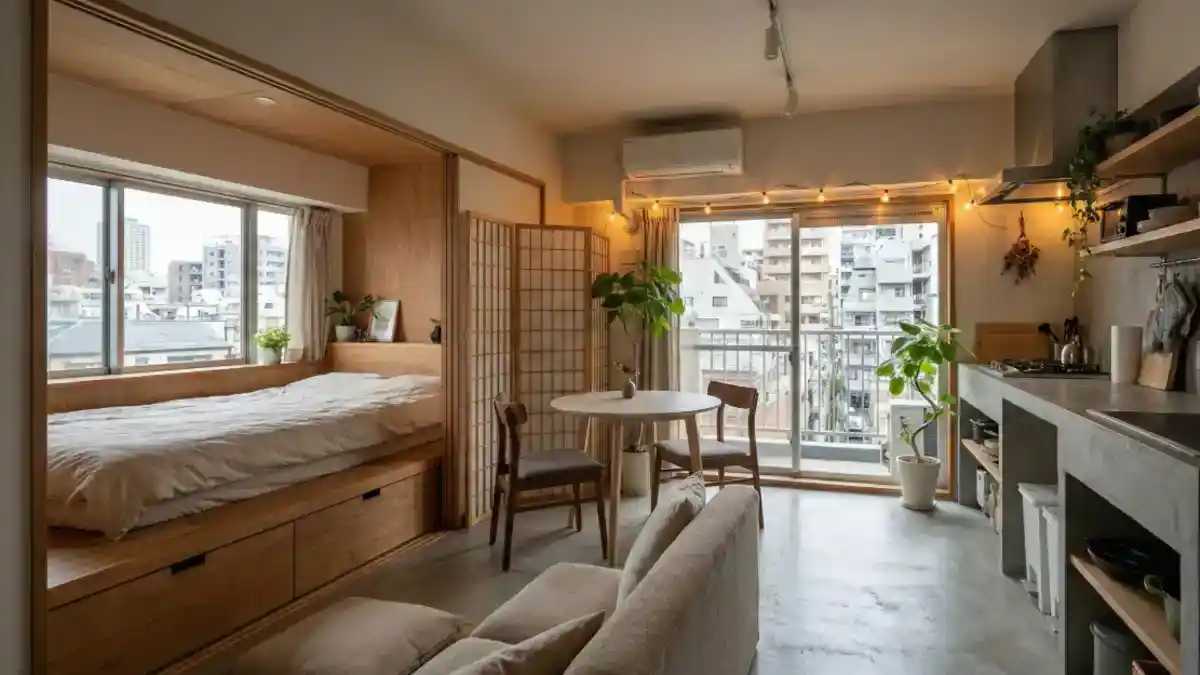
Waking up with your elbow in the toaster is rarely a conscious design choice, yet it remains the daily reality for countless city dwellers. Cramped studios and boxy one-bedrooms often feel more like storage units than sanctuaries, leaving you suffocated by your own belongings.
Japanese architecture addresses this friction with a profound philosophy: space is not defined merely by square footage, but by how light, flow, and function interact within those walls.
Japan’s mastery of compact living goes beyond stark minimalism; it requires radical intentionality. Every inch works double duty, and every corner breathes. Through centuries of adapting to extreme density, Japanese designers have unlocked the code to making the minuscule feel magnificent.
1. Multifunctional Platform Bed with Integrated Desk
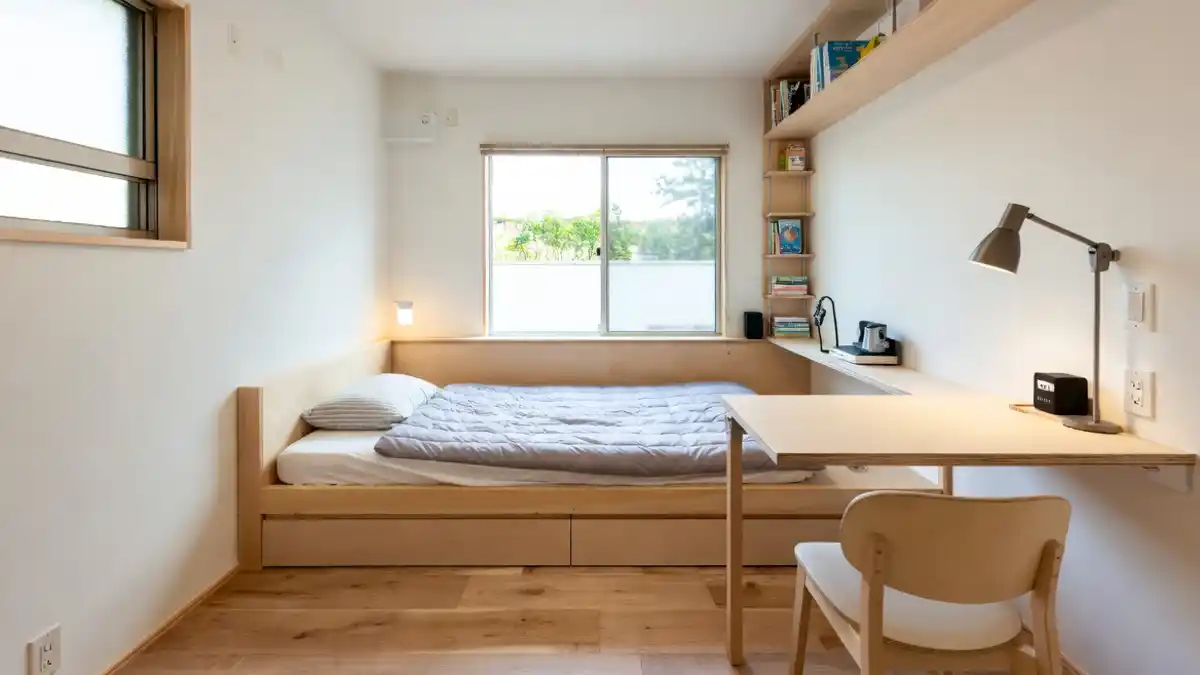
Consider how clever design can transform a compact room. This tiny Japanese apartment idea showcases a custom-built wooden platform bed that does double duty.
It offers a comfortable sleeping area while also featuring large, built-in drawers underneath for essential storage, eliminating the need for a separate dresser. The light wood finish keeps the space feeling bright and airy.
Seamlessly connected to the bed frame is a minimalist desk and shelving unit. This integration creates a dedicated workspace without occupying extra floor area, a common challenge in small living quarters.
The floating shelves above provide ample room for books and decor, drawing the eye upward and making the walls feel taller.
Utilizing such multifunctional furniture is key to maximizing every square inch. By combining sleep, study, and storage into one cohesive piece, this clever solution frees up valuable floor space. It’s a practical and stylish way to make a small room feel surprisingly spacious and organized.
2. Embrace Lighter Wood Tones for Airy Openness
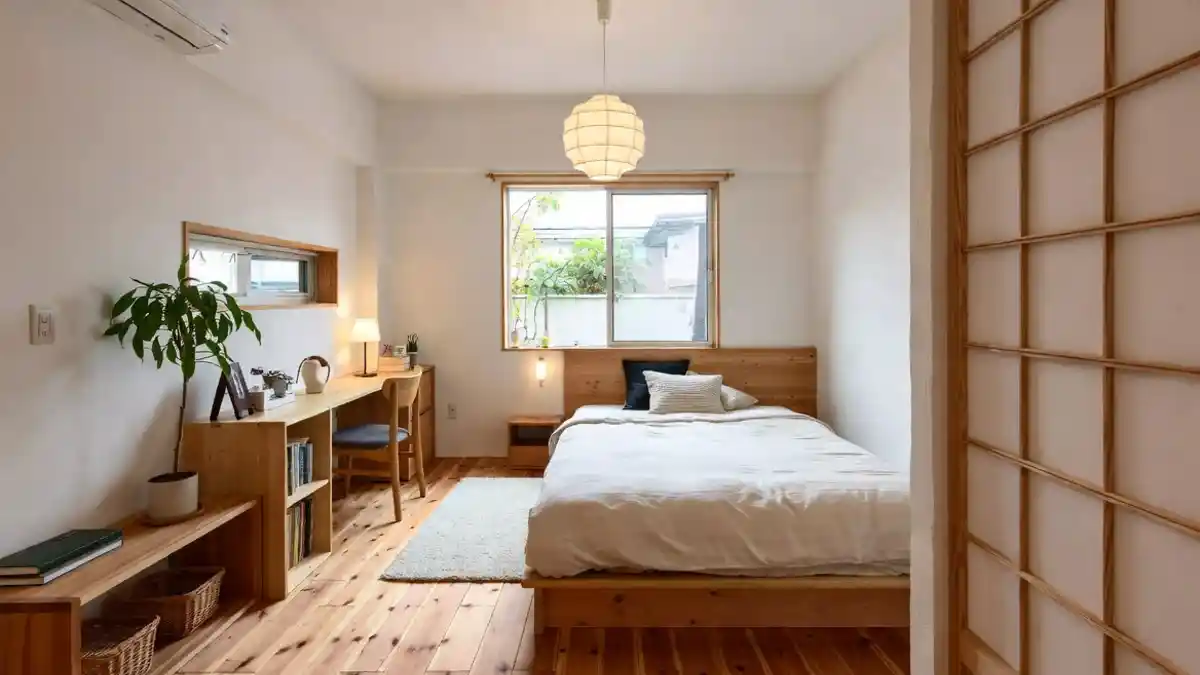
Utilizing a distinct palette of soft whites and pale timber effortlessly transforms cramped quarters into breathable sanctuaries.
This specific approach is central to many successful tiny Japanese apartment ideas that make small spaces feel huge. By keeping the floors, bed frame, and built-in desk all in the same light wood tone, the visual boundaries of the room effectively blur.
Abundant natural light streaming through the large window is absolutely crucial for expanding the perceived square footage.
The traditional rice paper pendant lamp adds a necessary soft glow without visually cluttering the valuable ceiling area. Even the beautiful shoji-style sliding door assists by letting light pass through while clearly defining the sleeping zone.
Intentional placement of greenery, like the tall potted plant near the desk, connects the interior to the outdoors and adds significant depth. The smart, built-in shelving unit maximizes function without encroaching on the limited floor plan. Keeping all surfaces clear of excessive items completes this spacious, clean, and minimalist aesthetic.
3. Seamless Open-Concept Flow
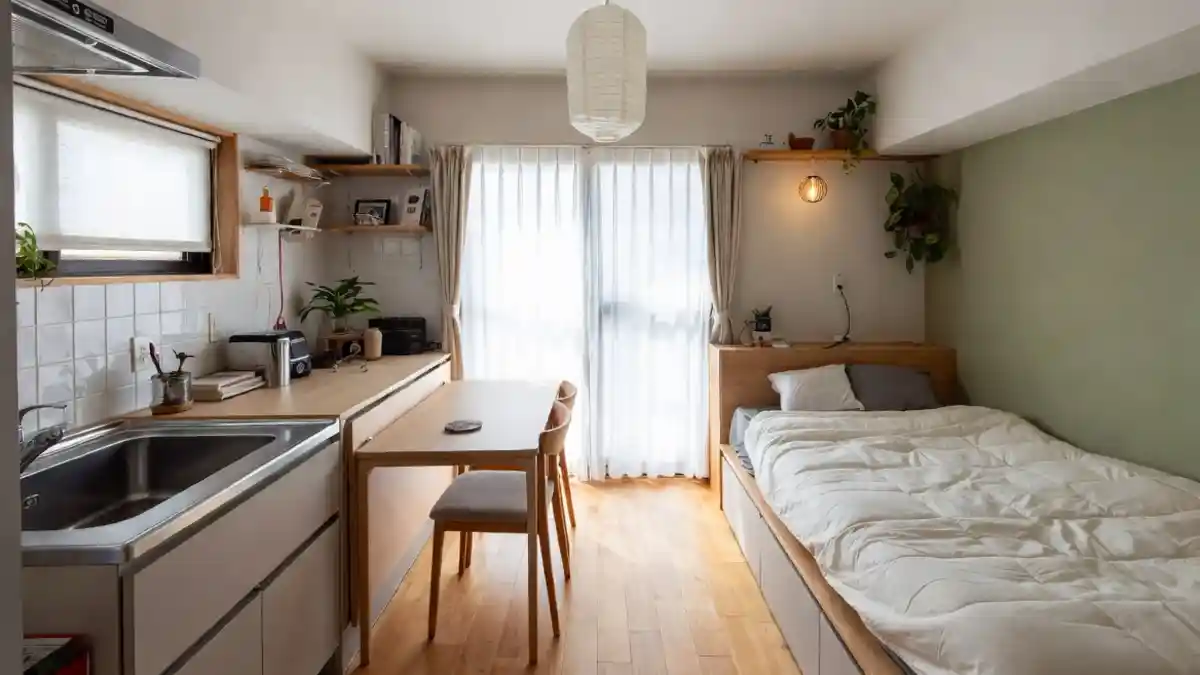
Witness how this apartment dissolves boundaries between essential living areas. Instead of chopping up limited square footage with walls, the kitchen flows naturally into the dining space, which sits just inches from the sleeping quarters.
This technique is a cornerstone of many tiny Japanese apartment ideas designed to maximize perceived space.
Utilizing a continuous line creates a visual bridge between functions. The food preparation area extends into a small wooden dining table, eliminating the need for bulky, separate furniture pieces.
Keeping materials consistent, like light wood and white tiles, helps the eye travel smoothly across the entire room without interruption.
Beneath the sleeping area, built-in drawers provide essential storage without taking up extra floor space. By elevating the bed on a platform, the room gains functionality while maintaining an airy feel, aided by natural light from the large window. It is a brilliant example of making every inch count in a compact footprint.
4. Permeable Wood Slat Partition

Ingeniously, this layout utilizes a permeable wood slat partition to define separate living zones without closing them off. This clever approach is a staple among tiny Japanese apartment ideas designed to make compact footprints feel expansive.
Instead of installing a solid wall that would shrink the room and block precious sunlight, these thin vertical slats create a necessary visual boundary.
Transparency remains priority number one, allowing your line of sight to travel the full length of the apartment toward the bright window.
This uninterrupted view ensures the narrow space feels significantly longer and far less restricted. Natural light flows freely through the gaps in the wood, keeping the desk and small sofa area bright and welcoming throughout the day.
Functionality gains a major boost here without sacrificing the open, airy atmosphere essential for small-scale living. You acquire a distinct sleeping nook and a dedicated spot for work, yet the entire home retains a cohesive flow. Utilizing wall space with minimalist floating shelves further enhances the sense of vertical height and reduces clutter on the floor.
5. “Room-in-a-Room” Sleep Sanctuary
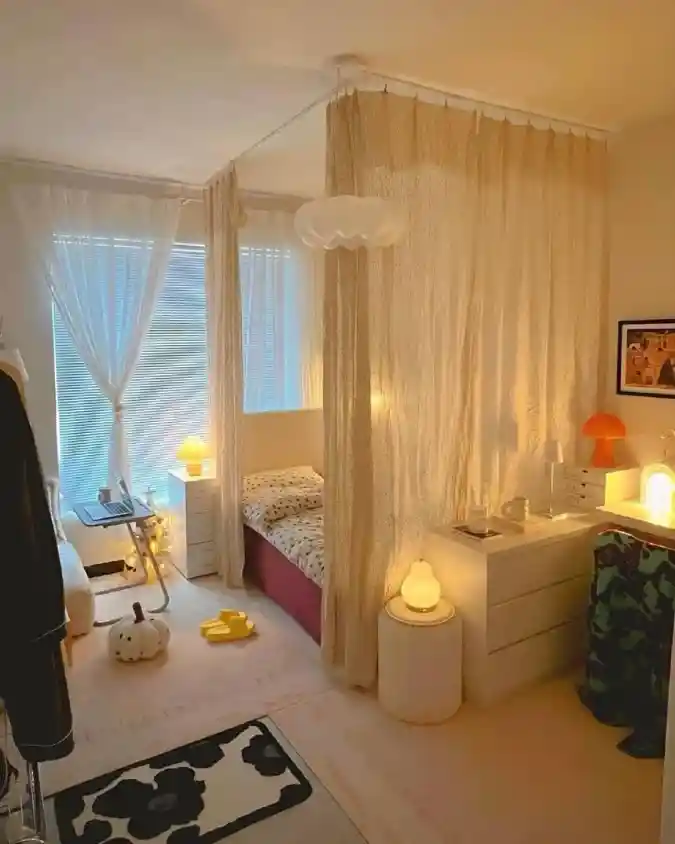
Utilizing sheer fabric partitions creates distinct zones without blocking crucial natural light or completely closing off the area.
In this compact studio example, a floor-to-ceiling curtain railing defines a private sleeping nook, effectively separating rest areas from necessary work spaces. This soft boundary manages to make the bed feel like an entirely separate bedroom rather than just another piece of furniture placed in an open layout.
Illuminated warmth is key to preventing a small sleeping area from feeling cramped, dark, or dingy during the evening hours.
Notice how the whimsical cloud pendant light and warm bedside lamps cast a gentle, inviting glow that makes the textile walls shimmer. Strategic lighting choices like this draw the eye toward cozy corners instead of focusing on the room’s overall tight dimensions.
Elsewhere, compact furniture choices ensure maximum utility without adding unnecessary bulk to the limited floor plan. A slim desk sits neatly by the window for daylight tasks, while a white dresser serves dual purposes for essential storage and surface display. Keeping furniture profiles low and colors light helps maintain an airy, uncluttered atmosphere essential for comfortable tiny living.
6. Multi-Level Loft Strategy
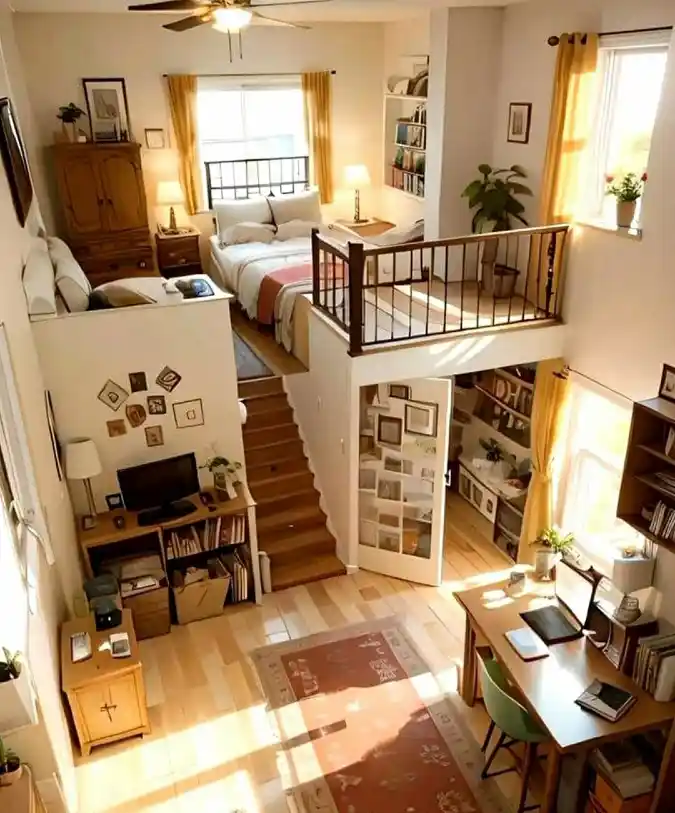
Capitalizing on available ceiling height is a game-changer when floor space is scarce. This clever design demonstrates how building upwards creates distinct functional zones without expanding the actual footprint.
By introducing split-level platforms, the layout successfully separates sleeping quarters from the active living areas underneath, making the entire apartment feel significantly larger than its measurements suggest.
Elevated above the ground floor, the primary sleeping area offers a private retreat accessible via a dedicated staircase.
Tucked neatly beneath a second, smaller lofted nook is a fully equipped workspace with a computer and storage. This smart layering technique ensures that every cubic foot serves a purpose, keeping the main floor area open and free of clutter.
Ample natural light streams through tall windows, illuminating the warm wooden textures used throughout the shelving, stairs, and furniture.
The inclusion of elements like the glass-paned door beneath the main loft maintains a visual connection between spaces. Such intelligent architectural planning proves that even a restricted footprint can provide a spacious and comfortable living experience.
7. Multi-Functional Platform Bed
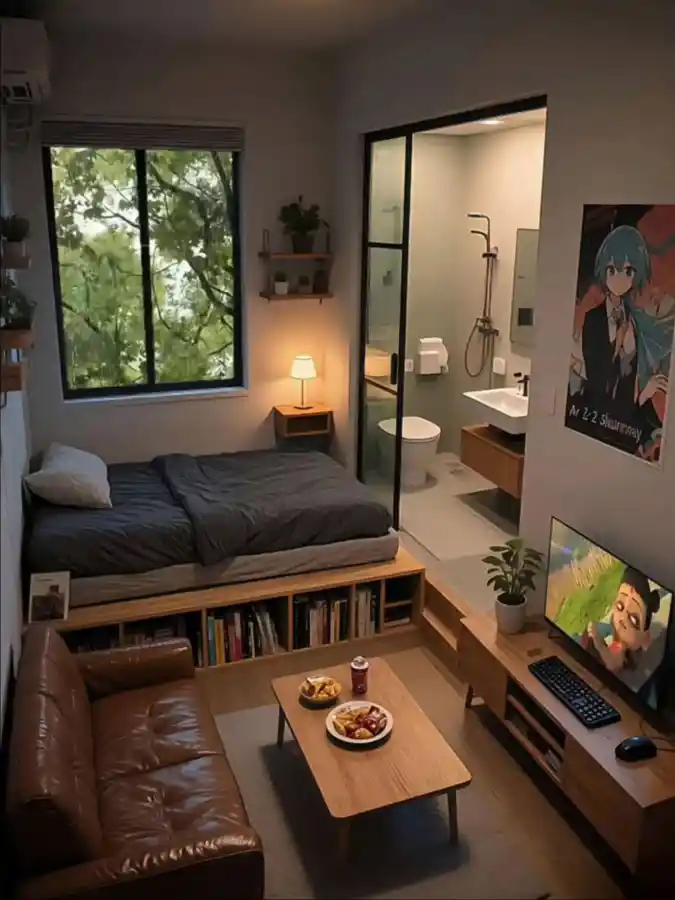
Ingenuity is essential when designing for tight quarters, and this space masterfully utilizes vertical height. Raising the sleeping area onto a substantial platform creates a cavernous storage opportunity directly underneath the mattress.
This smart elevation instantly transforms potential dead space into a functional library and organizational hub without occupying valuable floor area.
Transparency plays a significant role in maintaining an open feel throughout the studio. The glass-enclosed wet room provides all necessary amenities while allowing sightlines to extend to the back wall. Unlike traditional opaque partitions that stop the eye, these see-through barriers ensure the room feels expansive rather than boxed in.
Strategic zoning clearly defines the comfortable living area with a sofa and media console, separating daily activities from sleep.
Abundant natural light from the large window further enhances the airy atmosphere, proving that limited square footage is just a number. Implementing such tiny Japanese apartment ideas that make small spaces feel huge requires smart planning like this.
8. Elevated Wood Platform Zone
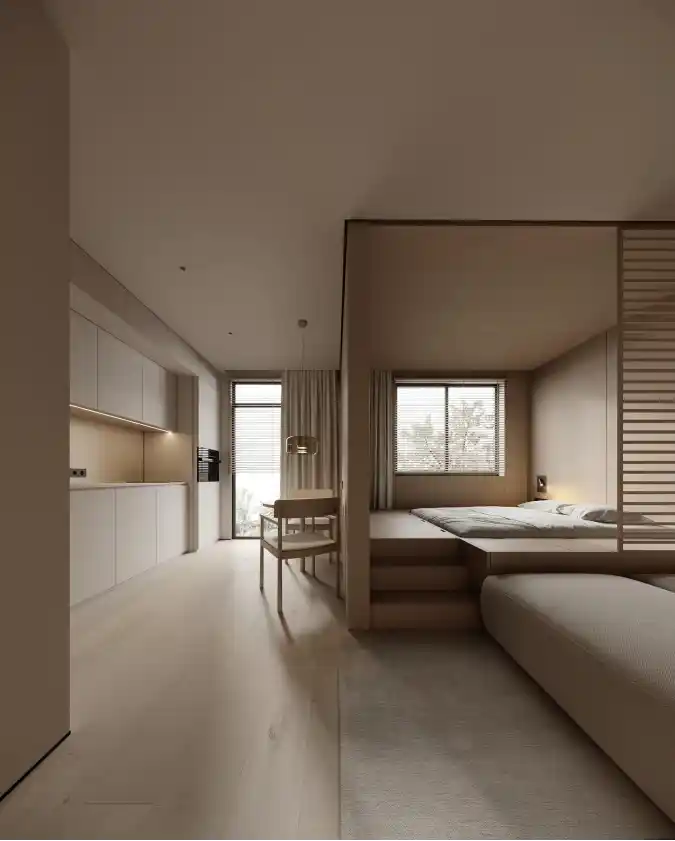
Rarely do we see studio layouts that balance separation and openness so well. This space masterfully employs a raised wooden plinth to define the sleeping quarters, a hallmark among clever tiny Japanese apartment ideas.
The elevation naturally distinguishes the bedroom from the living and kitchen areas without relying on bulky walls that shrink a room.
Ingeniously, a slatted timber screen offers necessary seclusion while permitting sunlight to filter through from the large window.
This visual divider keeps the sleeping nook feeling cozy yet integrated with the rest of the home. The consistent use of pale wood tones across the floor, cabinetry, and platform creates a seamless, expansive visual flow.
Functionality is key here, with built-in storage often hidden beneath such elevated structures to maximize every inch. By utilizing vertical space for sleeping, the main floor remains open for dining and daily tasks. This approach proves that strategic zoning is crucial for making compact living feel luxurious rather than limited.
9. Zoning with Contrasting Colors and Open Shelving
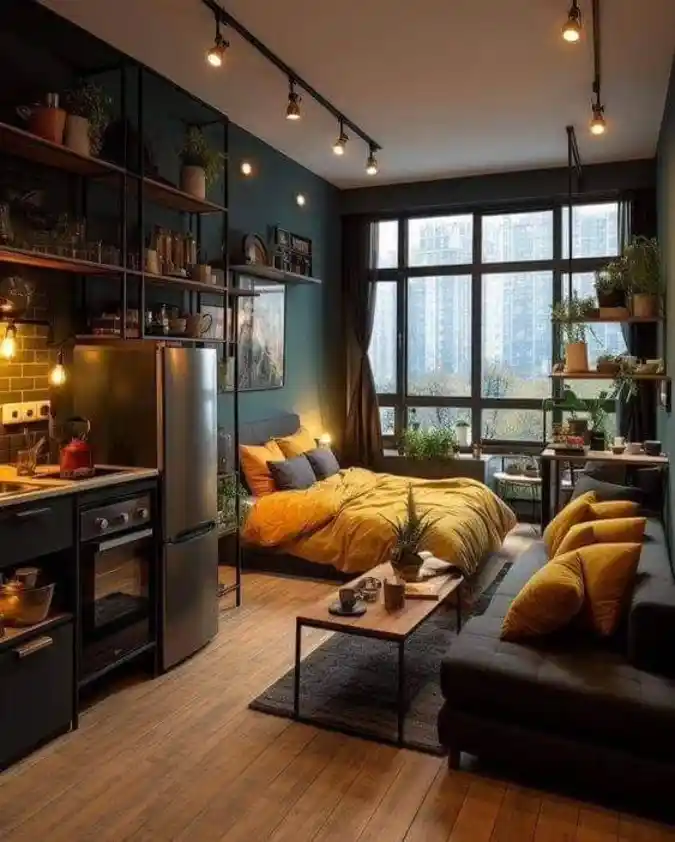
Contrarily to common assumptions, deep, moody wall colors often help small spaces expand visually rather than shrink them.
This compact studio utilizes a rich dark teal to push the boundary lines backward, creating significant depth in a tight footprint. Instead of feeling enclosed, the room feels enveloped and surprisingly vast because the corners are blurred.
Ingeniously, an open-frame industrial shelving unit functions as a necessary zone separator without blocking essential natural light from the large window. It clearly defines the practical kitchen area from the restful bedroom zone while maintaining a crucial sense of flow. A solid partition used here would instantly destroy the open illusion and cramp the style.
Vibrant splashes of mustard yellow on the bedding and sofa act as deliberate focal points to draw the eye across the entire length of the apartment.
This smart technique distracts the viewer from tight dimensions and highlights the distinct functions of each living zone. The combination proves that effective tiny spaces often rely on clever visual tricks.
10. Zoning with Vertical Slat Partitions

Paramount when tackling restricted floor plans like the one pictured here. The layout brilliantly demonstrates how physical barriers can define specific functions without shrinking the room’s perceived volume.
A striking architectural feature in this space is the floor-to-ceiling wooden slat partition, which effectively separates the sleeping quarters in the foreground from the communal living zone situated behind it.
Transparency is maintained through the deliberate gaps in the timber, allowing essential light to filter all the way to the back entryway. This visual connection is a cornerstone of tiny Japanese apartment ideas that aim to make tight quarters feel expansive.
By letting the eye travel further through the divider, the design tricks the brain into perceiving significantly more depth than actually exists in the narrow footprint.
Furthermore, streamlined furniture choices complement the airy divider to maximize flow. A long, built-in bench provides ample seating along the right wall without the visual bulk found in traditional sofas.
Opposite this seating area, a minimalist kitchenette utilizes sleek, light wood cabinetry to keep visual noise to an absolute minimum.
11. Utilize Floor-to-Ceiling Vertical Storage

Maximizing vertical real estate is crucial in tight quarters like this crowded Tokyo apartment. Towering shelves utilize wall space right up to the ceiling, storing books, speakers, and media equipment that would otherwise consume valuable floor area.
By moving storage upwards, the inhabitants keep the pathways clear for movement. This technique successfully draws the eye upward, making the modest ceiling height feel significantly loftier.
Observe how distinct functional zones coexist within the single open plan without relying on bulky dividers.
The sleeping nook nestles against the window, defined only by the bed itself, while the adjacent living area features a sofa and a multi-use coffee table. Furniture placement dictates the flow, allowing the central table to serve as both a dining spot and a dual-laptop workspace.
Harnessing natural light from the large window is essential for preventing a claustrophobic atmosphere in such a dense space.
Sunlight floods the bedding and filters into the seating area, brightening the various textures and personal items lining the shelves. Despite the sheer volume of belongings, that bright connection to the outdoors keeps the small room feeling livable and airy.
12. Vertical Loft Solution
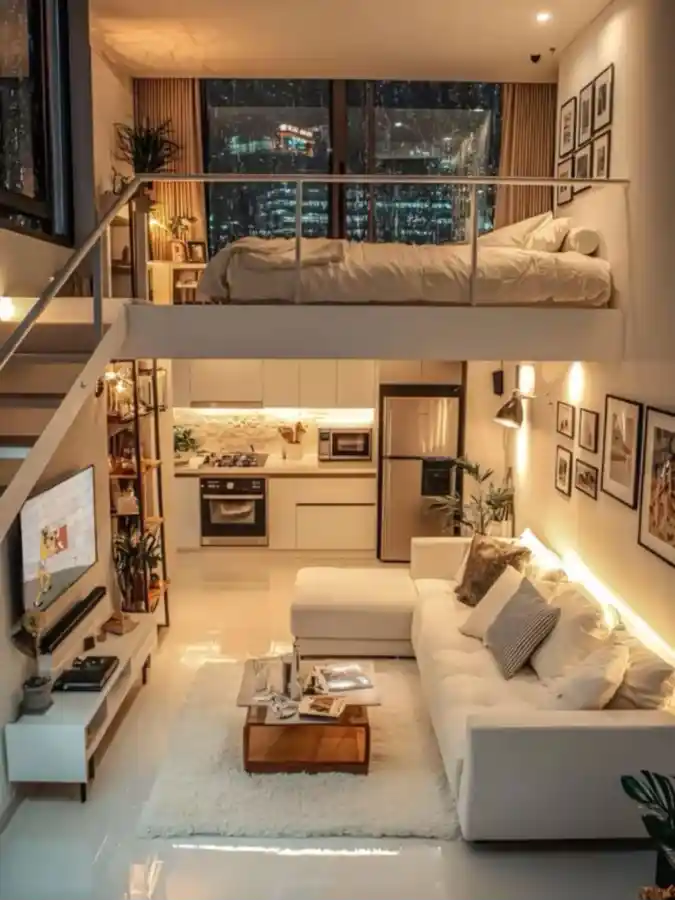
Harnessing available ceiling height is a brilliant strategy when floor space is scarce. This design elevates the sleeping quarters entirely off the ground level, creating a distinct separation between rest and activity. By lifting the bed, the layout effectively doubles the usable living area without expanding the actual footprint.
Beneath the raised bedroom structure, a fully functional kitchen and a comfortable lounge area coexist harmoniously. This arrangement allows for dedicated zones specifically for cooking, relaxing, and entertainment. Such clear separation of functions is often missing in typical studios but is crucial for feeling settled.
Incorporating a mezzanine level like this is among the most transformative tiny Japanese apartment ideas for maximizing volume. The high ceilings required for a loft naturally make the entire room feel airier and less confined. Consequently, the apartment feels significantly larger than its actual measurements would suggest.
13. Multi-Functional Wooden Loft System
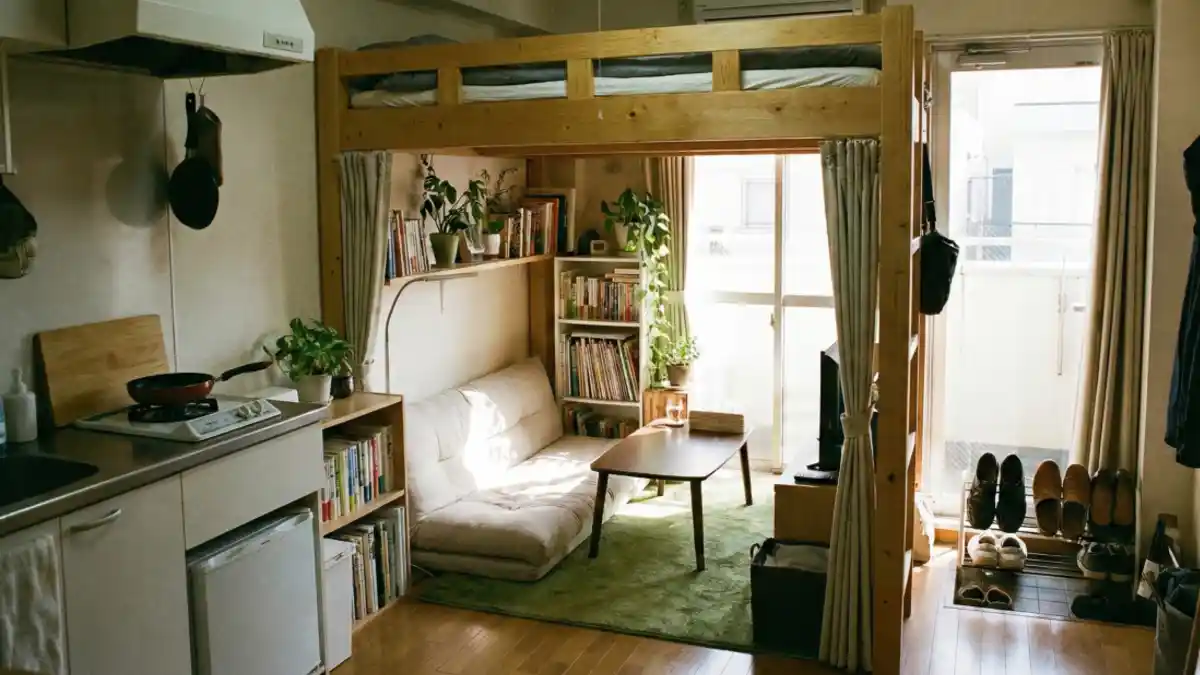
Capitalizing on vertical real estate is crucial when dealing with limited square footage. This striking wooden loft bed serves as one of the most effective tiny Japanese apartment ideas that make small spaces feel huge by doubling the usable floor area.
Raising the sleeping zone high above the ground frees up the entire lower level for daily living essentials without the room feeling cramped or overstuffed.
Beneath the sturdy timber structure lies a fully functional and surprisingly cozy lounge area. A low sofa rests comfortably on a green rug, surrounded by integrated shelving packed with books and vibrant plants.
Curtains attached to the loft frame allow residents to close off this lower “room” completely, creating an instant sense of privacy for relaxation or study.
Natural light streams in from the adjacent balcony door, keeping the area feeling airy rather than boxed in.
The nearby compact kitchen shows just how tight space is, yet the clever loft design prevents the apartment from feeling cluttered. This setup demonstrates that smart design choices always trump raw square footage in tiny homes.
14. Lofted Sleeping and Vertical Storage

Elevating the sleeping quarters is a game-changer in this tiny Japanese apartment. A comfortable loft bed, reached by a sleek ladder, is perched directly above the functional kitchenette.
By moving the bed upwards, the design frees up the entire ground floor for daily activities, creating a distinct separation between rest and living areas without needing extra rooms.
Maximizing verticality isn’t just for sleeping; it’s also for storage. The kitchen features open shelving for easy access to dishes, while a massive floor-to-ceiling bookshelf holds a vast collection of books and decor.
This clever use of height keeps the floor clear of clutter, which is essential for maintaining a sense of spaciousness in such a compact home.
Ample daylight from a large window illuminates the wooden floors and light-colored walls, enhancing the airy atmosphere. A traditional shoji screen door leads to the bathroom, adding a cultural element that is both practical and beautiful.
The minimalist furniture, like the low table and floor cushions, ensures the room never feels overcrowded, proving that smart design can make a small space feel huge.
15. Multifunctional Appartment
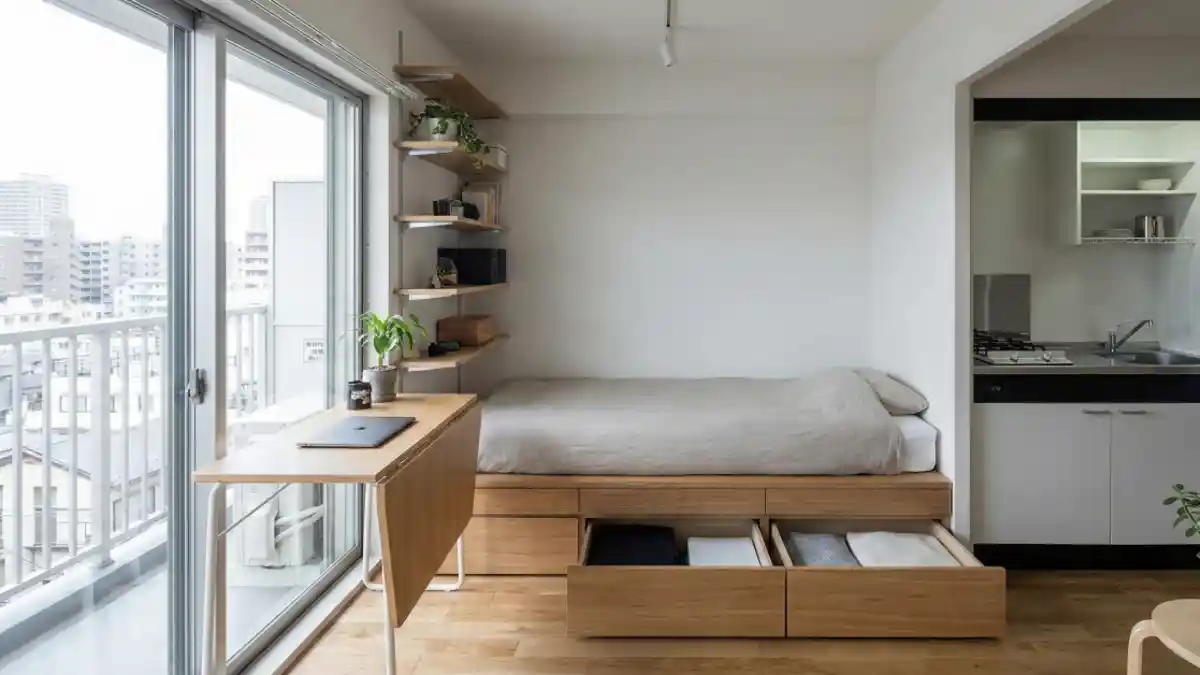
Elevated significantly above the standard floor level, this sleeping nook offers far more than just a place to rest.
Deep, accessible wooden drawers slide smoothly from beneath the mattress, swallowing bulky items like winter duvets and seasonal clothing with surprising ease. Such clever utilization of often-wasted vertical space is a true hallmark of ingenious tiny Japanese apartment ideas that prioritize functionality above all else.
Positioned adjacent to this multi-purpose sleeping platform, a slender timber desk sits against large balcony doors to capitalize on the daytime view.
Natural light floods the entire interior through the expansive glass, making the compact square footage feel significantly more open and less confining to the occupant.
Sequestered neatly away into a recessed alcove, the minimalist white kitchen maintains clean architectural lines and keeps visual noise to an absolute minimum in the main room. By integrating smart furniture that serves double duty, like this expansive storage bed, the dwelling successfully keeps the main floor area clear and highly livable.
16. Elevated Storage Bed Platform
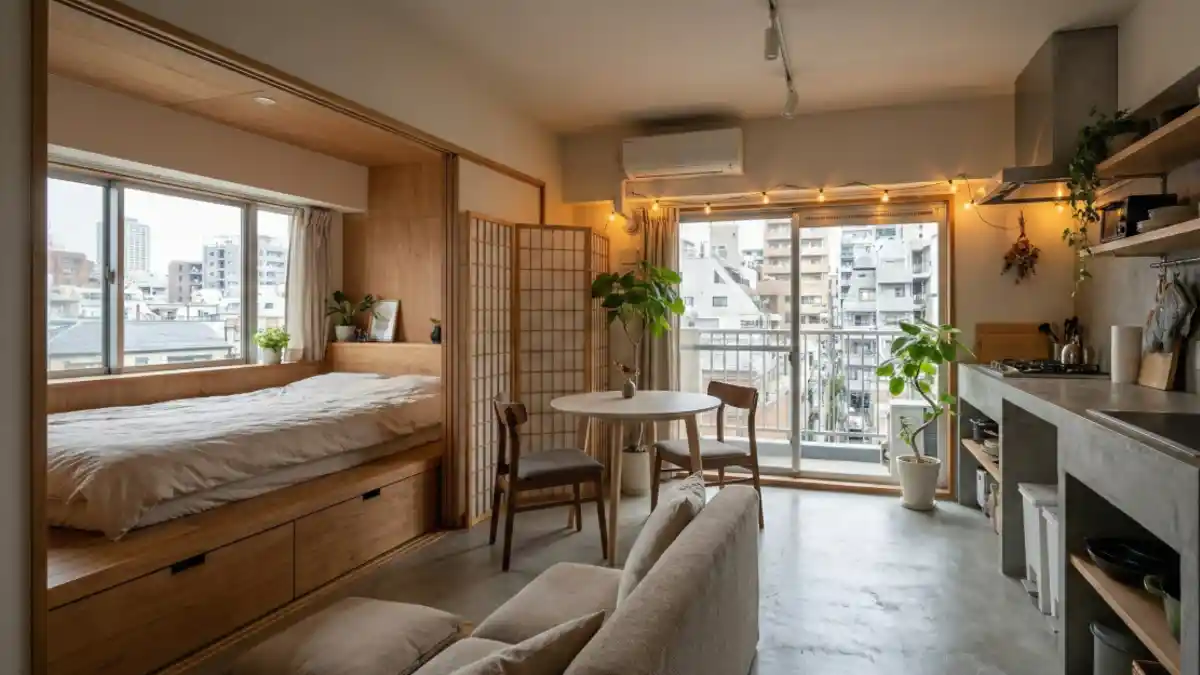
Space utilizes vertical height to create distinct living zones within an otherwise open floor plan. The custom wooden sleeping alcove rests atop massive, deep drawers, offering essential storage for clothing or bedding without sacrificing precious square footage.
It is one of those brilliant tiny Japanese apartment ideas that fundamentally changes how a small room functions by hiding significant clutter in plain sight.
Adjacent to this cozy sleeping area, a raw concrete kitchen counter provides a cool industrial contrast to the warm, abundant wood tones found elsewhere in the unit. Open wooden shelving mounted above the sink keeps everyday cooking items accessible but visually light, maintaining necessary flow in the narrow area.
A petite, round dining table sits purposefully near the large balcony doors, maximizing exposure to natural light during meals and making the room feel airier.
Furthermore, soft string lights draped near the ceiling and strategically placed potted plants add a cozy, human layer to the otherwise minimalist design framework.
The use of a traditional shoji-style sliding screen provides a flexible, elegant way to add privacy to the bedroom nook only when desired. This entire setup demonstrates how thoughtful, integrated architecture trumps sheer size every single time in urban environments.
17. Cohesive Natural Wood Zoning

Employing a consistent palette of warm, light wood is a hallmark of successful tiny Japanese apartment ideas, as clearly seen in this cohesive living space. The uniform material across floors, cabinetry, and furniture blurs the hard lines between different zones, creating an immediate illusion of vastness.
Instead of relying on solid walls, open slatted screens define the desk and sleeping areas while allowing necessary natural light to penetrate every corner.
Strategically elevating the sleeping quarters on a wooden platform serves as another smart tactic demonstrated here for defining space.
This subtle architectural shift separates the bedroom from the general living area without closing it off completely or making it feel cramped. A minimalist grey sofa and a simple wooden coffee table anchor the lounge space, resting on a textured rug to add significant warmth and comfort.
Concealed storage solutions are integrated seamlessly into the massive wooden structures, keeping surfaces entirely clear of daily clutter to reduce visual noise.
The compact kitchenette unit is tucked neatly beside the large central wooden volume, maintaining the room’s clean, uninterrupted lines. This approach effectively proves that limited square footage absolutely does not mean sacrificing style or essential functionality in your home.