
Coming home should bring peace, not chaos. Stepping inside only to trip over scattered sneakers ruins moods instantly.
Clutter piles up fast in tight spots, creating unnecessary anxiety before relaxation even begins. Embarrassment often strikes when friends visit unexpectedly. Guests need space for belongings, yet hooks remain scarce in narrow halls.
Why let limited square footage limit creativity? Dark hallways feel uninviting, but small changes brighten atmosphere significantly. Cramped does not mean ugly. Smart design solves spatial issues easily.
Mirrors add depth while clever storage hides mess. Every inch counts here. Make an impact immediately. Transform that forgotten corner into a stylish sanctuary. Explore 16 distinct ways to maximize charm without sacrificing function.
Turn Chaos Into Calm: Mastering Small Entryways
Messy foyers kill relaxation instantly. Shoes scatter across floors while coats pile on chairs, making tight quarters feel suffocating. Small spaces demand clever solutions rather than neglect.
Turning a cramped hall into a welcoming haven requires strategy, turning every square inch into an asset.
Turn Chaos Into Calm
Maximize vertical wall areas using slim hooks.
Reflect light to expand depth with placed mirrors.
Conceal daily clutter inside multi-functional benches.
Anchor distinct zones via bold, durable rugs.
1. Textured Terracotta & Lantern Glow Entryway
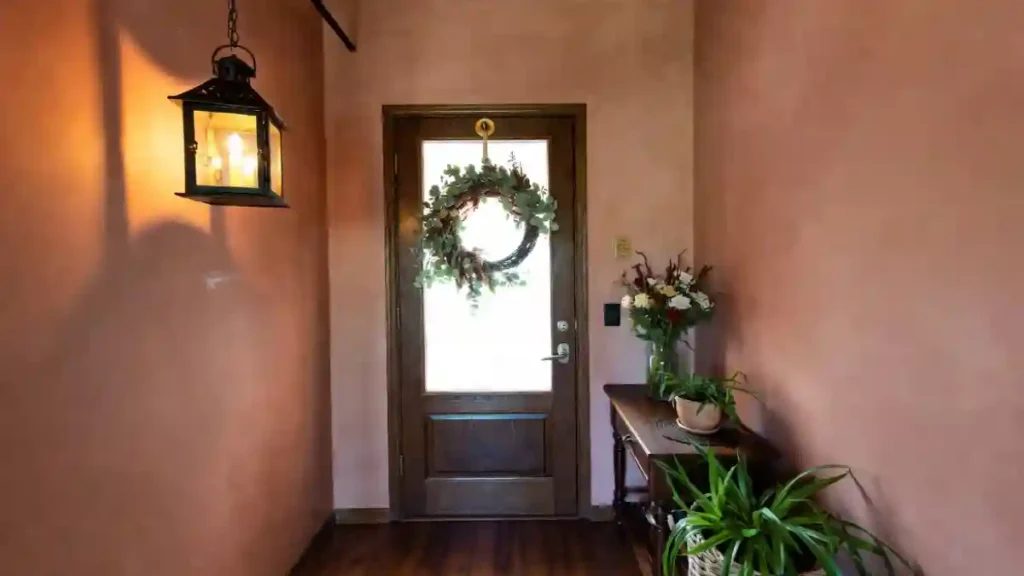
Embracing a rich, textured wall treatment instantly elevates a tight corridor from a forgotten passageway to a stunning design destination. Warm clay tones reflect the soft light from that charming hanging lantern, creating an ambiance that feels intentional and cozy rather than just cramped.
Pairing a slim wooden console with vibrant greenery adds life without sacrificing precious walkway width, while a simple wreath on the door acts as the perfect finishing touch.
Making a big impact relies heavily on playing with vertical space and utilizing rich, mood-setting colors to blur the boundaries of the room.
- Vertical Lighting: Suspending a lantern or pendant light draws the eye upward, making the ceiling feel higher while keeping floor and table surfaces clutter-free.
- Textured Walls: Using techniques like limewash or Venetian plaster in warm, earthy hues adds depth and dimension that flat paint simply cannot achieve in small areas.
- Slim Profile Furniture: Choosing a narrow console table ensures you have a drop zone for keys and mail without obstructing the flow of traffic in tight entryways.
- Natural Elements: Incorporating a door wreath and potted plants softens the architectural lines and bridges the gap between the outdoors and your interior.
2. Enchanted Archway & Fairy Lights Foyer
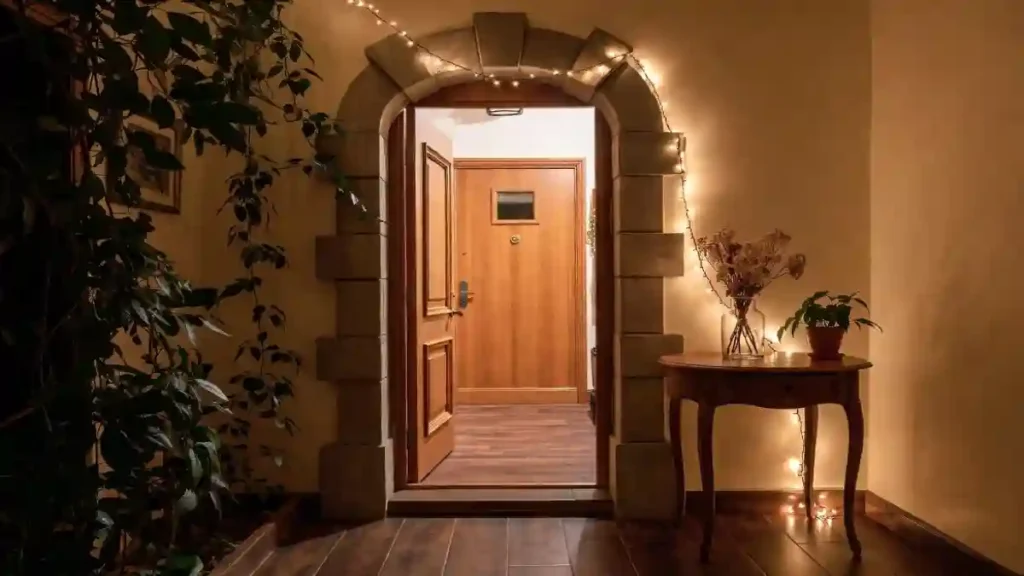
Framing a doorway with rough-hewn stone and twinkling fairy lights creates a magical threshold that instantly separates the chaotic outside world from the peaceful interior.
Using such dramatic texture alongside soft, whimsical lighting turns a standard door frame into a focal point, drawing guests in with warmth rather than bright, clinical overhead bulbs.
A strategically placed, curved console table tucks neatly against the wall, offering a spot for decor without encroaching on the walking path, proving that limited square footage doesn’t have to mean limited style.
- Whimsical Lighting: Draping simple string lights accentuates architectural curves and provides a low-cost, high-impact alternative to installing new, hardwired sconces.
- Architectural Framing: Adding stone veneer or decorative arch trim gives the illusion of a historic, solid structure and adds immediate character to a plain builder-grade entry.
- Space-Saving Curves: Opting for a demilune (half-moon) table eliminates sharp corners, making the passage feel wider and more fluid for anyone walking through.
- Vertical Greenery: Allowing tall plants to climb or frame the entryway introduces organic movement and freshness that breathes life into small, enclosed spaces.
3. Rustic Stone & Warm Bistro Lights Entry
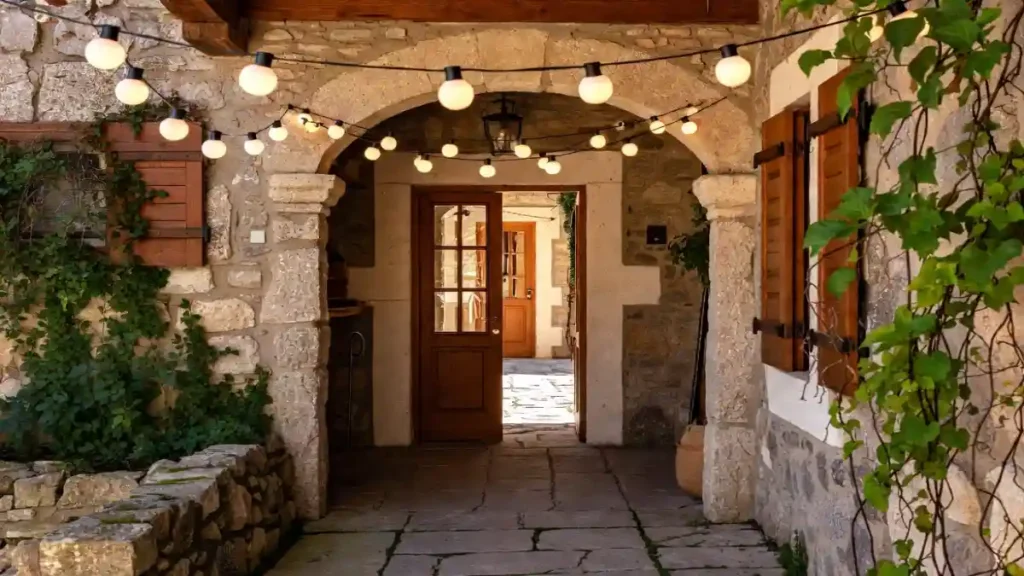
Transforming a compact entryway into a memorable experience often involves embracing textures that feel permanent and substantial. Utilizing rough-hewn stone for walls and framing an archway immediately imparts a sense of history and character, making even a small vestibule feel like a significant architectural feature rather than an afterthought.
Draping large-bulb bistro lights across the ceiling creates a warm, inviting canopy that draws the eye upward, adding vertical interest and a cozy glow that clinical overhead fixtures lack.
Softening these hard surfaces with climbing ivy or other greenery blurs the lines between indoors and out, adding an organic touch that makes the space feel fresh and welcoming.
- Bistro Lighting: Stringing larger bulbs across the ceiling or along a wall provides soft, ambient light that feels more intentional and atmospheric than a single overhead fixture.
- Textured Walls: Using materials like stone veneer, exposed brick, or even a heavy plaster finish adds depth and interest without requiring additional floor space for decor.
- Glass-Paneled Doors: Opting for a front door with glass inserts allows natural light to flow between the entryway and the adjacent room or outdoors, making the area feel less confined.
- Climbing Plants: Encouraging ivy or a similar vine to grow around an archway or door frame introduces a living element that softens architectural lines and adds a vibrant pop of color.
4. Illuminating Small Spaces with Rustic Charm
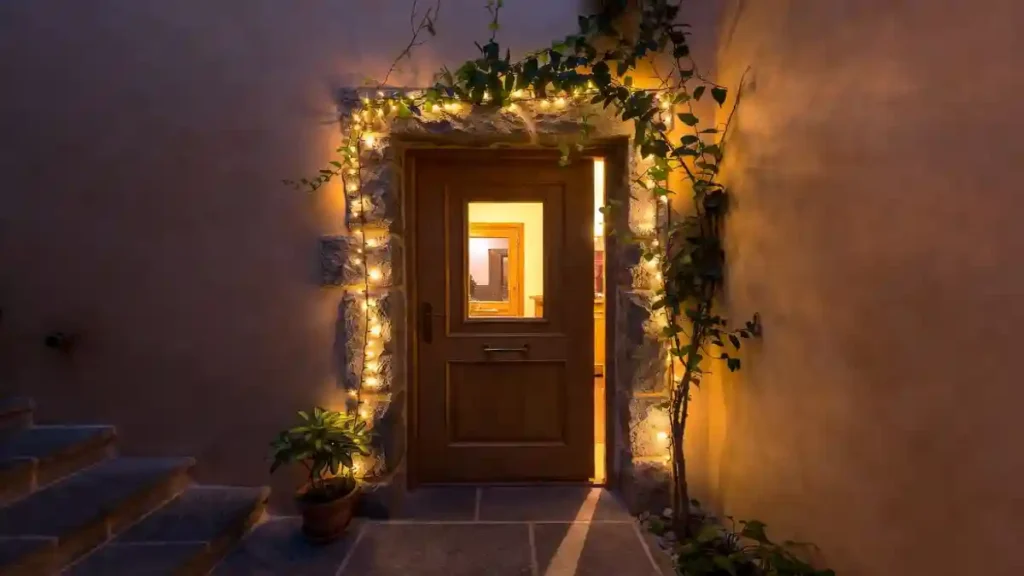
String lights draped over rough stone create an instant focal point without needing valuable floor space, a crucial strategy for tight exteriors.
Vertical gardening with climbing ivy draws the eye upward, making a compact entrance feel taller and significantly more inviting.
Warm amber glows serve as a beacon, proving that limited square footage never has to mean limited atmosphere when texture and light combine so effortlessly.
- Whimsical Vertical Lighting: Woven fairy lights offer a practical solution for night visibility while adding a soft, magical touch that bulky fixtures often lack in tight corners.
- Natural Architectural Framing: Rugged stone borders act as a built-in frame, adding architectural weight and historical depth that defines the entry zone clearly.
- Living Wall Decor: Climbing foliage utilizes vertical real estate effectively, softening hard masonry edges and bringing organic vibrancy right to the doorstep.
5. Bohemian Gallery & Greenery Entryway
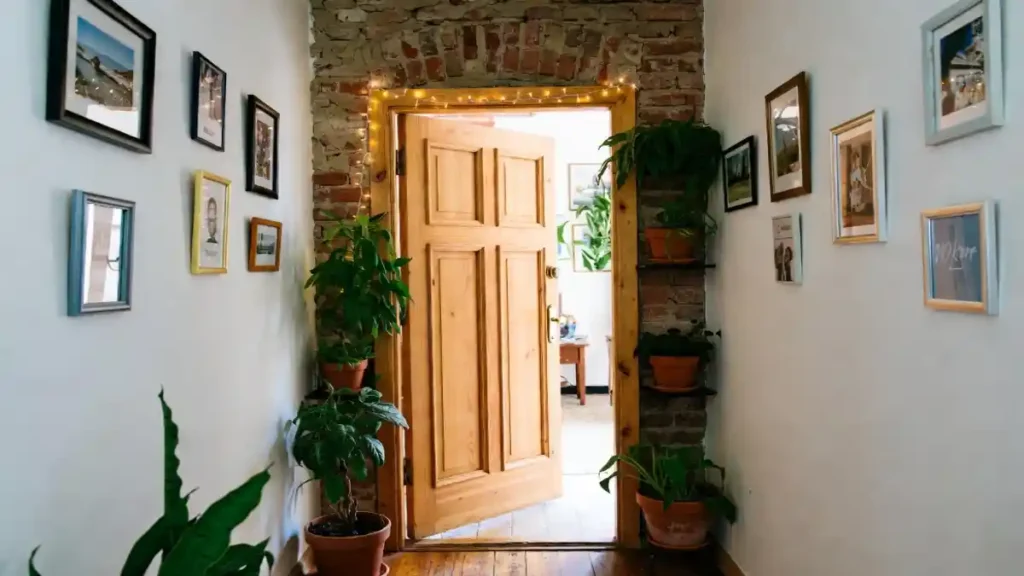
A narrow hallway delivers a memorable statement through a curated gallery of framed art and photos that immediately catches the eye.
Warm string lights add a soft, inviting glow above the light wood door, while exposed brick offers a touch of rustic charm.
Potted plants of various sizes bring life and a sense of the outdoors inside, clever shelving utilizes vertical space to keep the floor clear.
- Personalized Gallery Wall: Utilizing vertical wall space with a collection of framed art and photos creates a striking focal point.
- Warm Lighting and Texture: String lights and exposed brick add warmth and character, making the small space feel cozy and inviting.
- Vertical Greenery: Potted plants on shelves and the floor introduce natural elements without sacrificing valuable floor space.
6. Creating Depth with Dark Tones
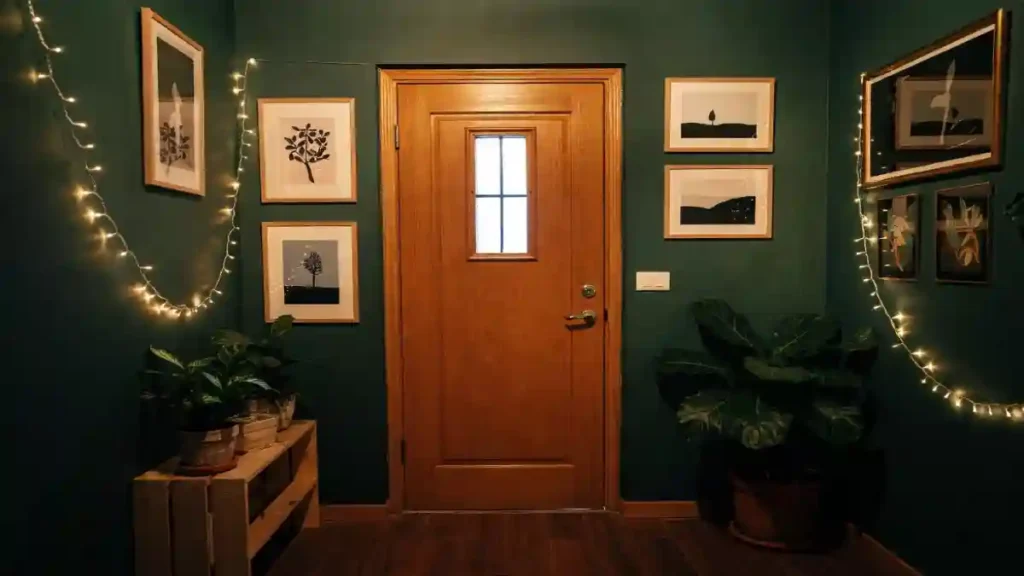
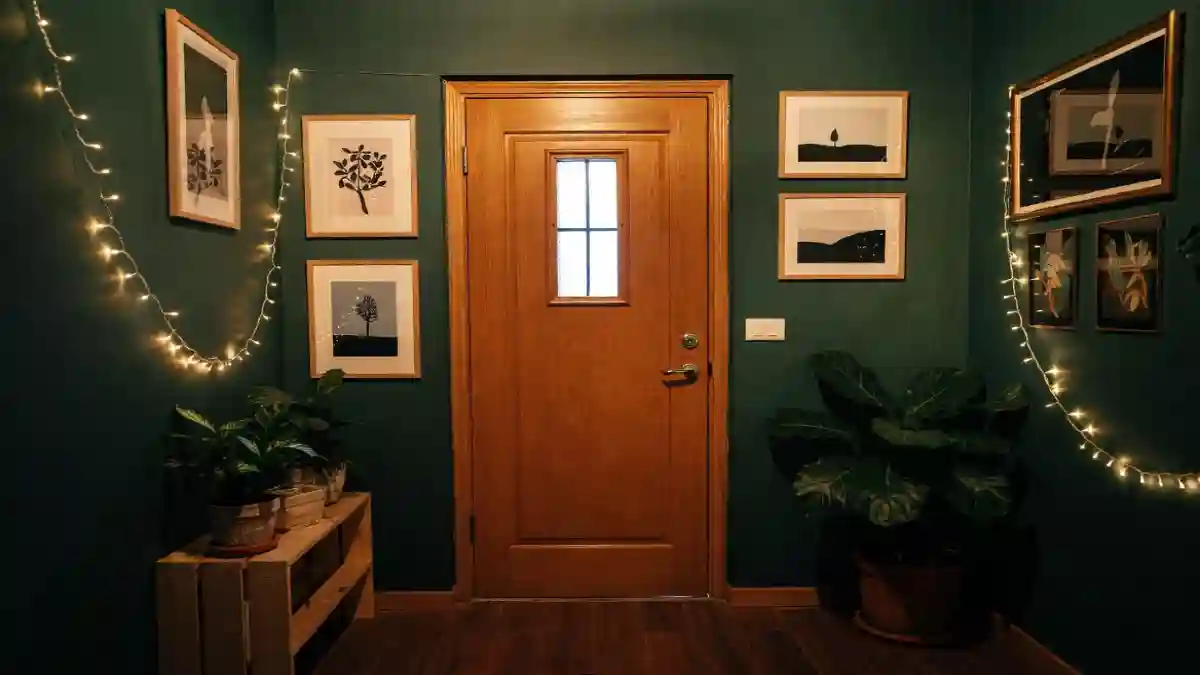
Going bold with deep green walls transforms a standard vestibule into a sophisticated, enveloping “hug” that feels intentional rather than cramped.
Scalloped string lights draped loosely across the walls act as effortless, renter-friendly art, providing a soft glow that replaces harsh overhead fixtures.
Honey-toned wood elements, from the sturdy door to the simple crate storage, pop against the dark backdrop to keep the vibe grounded and warm.
- Optical Depth: Dark paint colors often make walls appear to recede, creating an illusion of expanded space in tight quarters.
- Whimsical Wiring: Draping lights in waves adds movement and softness to rigid walls, doubling as illuminated decor.
- Earthy Anchors: Natural wood textures and leafy plants prevent the dramatic color scheme from feeling too sterile or cold.
7. Warm Amber and Botanical Entryway

Walking into a home should feel like a warm embrace, and this setup nails that sentiment perfectly through golden hues and soft illumination.Framing a doorway with delicate string lights draws the eye upward, instantly making a compact area feel magical rather than cramped.
A carefully arranged gallery wall utilizes vertical real estate to inject personality, proving you don’t need a grand foyer to make a statement.
Lush greenery placed at varying heights breathes organic life into the corners, softening the edges of the room while connecting the interior to the natural world outside.
- Vertical Storytelling: Utilizing height becomes essential in tight quarters; hanging a collection of framed art floor-to-ceiling maximizes visual interest without stealing precious floor space.
- Illuminated Architecture: Draping fairy lights around the door molding adds a layer of whimsy and defines the threshold, offering a softer alternative to harsh overhead fixtures.
- Organic Textures: Integrating leafy plants brings a burst of freshness and color that breaks up neutral walls, making the transition from outdoors to indoors feel seamless and vibrant.
8. Sun-Drenched Traditional Entryway
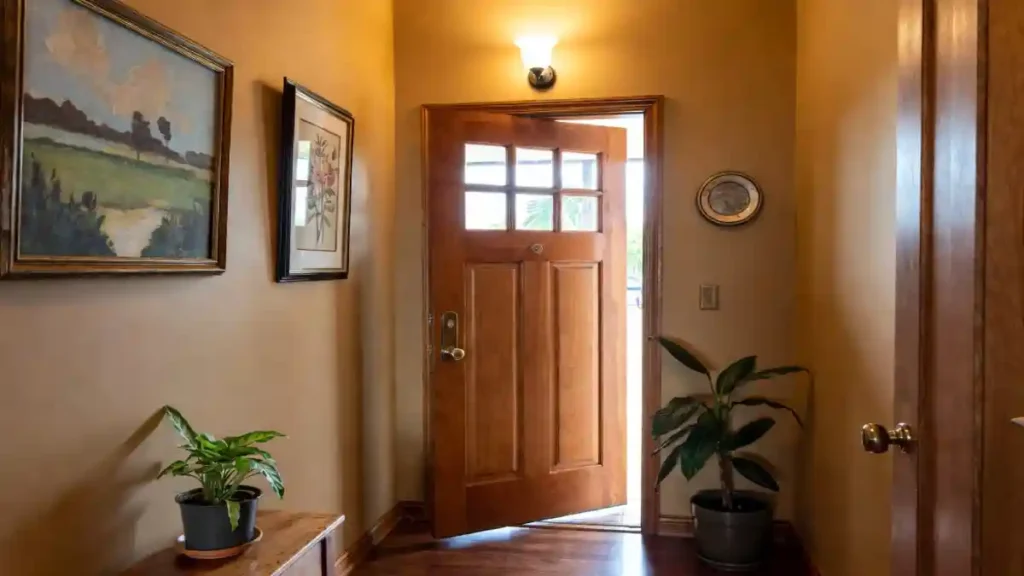
Golden hues dominate this space, instantly creating a cheerful greeting for anyone walking through the door.
Keeping furniture minimal allows the rich wood tones and wall color to take center stage without overwhelming the limited square footage.
A solitary sconce positioned above the entrance acts as a beacon of warmth, while carefully curated landscape art adds depth to the plain walls.
- Strategic Lighting: Positioning a light fixture directly above the door frame maximizes vertical space and casts a welcoming glow over the entry, eliminating the need for bulky floor lamps.
- Nature-Inspired Art: Displaying framed landscapes or botanical prints introduces a sense of the outdoors, expanding the visual boundaries of the room by suggesting distant horizons.
- Grounding Greenery: Anchoring the corner with a potted plant adds a pop of vibrant color that contrasts beautifully with warm wall tones, softening the hard lines of the architecture.
9. Classic Honey-Toned Foyer
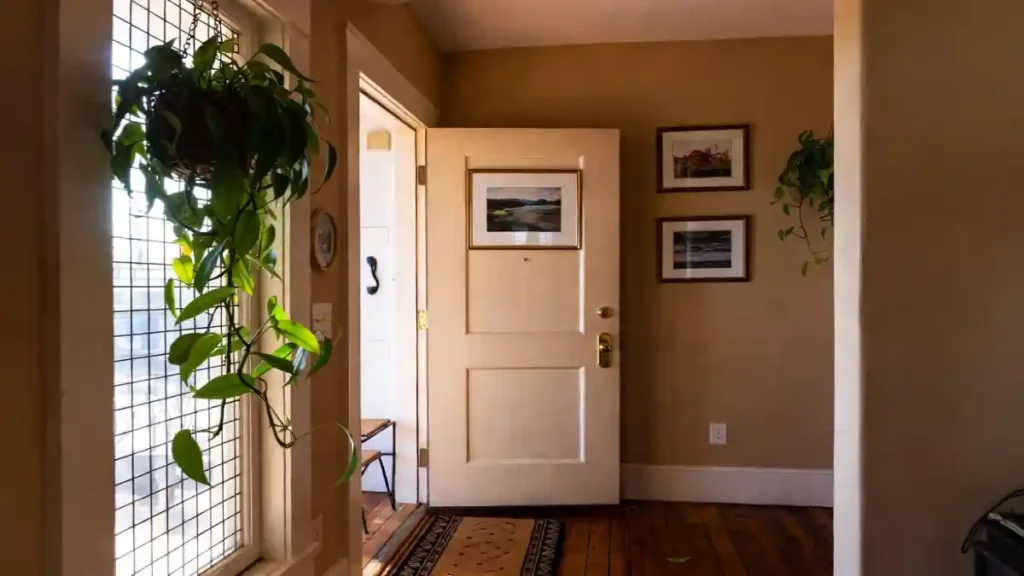
Entering this space feels like a gentle hug thanks to the cohesive blend of golden wall tones and rich hardwood floors.
Choosing classic landscape art brings a sense of expansive nature indoors, effectively pushing back the walls of a smaller area.
Placing a single sconce high above the doorway illuminates the entry without taking up valuable floor or table space, while a sturdy floor plant anchors the corner with organic texture.
- Elevated Lighting: Installing a fixture above the door frame highlights the architectural height and clears up room at eye level.
- Artistic Depth: Framing scenic paintings adds a “window” effect, tricking the eye into seeing more depth than really exists.
- Corner Greenery: Using a large potted plant fills awkward voids and softens the sharp angles of the room corners.
10. Golden Oak and Botanical Bliss Entryway

Stepping into a foyer like this feels instantly inviting, largely due to the rich honey tones of the wood trim and the soft glow diffusing through the geometric stained glass.
Vertical space gets maximized here by stacking vintage-inspired botanical prints on either side of the door, a clever trick that draws the eye upward and expands the perceived height of the room.
Incorporating a mix of textures, from the woven basket planter to the intricate metal scrollwork above the frame, adds depth without overwhelming the limited square footage.
Placing a tall, leafy plant in one corner and a trailing vine in the other creates a lush, organic frame that softens the architectural lines. Truly, a little intentional balance transforms a simple pass-through into a memorable destination.
- Vertical Art Stacking: Utilizing narrow wall segments for double-hung artwork capitalizes on vertical real estate while maintaining symmetry.
- Organic Textures: Woven baskets and rattan light fixtures introduce warmth and casual elegance that contrasts beautifully with smooth walls.
- Architectural Accents: Decorative metal scrollwork draws attention to the doorframe, acting as jewelry for the room without taking up floor space.
- Greenery Placement: Corner plants soften sharp corners and breathe life into neutral palettes, bridging the gap between indoors and outdoors.
11. Dusty Rose and Heirloom Wood Foyer

Painting walls in a soft, earthy clay tone instantly warms up a compact entrance, bridging the gap between historic charm and modern comfort. Heavy wood moldings and a solid craftsman door feel less imposing when softened by these pink-undertone hues, creating a cozy transition from the outdoors.
Utilizing a petite, round antique table tucked into a nook maximizes utility without blocking the path, offering a perfect pedestal for lush greenery.
Placing artwork on adjacent walls rather than centering everything creates a dynamic visual flow that distracts from the room’s small footprint.
Ultimately, treating a small foyer like a miniature living room sets a tone of intentional hospitality.
- Curated Vintage Vignettes: Grouping smaller, framed oil paintings or prints creates a sophisticated gallery feel that respects the scale of the wall.
- Corner-Friendly Furniture: Opting for a round accent table eliminates sharp edges that can cause hip-bumping in narrow pass-throughs.
- Layered Plant Heights: Staggering greenery by placing one pot on a table and a larger specimen on the floor adds vertical interest and fills dead space.
- Warm Ambient Tones: Selecting paint colors that complement rather than contrast with original woodwork makes the architectural details sing without dominating the space.
12. A Cozy, Plant-Filled Greeting
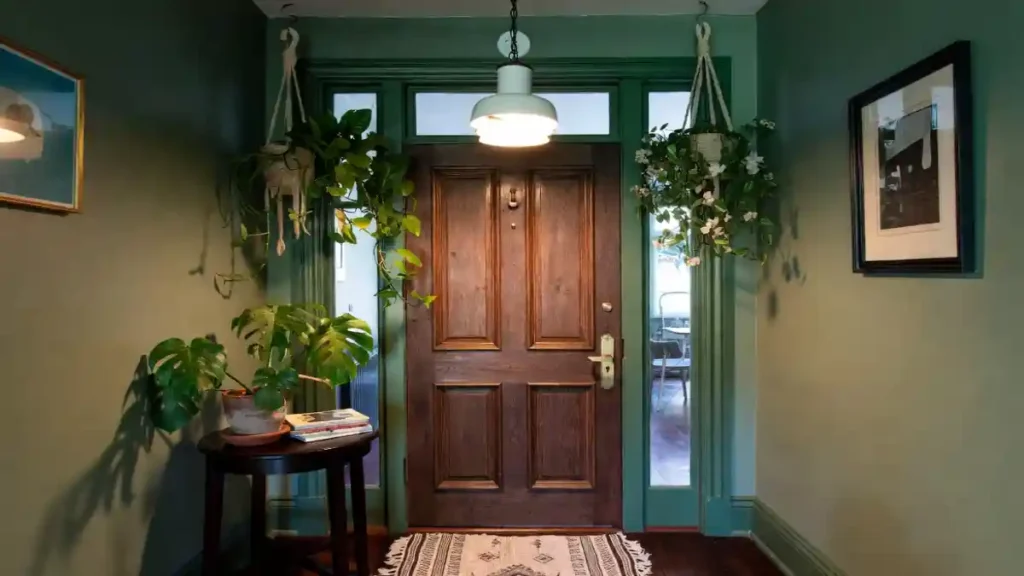
Drenching a compact foyer in a deep, saturated shade like this forest green instantly creates an enveloping sense of intimacy, turning a simple pass-through into a destination. Rather than shrinking the space, the dark hue blurs the corners and makes the rich wood tones of the door and trim pop with warmth.
Utilizing vertical space is key here, with trailing plants suspended in macrame hangers drawing the eye upward and adding life without sacrificing precious floor real estate.
A small, round side table tucked into the corner provides just enough surface for a potted plant and a stack of books, offering a curated vignette that feels intentional, not cluttered.
Grounding the look with a patterned runner rug adds texture and defines the entry zone, ensuring this small area makes a memorable, stylish statement.
- Vertical Gardening: Hanging plants frees up floor space while adding lush greenery and drawing the eye upwards.
- Bold Color Choice: Deep, moody wall colors can create a cozy, sophisticated atmosphere in small spaces, rather than making them feel smaller.
- Defined Entry Zone: A patterned runner rug anchors the space, clearly delineating the entryway from the rest of the home.
- Scaled Furniture: A petite, round table fits perfectly in a corner, providing a functional surface without obstructing the flow of traffic.
13. Golden Glow Curtain Foyer
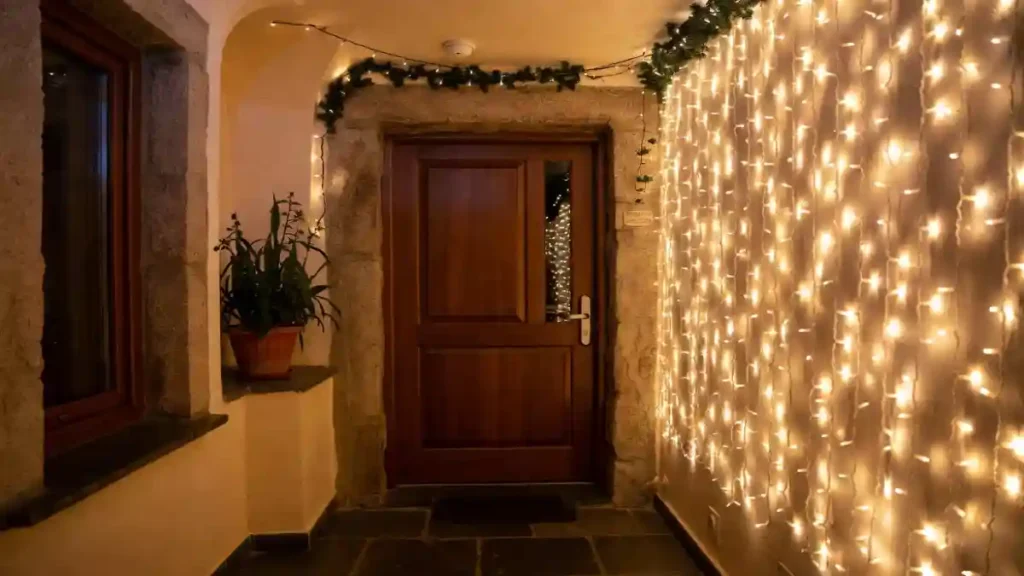
Stepping through the front door becomes an enchanting experience when you replace traditional overhead bulbs with a floor-to-ceiling curtain of fairy lights. Thousands of tiny, warm LEDs create a dazzling focal point that draws the eye upward, effectively making the ceiling feel higher while washing the rough stone masonry in a soft, flattering glow.
Minimalist decor works best here; a solitary green plant on the ledge offers just enough organic texture to ground the ethereal vibe without cluttering the path.
Such a bold lighting choice transforms a cramped vestibule into a cozy, radiant tunnel that guests won’t soon forget.
- Vertical visual expansion: Hanging lights from the very top of the wall draws attention vertically, counteracting the feeling of a low ceiling or narrow width in tight corridors.
- Texture interplay: Smooth glass on the bulbs contrasts beautifully with the rugged, uneven surface of the stone archway and the sleek slate flooring, adding depth to the design.
- Space-saving ambiance: Unlike bulky console tables or floor lamps, curtain lights provide immense atmosphere and brightness with absolutely zero physical footprint.
14. Craftsman Olive Warmth Entryway

Warmth radiates immediately from the deep olive walls and rich wood trim, proving that small spaces do not need to be stark white to feel open and welcoming.
Placing a tall, slender floor lamp in the corner acts as a brilliant hack, casting upward light that softens shadows while freeing up valuable surface area on the petite semi-circular console table.
Rich textures in the Persian-style rug anchor the floor, guiding guests inward with a splash of pattern that complements the solid wood grain rather than fighting it.
Utilizing vertical lighting instead of bulky table lamps keeps the visual flow uninterrupted and airier.
- Corner illumination strategy: Utilizing a floor lamp tucks lighting away from the traffic path while creating a golden wash against the wall, making the corner feel active rather than dead space.
- Scale-appropriate furniture: Opting for a demi-lune (half-moon) table ensures no sharp corners protrude into the walkway, preventing hip-bumping accidents in tight quarters.
- Cohesive earth tones: Matching the wood stain of the door frame to the furniture and pairing it with muted green paint creates a unified, monochromatic envelope that reduces visual clutter.
15. Bohemian Sunlit Entryway
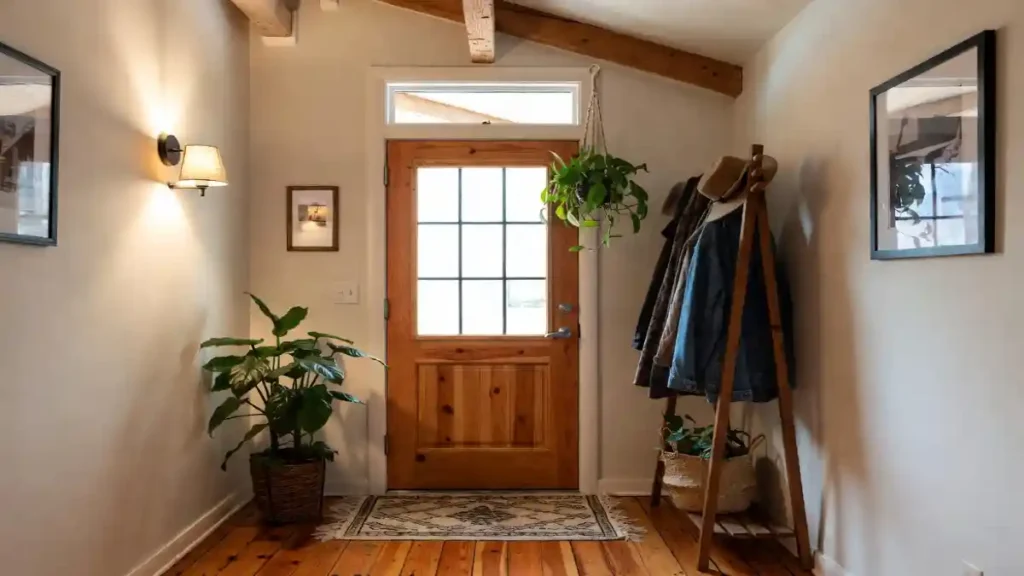
Bright and airy, this entryway leverages white walls and a large glass-paneled door to flood the compact space with natural light, making it feel instantly larger. Instead of a bulky closet, a slender wooden coat rack provides open storage for jackets and hats, keeping everyday items accessible yet tidy.
Lush greenery, including a large floor plant and a hanging pothos, brings vibrant life into the area, drawing the eye upward and emphasizing the height of the slanted ceiling with its exposed beams.
Warm wood tones in the flooring, door, and furniture ground the look, creating a welcoming, organic aesthetic that feels effortless.
- Vertical advantage: Utilizing a freestanding coat rack and a hanging plant makes the most of wall height and ceiling space, leaving the floor relatively clear.
- Light amplification: White walls act as a reflector for the sunlight streaming through the glass door, brightening every corner.
- Organic textures: Woven baskets, wooden elements, and live plants introduce warmth and character without clutter.
16. Wrapping Your Entrance in Earthy Warmth
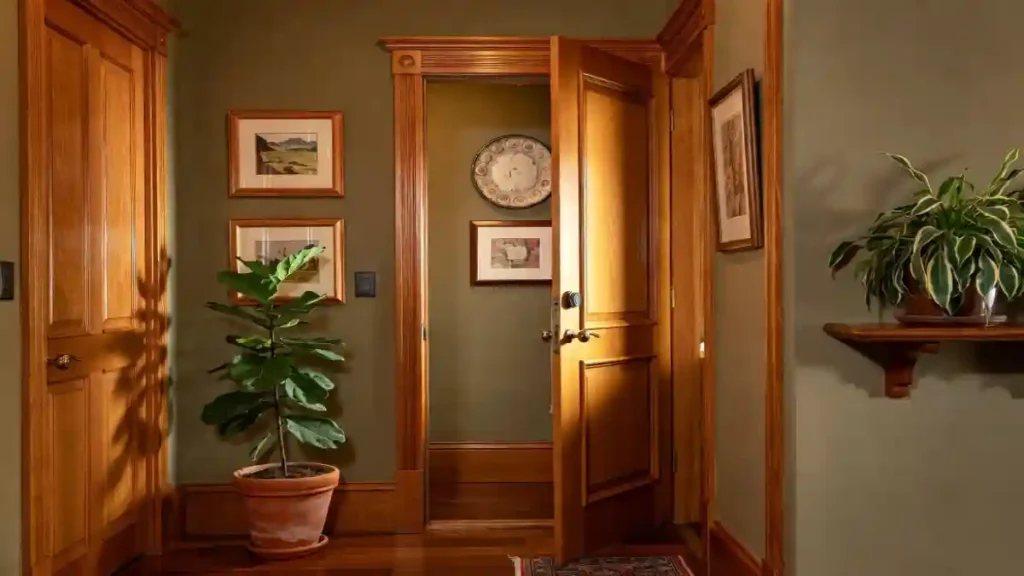
Embracing deep, saturated colors in a compact foyer might seem counterintuitive, but these olive green walls prove that moody hues actually push boundaries outward rather than closing them in. Rich, honey-stained millwork and solid wood doors slice through the green, adding architectural interest that acts as natural decor, significantly reducing the need for floor clutter.
Verticality plays a massive role in making the limited square footage work harder; stacking vintage-inspired artwork and placing trailing plants on high shelves intentionally draws the eye up toward the ceiling, creating an illusion of height.
Every inch serves a purpose here, from the large fiddle leaf fig anchoring the corner to the glimpse of decor in the adjacent room, resulting in a seamless flow that feels curated yet wonderfully lived-in.
- Vertical Art Stacking: Placing matching frames one above the other utilizes narrow wall segments without overcrowding the space.
- High-Contrast Trim: Natural wood tones frame the paint color, adding structure and warmth that white trim often lacks.
- Greenery for Depth: A floor plant combined with a high-shelf plant creates layers of texture that make the room feel dynamic.