
The relentless pursuit of a pristine, showroom-ready home is deeply exhausting. We polish surfaces until they lose their soul and hide every trace of daily life, often leaving our spaces feeling cold and detached. True sanctuary resides in the opposite approach.
Wabi-sabi, the ancient Japanese philosophy, finds profound beauty in imperfection, asymmetry, and the gentle mark of time. It validates the chipped ceramic mug, the weathered wood table, and the frayed linen throw as essential storytellers rather than flaws to be fixed.
This aesthetic rejects the pressure of curated perfection in favor of raw authenticity. Embracing the worn and the humble allows a home to finally exhale. These design principles will guide you toward a living space that prioritizes peace over polish, creating an environment that is not just seen, but deeply felt.
1. Sun-Drenched Organic Living Room
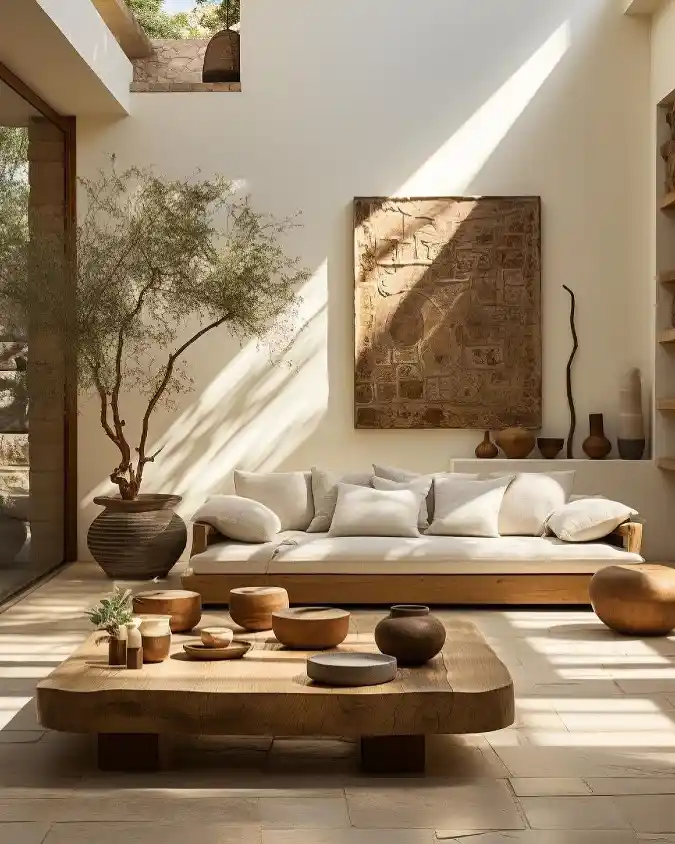
Seldom do interiors capture the essence of the wabi-sabi aesthetic as effortlessly as this calm, sunlit space. Raw, heavily textured timber forms the foundation of the room, visible in the low-slung sofa base and the substantial, blocky coffee table.
These materials are allowed to display their natural grain and inherent flaws without excessive polish.
Ample daylight slices across the warm, cream-colored walls, highlighting the subtle imperfections in the plaster and the tactile quality of the large abstract artwork. These shifting patterns of light and shade act as a dynamic element of the decor, changing constantly throughout the day. The atmosphere feels genuine and relaxed rather than pristine.
Furthermore, a large, graceful olive tree brings a vital organic presence indoors, connecting the inhabitants with the natural world. Handmade earthenware vessels are clustered on shelves and the table surface, offering irregular, organic shapes that invite a thoughtful touch. This is a room designed for quiet appreciation of simple things.
2. Embrace Raw and Imperfect Natural Materials
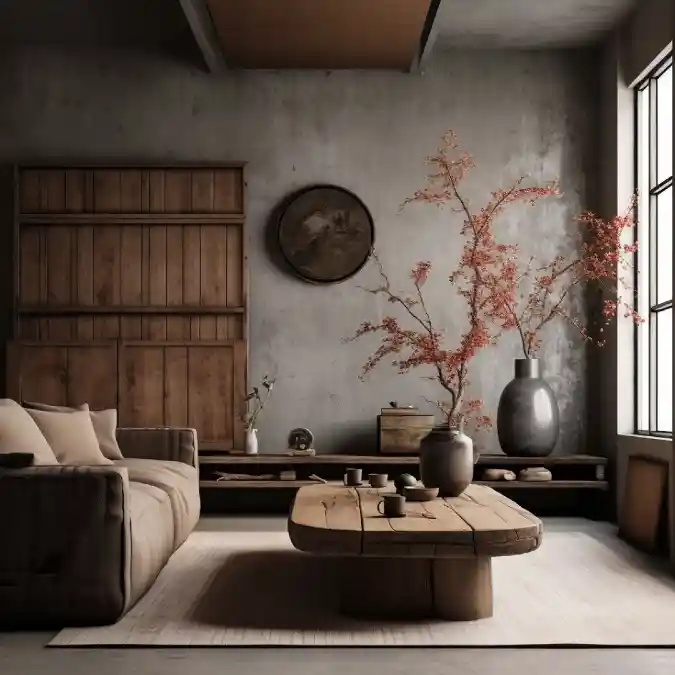
Seldom do we find spaces that so effortlessly blend industrial elements with organic warmth. This living room is a prime example of a wabi-sabi aesthetic idea, where raw concrete walls provide a textured backdrop for natural materials.
A large, sculptural wooden coffee table takes center stage, showcasing its rough, unfinished edges and unique grain.
Tattered and dried botanicals in a dark ceramic vase add a touch of autumnal color and a sense of fleeting beauty. The large wooden cabinet in the background looks aged, suggesting a history of use rather than pristine newness. Soft, crumpled linen on the sofa invites relaxation and emphasizes comfort over formality.
Copious natural light streams through the large window, highlighting the rich textures of the wood and the matte finish of the walls. The entire composition feels balanced and serene, proving that imperfections can create a truly inviting home. This approach celebrates the authentic and the simple.
3. Embracing Organic Imperfection in Bedroom Design
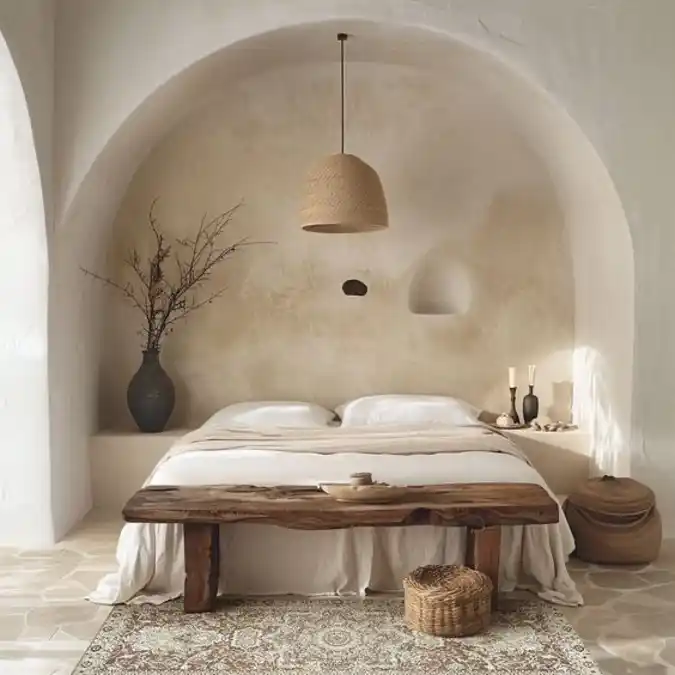
Lime-washed surfaces with visible trowel marks define this tranquil sleeping alcove. A sweeping architectural archway cradles the bed, creating a protective sanctuary that feels inherently calm.
This peaceful setting beautifully exemplifies the wabi-sabi aesthetic by celebrating the authentic beauty found in rough, unfinished textures instead of seeking flawlessness.
Unrefined materials ground the airy space with substantial visual weight. A raw, live-edge wooden bench sits imposingly at the foot of the bed, showcasing its natural grain, cracks, and wear proudly.
Overhead, a large woven rattan pendant light adds soft texture and casts a warm, inviting glow over the rumpled neutral linen bedding.
Botanical elements introduce necessary organic shapes to the minimalist room. Tall, dried branches arranged loosely in a dark, earthenware vase create a striking silhouette against the pale, curved wall.
Small, irregularly shaped niches carved directly into the plaster offer humble spots for decor, reinforcing the lived-in simplicity central to this design ethos.
4. Imperfectly Calm Sleeping Space
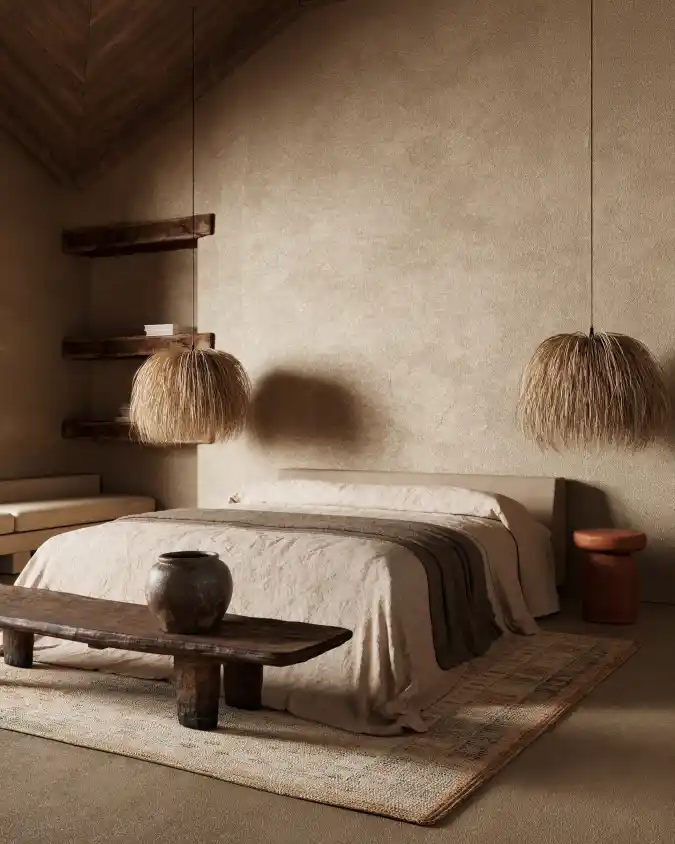
Texture plays the lead role in this bedroom, where smooth surfaces are entirely absent in favor of tactile richness. The walls wear a heavy coat of textured lime plaster, showing brushstrokes and natural flaws that catch the light.
Overhead, massive wooden beams define the sloping ceiling, their surfaces left rough and unfinished to highlight their age.
Suspended above the sleeping area, two oversized pendant lamps made from shaggy natural fibers dominate the vertical space.
Their untamed appearance contrasts beautifully with the soft, rumpled linen duvet and throw blanket on the low platform bed. Every textile here invites touch and refuses to look overly tidy or manufactured.
Anchoring the bottom of the frame is a heavy, rustic timber bench that supports a solitary, dark ceramic pot. A woven jute rug covers the concrete floor, adding another layer of organic warmth to the neutral palette. This space proves that embracing aged materials creates a truly restful atmosphere.
5. Raw Textures and Natural Materials
Interiors capture peace quite like this bedroom scene. The heavily textured plaster walls offer an immediate sense of grounding and deep history. This space clearly illustrates core Wabi-Sabi Aesthetic Ideas by celebrating surfaces that feel genuinely organic rather than manufactured.
Dominating the foreground is a rough-hewn wooden bench holding an aged earthenware pot. Overhead, two large, shaggy straw pendant lights draw the eye upward toward the dark rustic ceiling beams. These heavy pieces introduce necessary roughness to balance the soft, inviting linen bedding.
Beneath the heavy knit throw, rumpled linen sheets invite deep rest and relaxation. The entire muted color palette, consisting of browns, beiges, and warm terracottas, creates a truly soothing sanctuary. It is a masterful example of finding beauty in simple, natural imperfection.
6. Imperfect Textures and Natural Materials
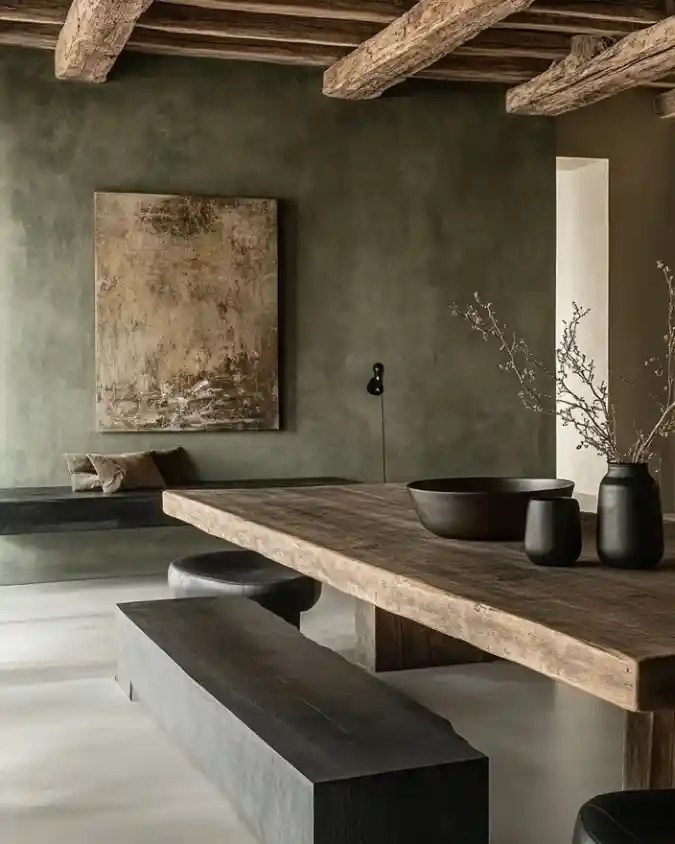
Find a space that speaks to the soul like this dining area. The massive, rough-hewn wooden table is the heart of this room, showcasing the true wabi-sabi aesthetic with its natural cracks and aged patina. Simple dark benches provide seating without distraction, grounding the look with their solid form.
Elsewhere, the textured olive-green walls create a calm and grounding backdrop for the large abstract artwork.
The uneven surface of the lime plaster adds depth, proving that beauty lies in the unfinished and raw. A minimalist black floor lamp offers a modern touch that doesn’t overpower the rustic feel.
Atop the table, dark, imperfect ceramic bowls and vases hold simple dried branches, bringing nature indoors.
These small, curated details reinforce the philosophy of appreciating humble and aged objects. This entire scene is a testament to creating a home that feels lived-in, authentic, and effortlessly beautiful.
7. Organic Curves and Textured Plaster
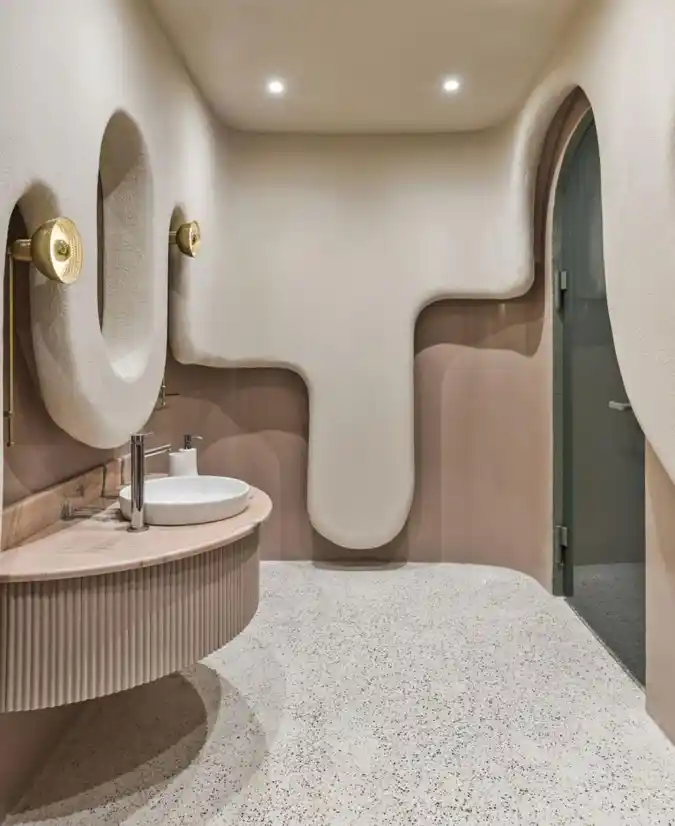
Conventional bathrooms embrace walls that refuse to remain flat. These vertical surfaces ripple with a thick, handcrafted plaster finish that deeply invites touch. The organic, flowing shapes replace standard sharp corners, making the entire space feel grown rather than merely built.
Earthy hues of muted dusty rose and creamy beige dominate the soothing palette, creating an immediate sense of calm. Underfoot, a classic speckled terrazzo floor grounds the design with natural aggregate patterns and texture.
Aged brass fixtures add a necessary warm, metallic gleam against the prevailing matte surroundings.
Observe how the fluted stone vanity reflects the room’s soft geometry with its gentle, rounded edge. This specific approach champions structural irregularity as a genuine form of beauty. The final result is a private sanctuary that feels effortlessly serene and authentically lived-in.
8. Incorporate Structural Softness and Raw Beams
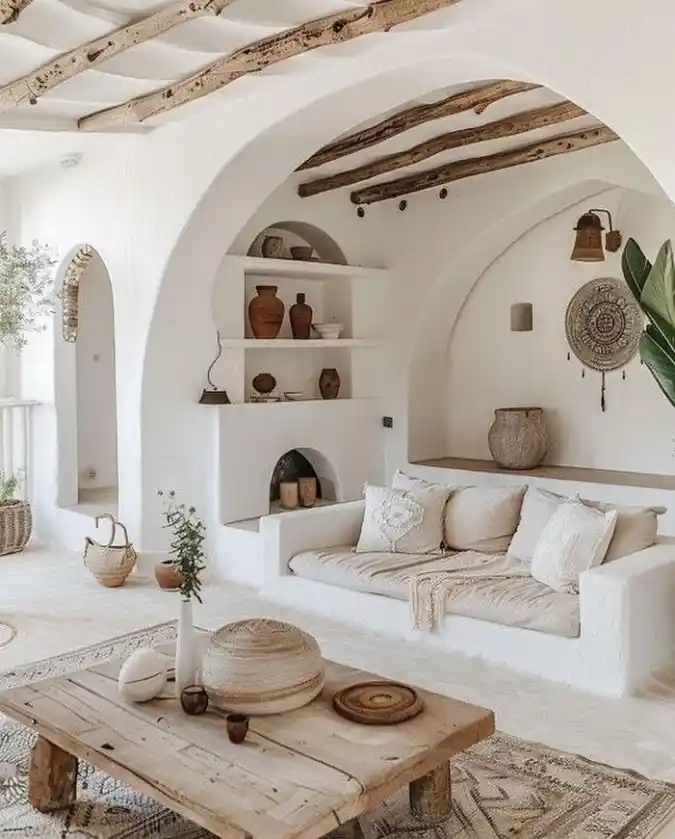
Modern interiors embrace such organic, flowing structural shapes. Sweeping white stucco arches define this living zone, creating soft and inviting transitions between spaces instead of rigid, sharp corners.
High overhead, rough-hewn timber beams provide essential rustic warmth, clearly showing their natural grain and weathered history against the smooth, bright plaster.
Integrated furniture blends seamlessly into the foundational architecture here, blurring the line between building and decor. A substantial built-in masonry sofa sits ready for relaxation, topped with piles of inviting textile cushions in varied muted earth tones.
Natural light streams freely into the space from unseen windows, highlighting the tactile, uneven quality of the handcrafted wall surfaces.
Humble, aged materials serve as the primary decorative elements throughout the room. A low, deeply weathered wooden coffee table anchors the main seating area atop a patterned jute rug, surrounded by simple earthenware pottery and organic woven wall art.
The overall atmosphere feels authentically calm and wonderfully lived-in rather than staged.
9. Embrace Imperfect, Organic Forms
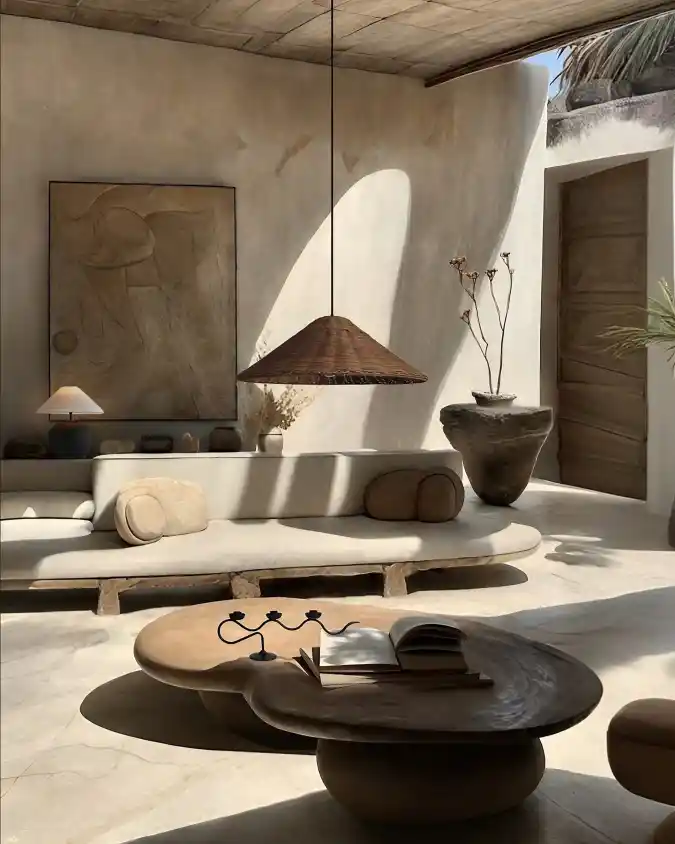
Room feel so connected to the earth through its very shape and texture. Curved, plaster-finished walls in warm beige tones replace sharp corners, creating a soft, enveloping environment that catches the light beautifully.
Strong sunlight streams in from an opening, casting dramatic, elongated shadows that highlight the rough, imperfect surfaces of the concrete floor and built-in seating.
Dominating the center is a large, irregularly shaped coffee table crafted from dark, natural wood, showing its grain and unique contours.
A long, low concrete sofa built directly into the wall is softened with rounded, earth-toned cushions. Above, a large, conical rattan pendant lamp hangs, adding a woven, natural element to the space.
Aesthetic appeal comes from humble, raw decor choices that celebrate natural flaws. A large, textured abstract artwork in muted browns leans against the back wall, complemented by aged stone vessels and simple dried botanical arrangements.
The entire space feels quiet, grounded, and effortlessly beautiful in its simplicity and embrace of the unfinished.
10. Structural Softness and Raw Beams
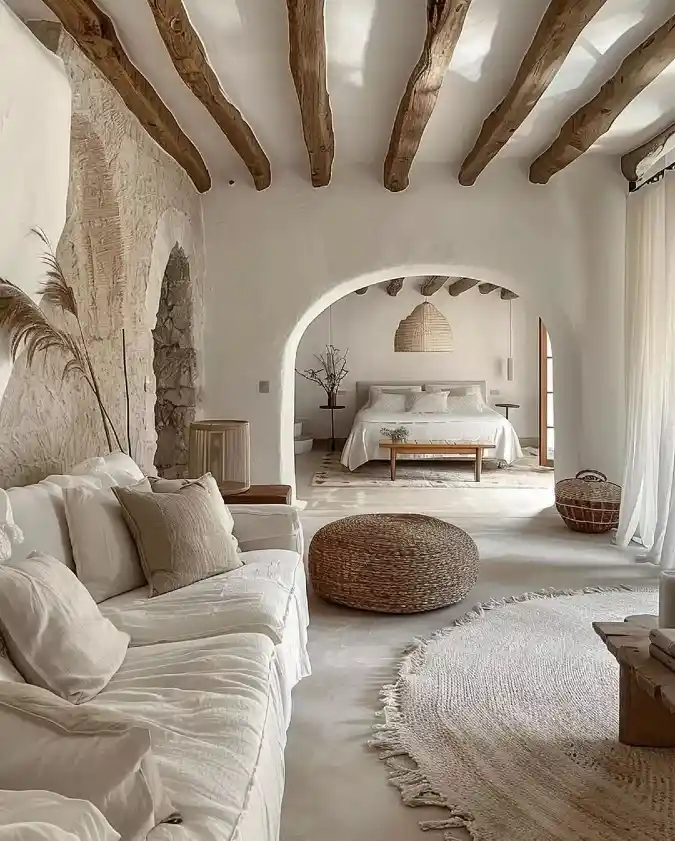
Embrace such organic, flowing structural shapes. Sweeping white stucco arches define this living zone, creating soft transitions instead of rigid, sharp corners. High overhead, rough-hewn timber beams provide essential rustic warmth against the smooth plaster.
Integrated furniture blends seamlessly into the architecture here, blurring the line between building and decor.
A substantial built-in masonry sofa sits ready for relaxation, topped with piles of inviting textile cushions in varied muted tones. Natural light streams freely into the space, highlighting the tactile quality of the handcrafted surfaces.
Humble, aged materials serve as the primary decorative elements throughout the room. A low, weathered wooden coffee table anchors the seating area atop a patterned jute rug, surrounded by earthenware pottery. The overall atmosphere feels authentically calm and wonderfully lived-in rather than staged.
11. The Raw Edge Timber Dining Suite
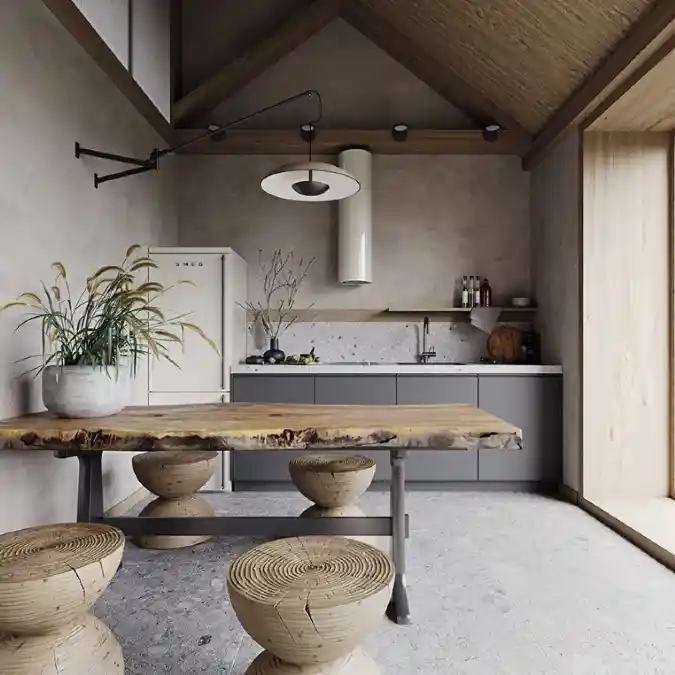
Embracing imperfection is fundamental to creating a space that feels truly lived-in and authentic to the senses.
The focal point here is clearly the heavy, live-edge timber table which refuses to hide its natural deep cracks or irregular grain patterns from years of growth. Beside it sit sculptural stools, hand-carved from solid blocks of wood, displaying every growth ring and natural fissure as a distinct badge of honor rather than a flaw.
Surrounding these dominant organic shapes are supportive textures that feel grounded, raw, and incredibly tactile to the touch.
The walls wear a textured, cloudy plaster finish that catches the incoming natural light unevenly, contrasting beautifully with the functional, matte grey cabinetry in the background. High, sloped wooden ceilings with dark, exposed beams complete the feeling of a rustic, almost monastic retreat that values sturdy function over shine.
Completing this look requires only minimal styling, exemplified by the simple dried grasses resting in a weathered stone planter on the tabletop surface.
This specific arrangement embodies one of the most powerful wabi-sabi aesthetic ideas by letting natural materials speak for themselves without needing excessive decoration or unnecessary fuss.
The resulting room feels deeply calm and effortlessly beautiful because it fully accepts the inherent transience of its components.
12. Raw Textures and Earthy Tones
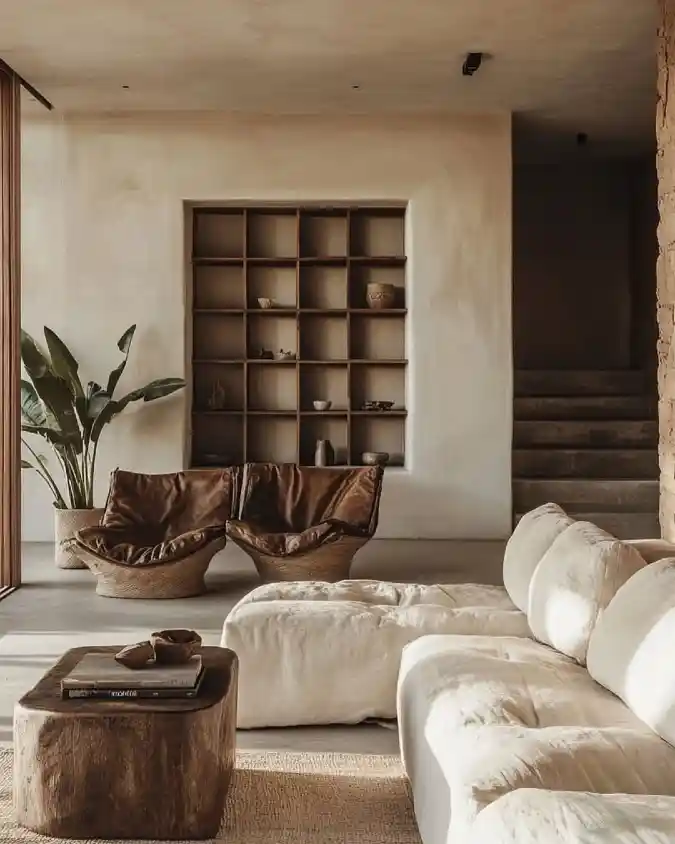
Textured plaster walls set a calming tone in this living space, providing a soft and neutral backdrop for the organic elements. Roughly hewn wood forms the sturdy block coffee table, highlighting natural cracks and grain that tell its unique history.
This honest approach to materials is central to achieving a genuine wabi-sabi aesthetic in any contemporary home.
Worn leather chairs featuring rustic woven bases sit opposite a plush, wrinkled linen sofa, inviting relaxation without any pretense.
These fabrics are allowed to crease, fade, and age naturally over time, significantly enhancing the comfortable, lived-in feel of the room. Accepting these inevitable signs of daily use is far better than constantly chasing a pristine look that often feels sterile.
A built-in shelving unit displays a curated collection of artisanal pottery, where each piece possesses an irregular shape and a muted, matte finish.
Beside the shelves, a large plant adds necessary vibrancy and connects the interior environment to the natural world outside the large window. Ultimately, this space proves that true beauty lies in simplicity and the quiet appreciation of humble, aged objects.
13. The Raw Stone Slab Centerpiece
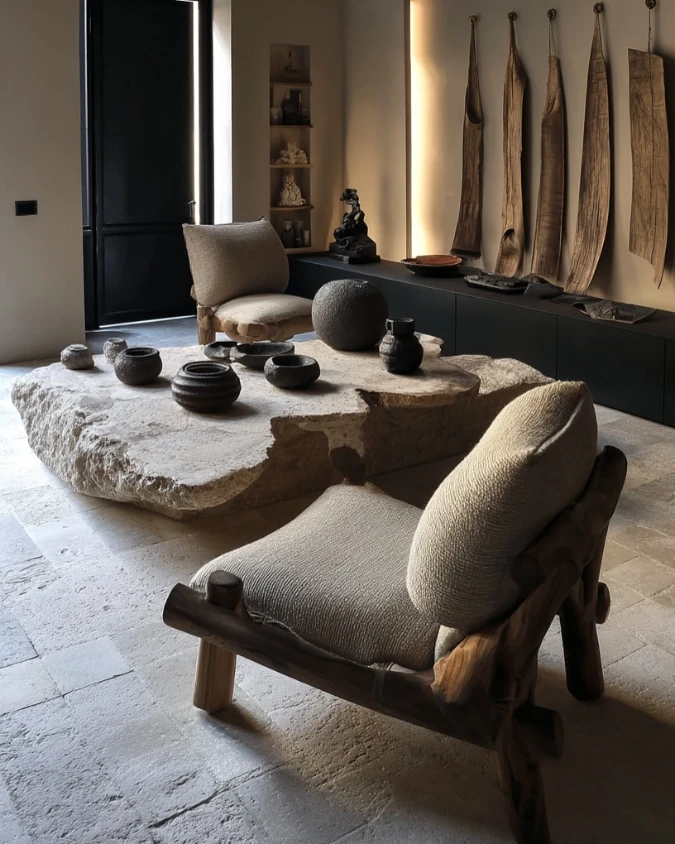
Dominating this tranquil living space is a massive, rough-hewn stone slab serving as a central coffee table.
Its raw, unfinished edges and inherent natural textures are a stunning example of the wabi-sabi aesthetic, celebrating authentic beauty found in imperfection rather than manufactured symmetry. Heavy, dark ceramic pottery in various organic forms sits clustered on the stone surface, adding visual weight.
Flanking this substantial geological feature are two distinct lounge chairs crafted from thick, unfinished wooden branches and upholstered in coarse, neutral textiles.
These unique seating options emphasize comfort and natural materials, inviting relaxation without pretense. Beneath these elements lies an aged stone tile floor, further grounding the room with earthy, durable textures that look better with time.
Against the far wall, several tall, slender wooden forms lean casually above a long, dark credenza, providing vertical interest and warmth without creating clutter.
Soft, natural light streams in from an adjacent doorway, gently highlighting the rich interplay of surfaces throughout the room. This careful curation creates a deeply serene, lived-in atmosphere that feels calming and effortlessly beautiful.
14. Raw Timber and Sculptural Stone Lounge
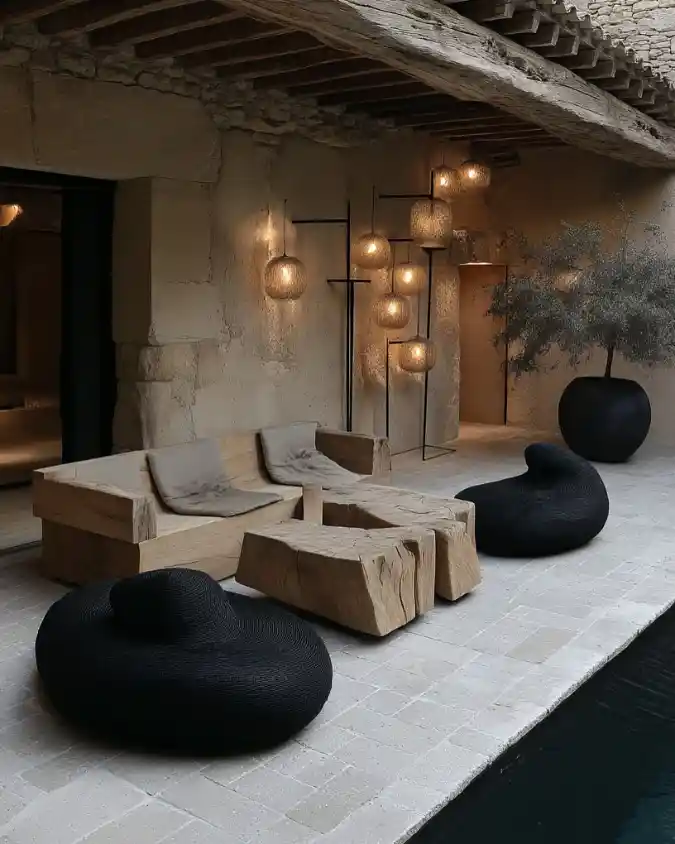
Embracing natural imperfection is central to the Wabi-Sabi Aesthetic Ideas presented in this serene covered patio.
Massive beams of raw, untreated timber serve as the primary sofa base and blocky coffee tables, proudly highlighting their inherent grain, cracks, and rugged edges. The surrounding rough, aged stone architecture creates a deeply textured backdrop that feels grounded and authentic.
Juxtaposing the rigid, linear wood furniture are two dark, sculptural poufs with distinct, organic, rounded silhouettes.
Their woven, tactile surface adds needed depth against the smooth, pale stone floor tiles that pave the area. A striking, multi-headed floor lamp featuring warm, glowing woven shades provides soft, ambient illumination perfect for quiet evenings.
Completing this tranquil outdoor living room is a solitary olive tree housed in a large, dark planter, bringing essential life to the otherwise stony environment.
The entire seating area sits adjacent to the still, dark water of a pool, significantly enhancing the overall calm atmosphere. This setup clearly demonstrates that prioritizing raw, honest materials leads to effortlessly beautiful and functional spaces.
15. Embrace Rough, Unhewn Stone Walls
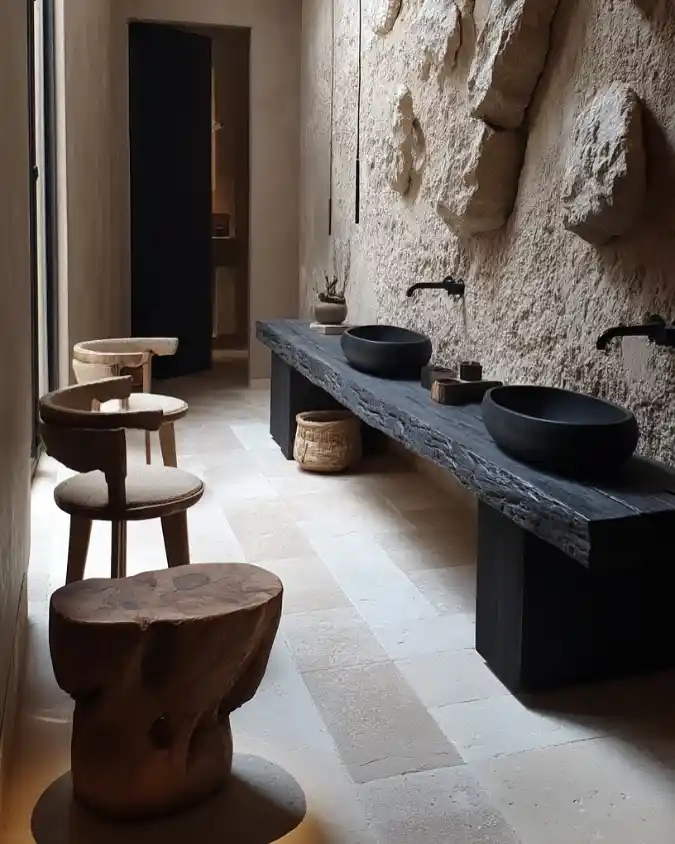
Incorporating raw, unfinished elements is central to achieving a genuine wabi-sabi aesthetic in a modern home.
This bathroom exemplifies this philosophy by featuring a dramatic wall dominated by rough, large stones embedded directly into textured plaster. The powerful juxtaposition creates a deep sense of connection to the natural world, celebrating inherent flaws rather than hiding them behind smooth finishes.
Beneath this rugged backdrop sits a substantial vanity crafted from thick, dark, live-edge wood showing deep grain and age.
Simple black vessel sinks and minimalist faucets provide a functional contrast without detracting from the dominant organic textures. Earthenware accessories and a simple woven basket complete the lived-in, unstudied look that defines this style.
Furthering the organic theme are unique seating options made from natural materials, including a solid tree stump stool and wooden chairs with woven seats.
Soft natural light streams in from the side window, highlighting the rich textures and varied tones of the stone and wood surfaces. The entire space feels calm, grounded, and effortlessly beautiful through its honest embrace of natural imperfections.
16. Raw Wood and Organic Forms Dining
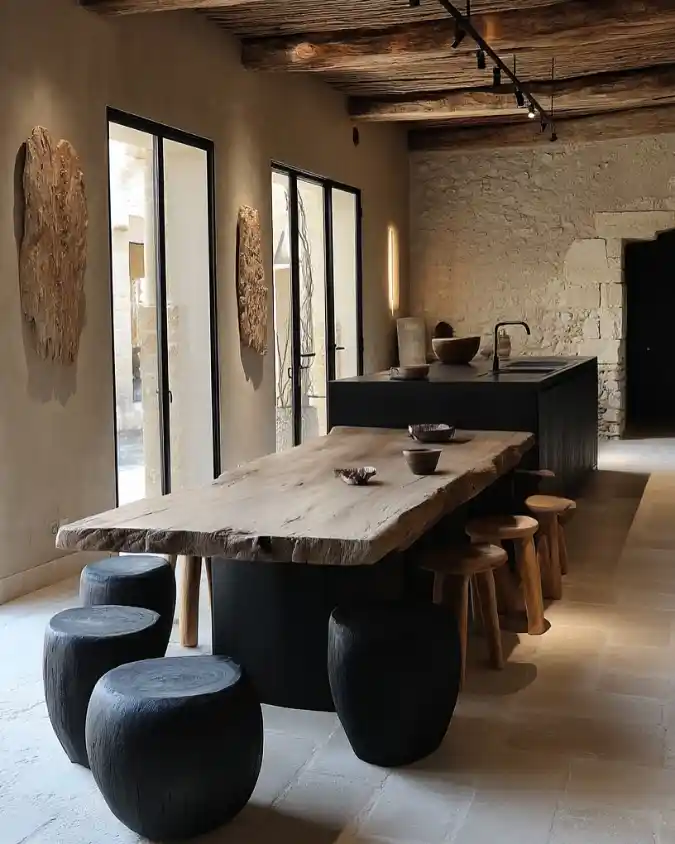
Central to this dining space is the magnificent live-edge wooden table acting as a robust anchor for the room.
Its rough unfinished edges and stunning natural grain celebrate the inherent beauty found in nature’s flaws which is core to various wabi-sabi aesthetic ideas. Instead of hiding imperfections this massive slab highlights the wood’s history and true organic form.
Surrounding the table a curated mix of dark solid stools and raw pale wooden ones creates an engaging visual contrast that feels intentional yet relaxed.
The sleek modern dark kitchen island in the background offsets the ancient ruggedness of the exposed stone wall. This deliberate interplay between smooth contemporary surfaces and rough aged textures brings immense depth to the overall area.
Ultimately this design approach fosters a deep sense of tranquility and groundedness for anyone entering the space.
By choosing pieces that look aged worn or handmade the home instantly feels lived-in and authentically comfortable. It proves that genuine beauty often lies in simplicity and the unrefined natural weathering of materials.