
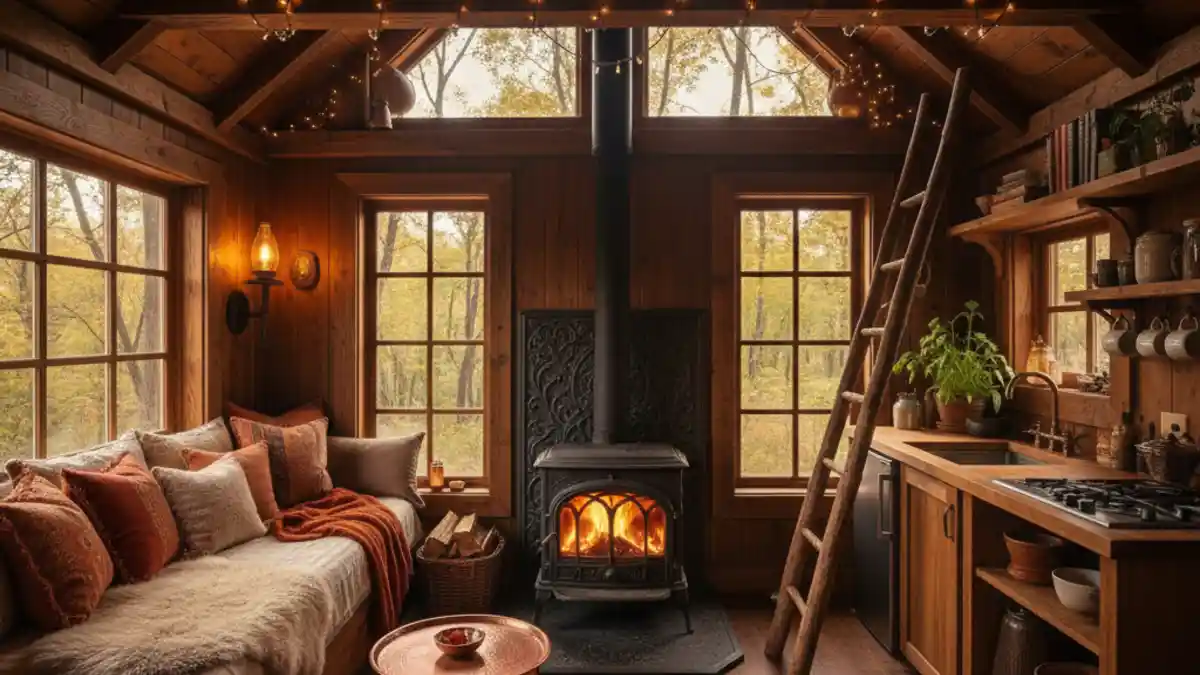
Tiny square footage often feels like a massive compromise. I mean, you want cozy, not cramped. But figuring out exactly where to put everything without totally ruining visual flow? Exhausting. Sometimes it seems impossible to keep that rustic character while actually gaining storage.
I am not sure, but maybe we just overcomplicate organization by thinking we need more room. Actually, making small cabins feel spacious requires strategy, not just throwing stuff away.
It really comes down to clever hacks and multifunctional pieces. 17 ideas below offer fresh, practical perspectives on maximizing every single inch effectively.
Mastering Small Cabin Living: Smart Storage & Spatial Flow
Transforming a compact cabin into a comfortable retreat requires a strategic approach rather than just extra square footage.
Instead of sacrificing your rustic aesthetic or feeling forced to purge necessary items, the key lies in intelligent organization and multifunctional design.
- Multifunctional Furniture: Invest in pieces like storage ottomans or loft beds that serve dual purposes to save floor space.
- Vertical Utilization: Take advantage of wall height with floating shelves or hooks to keep high-traffic areas clutter-free.
- Hidden Zones: Exploit awkward corners and under-bed areas to stow away seasonal gear without ruining the visual flow.
- Strategic Layouts: arrange furniture to create clear pathways, ensuring the cabin feels open rather than cramped.
Multifunctional Furniture
Invest in storage ottomans or loft beds that serve dual purposes.
Vertical Utilization
Use wall height with floating shelves to keep floors clutter-free.
Hidden Zones
Stow seasonal gear in awkward corners and under-bed areas.
Strategic Layouts
Arrange furniture to create clear pathways and an open feel.
1. Retractable Living & Perimeter Utility
Synchronized Expansion: In a narrow galley layout, permanent furniture is an obstacle. Pairing a wall-mounted drop-leaf table on the left with a pull-out kitchen counter on the right allows the central walkway to remain completely clear, transforming into a full dining zone only when necessary.
The Upper Border: Floor space is precious, so storage has to go vertical. Running a continuous shelf above the window line frames the room and provides a perfect home for books and decor without encroaching on the living area, drawing the eye upward to the high ceiling.
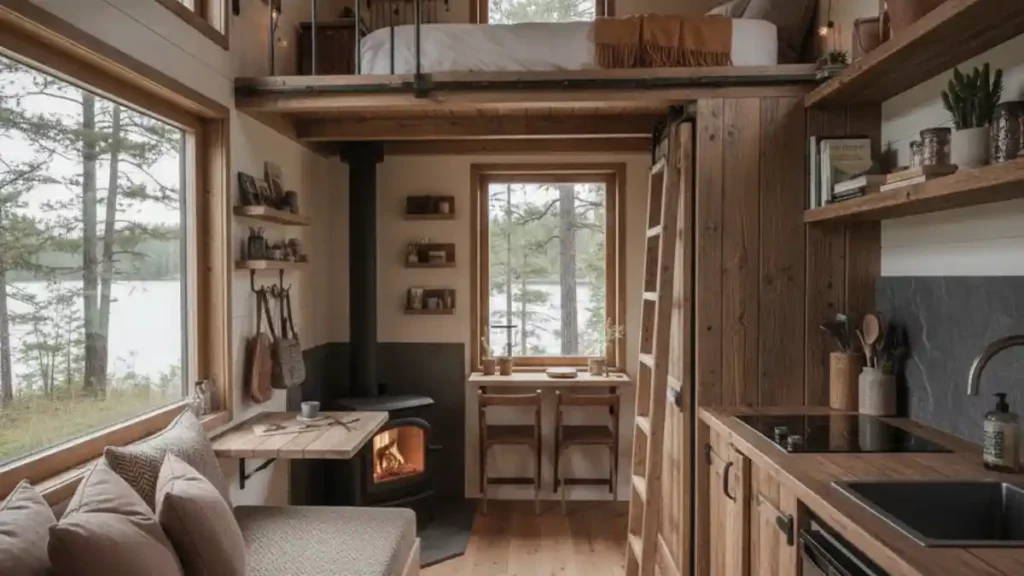
2. Lakefront Timber & Flexible Zoning
Dual-Purpose Surfaces: This layout masterfully proves that square footage is irrelevant with the right furniture. By installing two separate fold-down stations—one for dining by the fire and another for coffee with a view—the room offers multiple “destinations” within a single open space.
Thermal Stacking: Tucking the wood stove in the corner below the sleeping loft is a strategic heating move. It ensures the warmth rises directly to the bed above while keeping the floor level cozy for daytime lounging next to that incredible lake view.
3. Alpine Contrast & Hearth-Centered Living
The Thermal Divide: The true magic here lies in the contrast. Separating the freezing, snow-covered pines from the roaring fire with nothing but clear glass amplifies the feeling of warmth. It turns the harsh weather into a scenic backdrop rather than a threat, making the interior feel like a protective fortress against the elements.
Textural Grounding: In a room dominated by glass and expansive views, you need solidity. The rough-stacked stone chimney provides a necessary heavy anchor that prevents the space from feeling too fragile. It visually supports the high ceilings while adding earthy, tactile comfort to balance the smooth glass surfaces.
4. Rustic Comfort & Strategic Layout
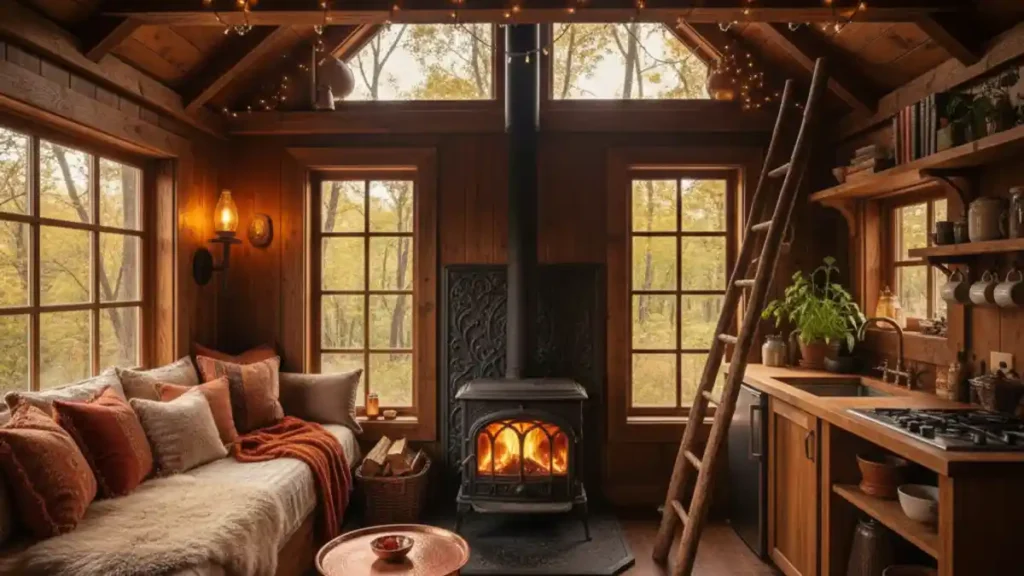
Window-Side Repose: Integrating a built-in daybed directly beneath the expansive window creates a prime location for relaxation that doesn’t encroach on the central living area. It transforms a simple seating arrangement into a dedicated nook for soaking in the forest views.
Vertical Efficiency: Placing the loft ladder adjacent to the compact kitchen is a clever use of transitional space. It provides necessary access to the sleeping quarters while defining the boundary of the culinary zone without requiring a physical wall.
5. Cathedral Glass & Stone Hearth
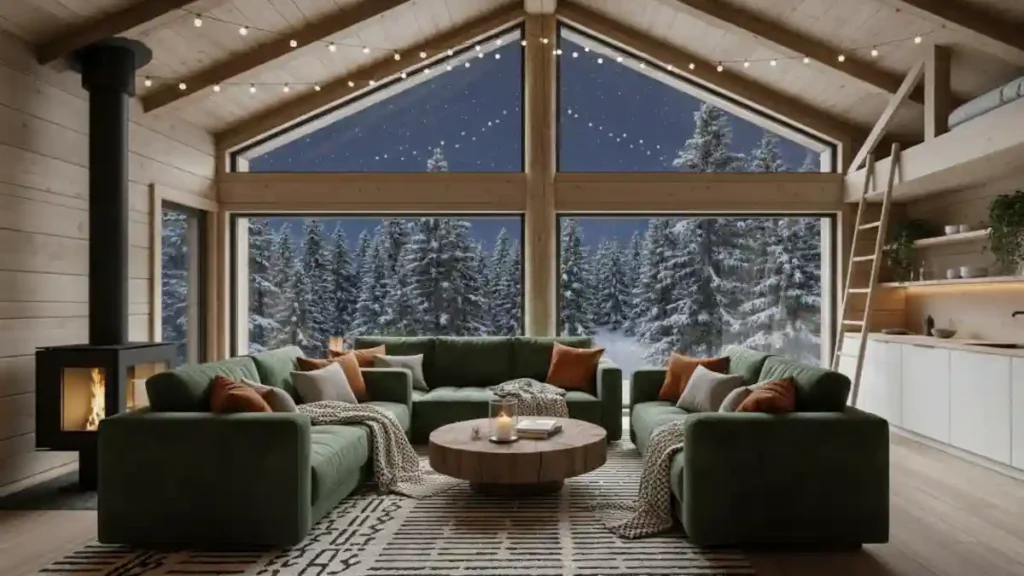
- Sky-High Glazing: Standard windows would be a missed opportunity here. Those soaring custom windows that slice through the timber walls turn the entire cabin into a luxury observatory for stargazing. When you build this high, you have to capture the sky.
- Material Harmony: Look at how the colors connect. Using emerald green upholstery ties the interior directly to the evergreen forest visible through the glass, blurring the line between inside and out. Pulling exterior colors inside makes the space feel expansive.
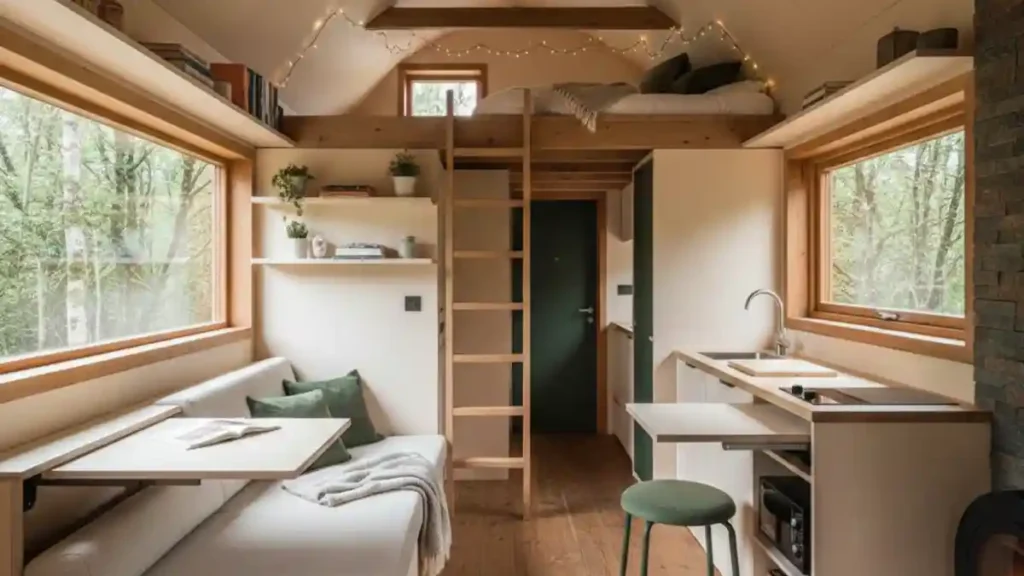
6. Birch Plywood & Hidden Dining
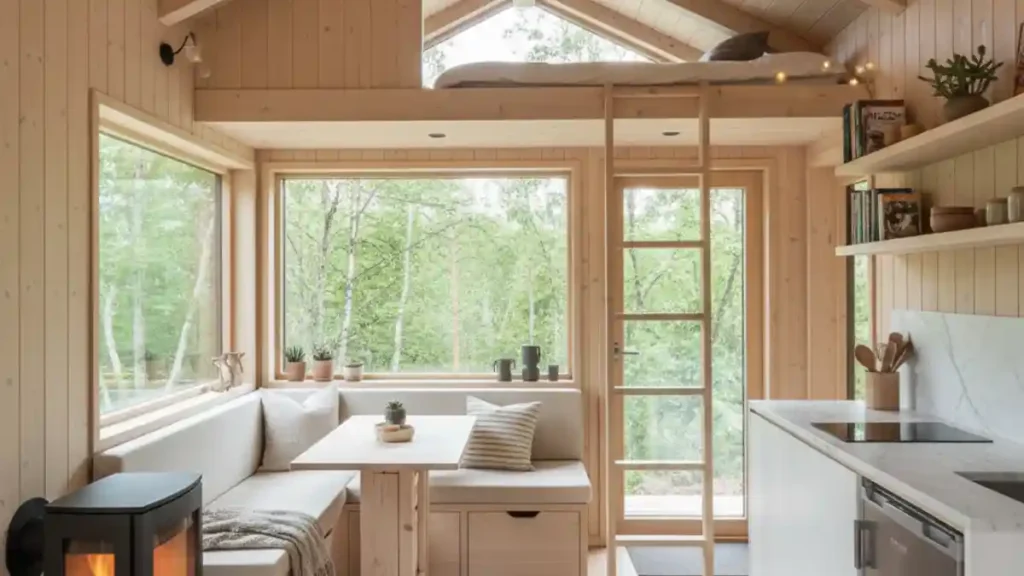
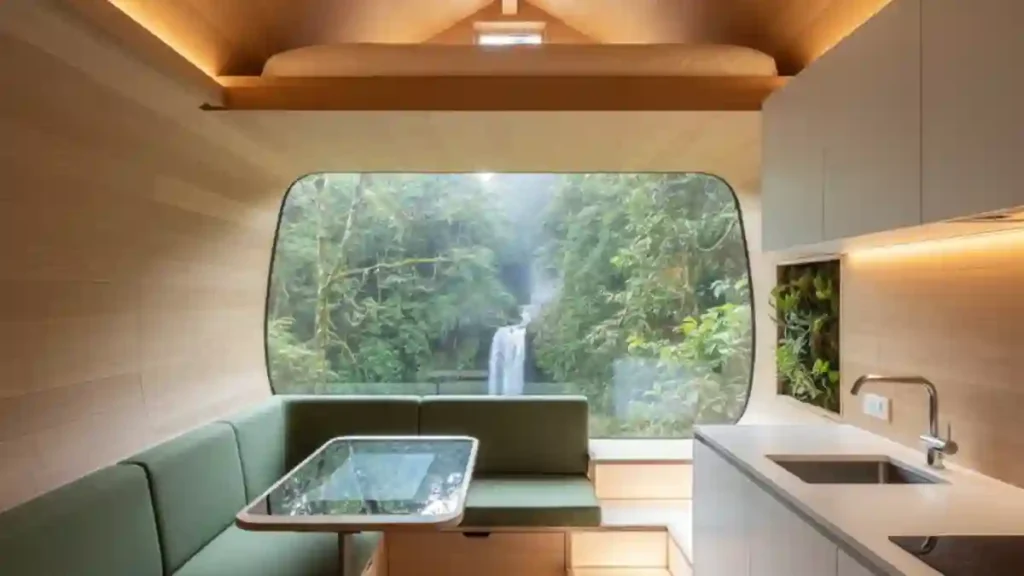
Seamless Grain: Different materials can chop up a small room. Wrapping the walls, ceiling, and furniture in the same pale birch plywood creates a unified, calming box that feels larger than it is. Monochromatic wood tones trick the eye into seeing more space.
Vanishing Act: Fixed furniture can be a nuisance in tight quarters. Integrating a pull-out table into the bench seating allows the dining area to appear only when needed, leaving the walkway completely clear the rest of the time. Flexibility is the ultimate luxury in compact living.
7. Panoramic Nook & Pale Timber
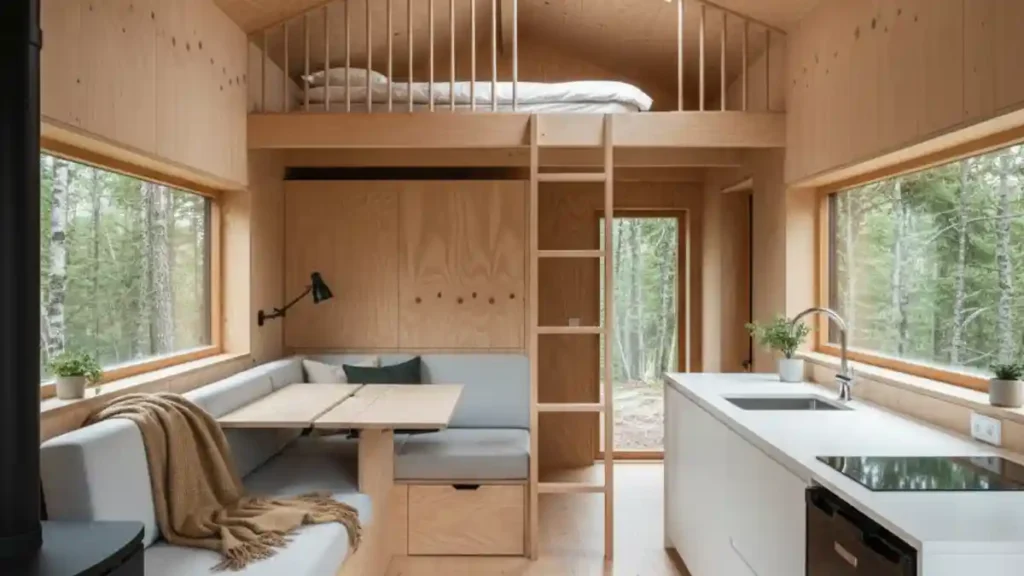
Smart Storage: Seating needs to earn its keep. Building deep drawers under the dining bench provides massive storage for gear or linens without taking up an extra inch of floor space. Hidden compartments are essential for maintaining that minimalist look.
Erasing the Corner: Corners usually box you in. Wrapping that window glass right around the edge of the room dissolves the physical boundary, making you feel like you are floating in the trees. Glazing that turns a corner is one of the most impactful architectural moves you can make.
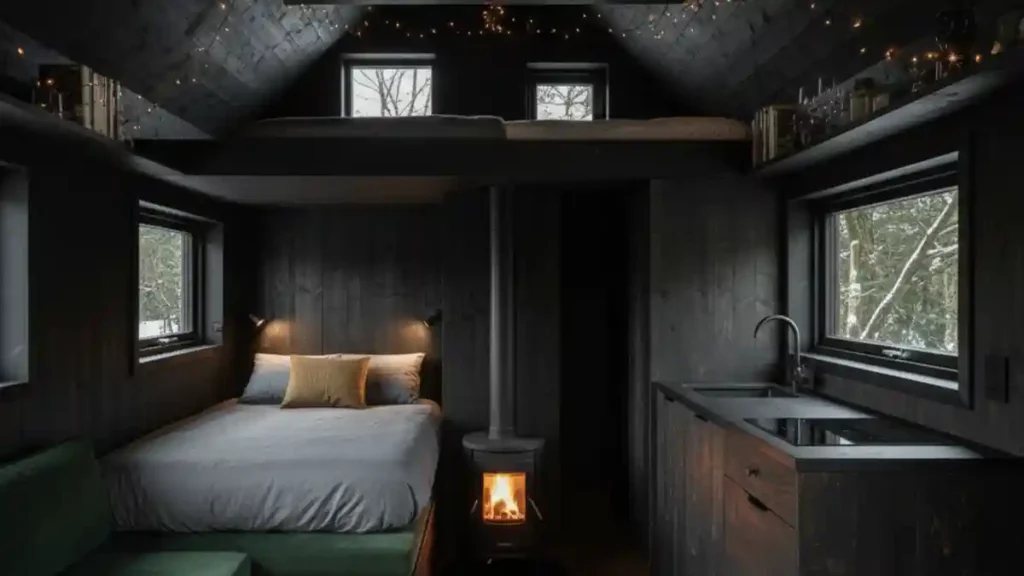
8. Winter Stone & Emerald Velvet
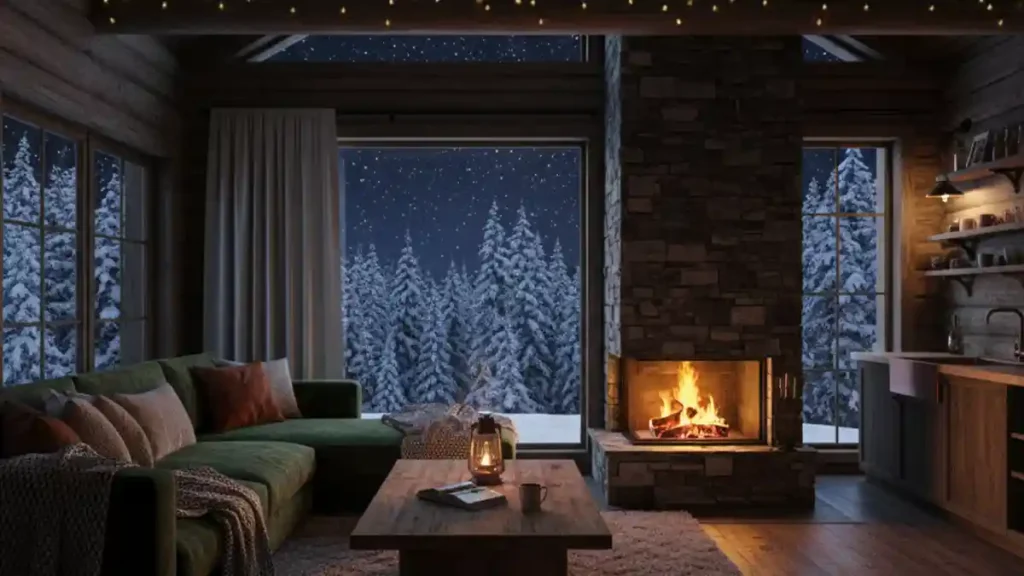
Mood Lighting: Bright overhead lights would kill this vibe. Relying solely on the fire’s glow and subtle string lights mimics the falling snow outside, creating a magical, den-like atmosphere for the evening. Mood often relies on what you choose not to light up.
Balancing the Elements: Glass walls are beautiful, but they can feel cold. That massive floor-to-ceiling stone fireplace acts as a heavy, warm counterweight to the snowy window, grounding the room so it feels protected. Visual weight is just as important as physical warmth in winter designs.
9. Golden Hour & Copper Accents – Rustic Kitchen Charm
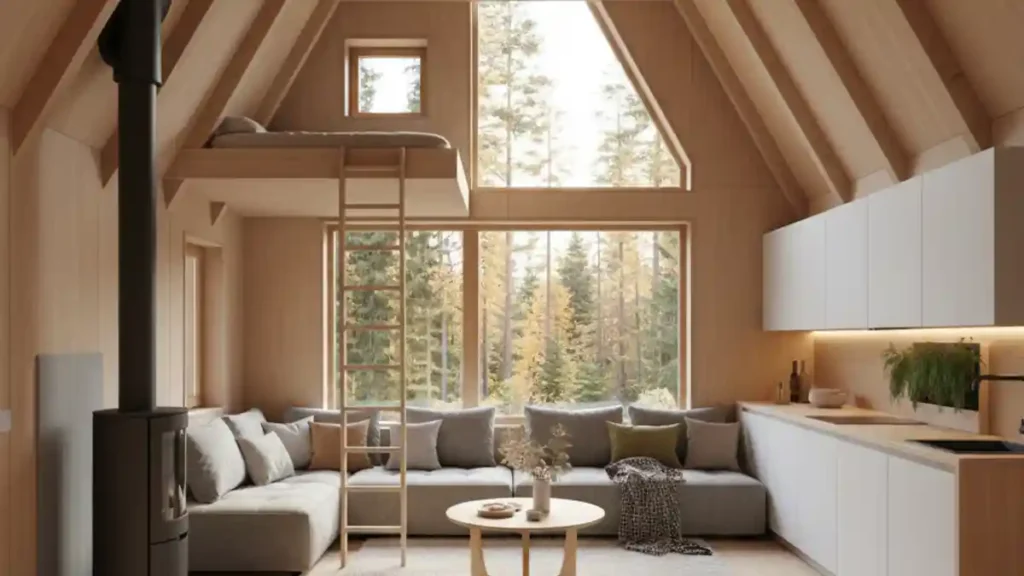
Vintage Warmth: Modern metals can feel sterile. Choosing copper accents and warm-toned wood makes the kitchen feel lived-in and welcoming, perfectly matching the golden autumn leaves outside. Materials that patina over time add instant character.
Vertical Access: Stairs take up too much room. Leaning a simple rustic ladder against the wall provides access to the loft while doubling as a place to hang blankets or display vintage items. sometimes the simplest solution is also the most beautiful.
10. Bright White & Fold-Down Logic – Tiny House Efficiency
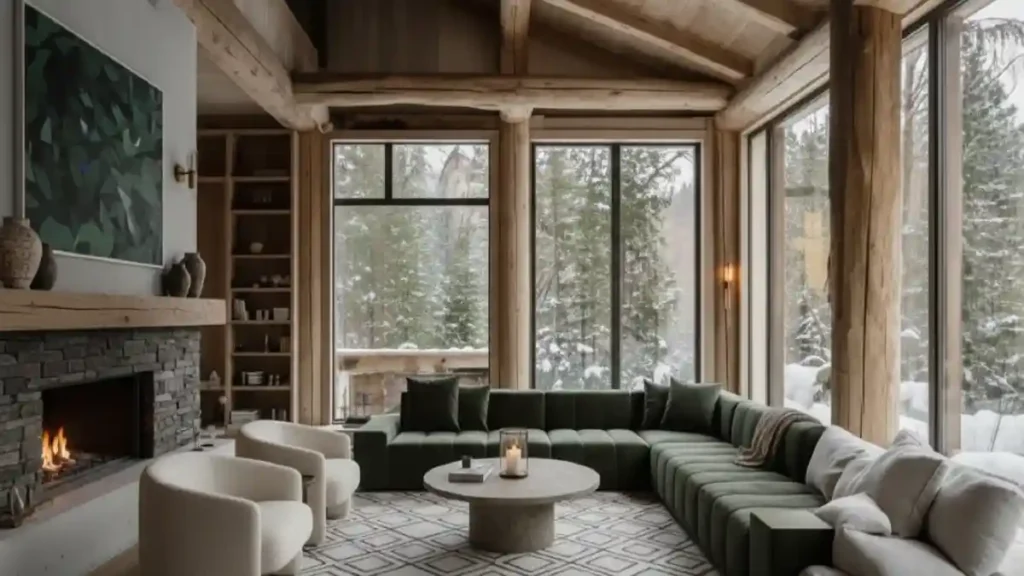
Framed Views: A plain wall is a wasted opportunity. Framing the sofa with a massive panoramic window turns a simple seating area into a premium viewing deck for nature. Glass is always the best wallpaper money can buy.
Disappearing Desk: You don’t need a dedicated office room. Installing a wall-mounted drop-leaf table gives you a sturdy workspace that folds flat against the wall the second you clock out. Your furniture should adapt to your schedule, not the other way around.
11. Forest Green & Stone Textures – Cohesive Color Stories
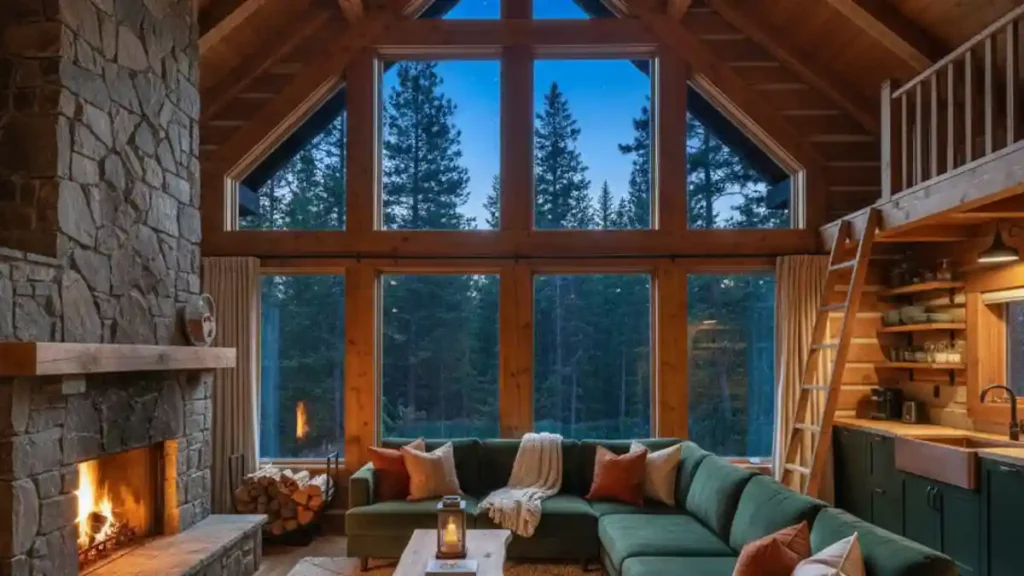
Rustic Jewelry: Utility fixtures don’t have to be boring. Adding a copper farmhouse sink brings a flash of metallic warmth that breaks up the green and adds a focal point to the cabinetry. Small details often have the biggest visual impact.
Unified Zones: Open plans can feel messy if they aren’t linked. Painting the kitchen cabinetry the exact same forest green as the velvet sofa ties the cooking and living areas into one cohesive design story. Repetition is the secret to a professional-looking interior.
12. Window Seats & Corridor Hacks – Utilizing Narrow Spaces
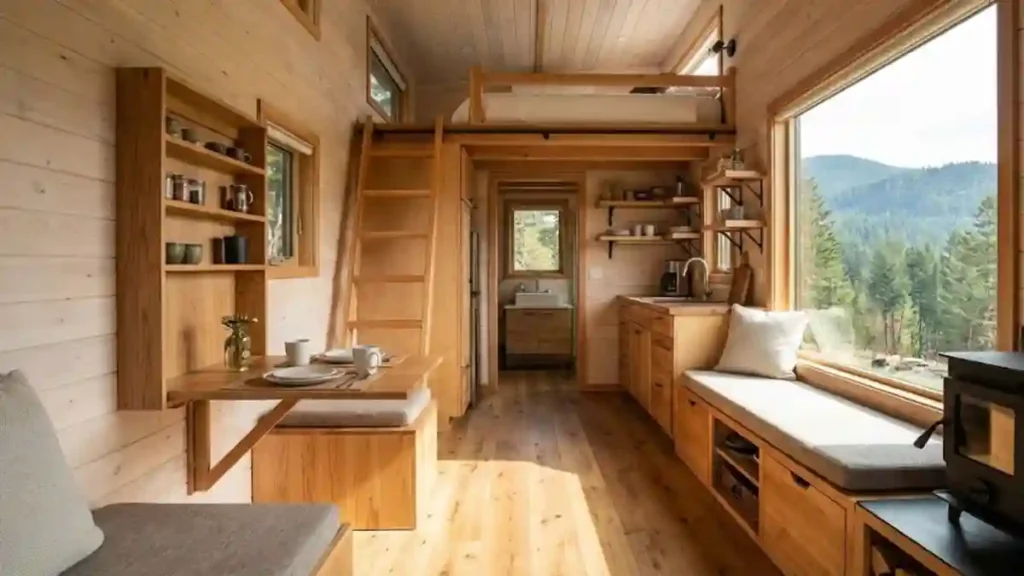
Open Sightlines: Upper cabinets would close this space in. Opting for open wooden shelving keeps the sightlines clear all the way to the back wall, making the narrow room feel significantly wider. Seeing the walls behind your storage makes the room breathe.
Hallway Hero: Corridors are usually dead space. Transforming the walkway into a destination with a long window seat creates a cozy reading nook that utilizes every inch of the width. Never let a hallway just be a hallway.
13. Scandinavian Symmetry & Kinetic Furniture
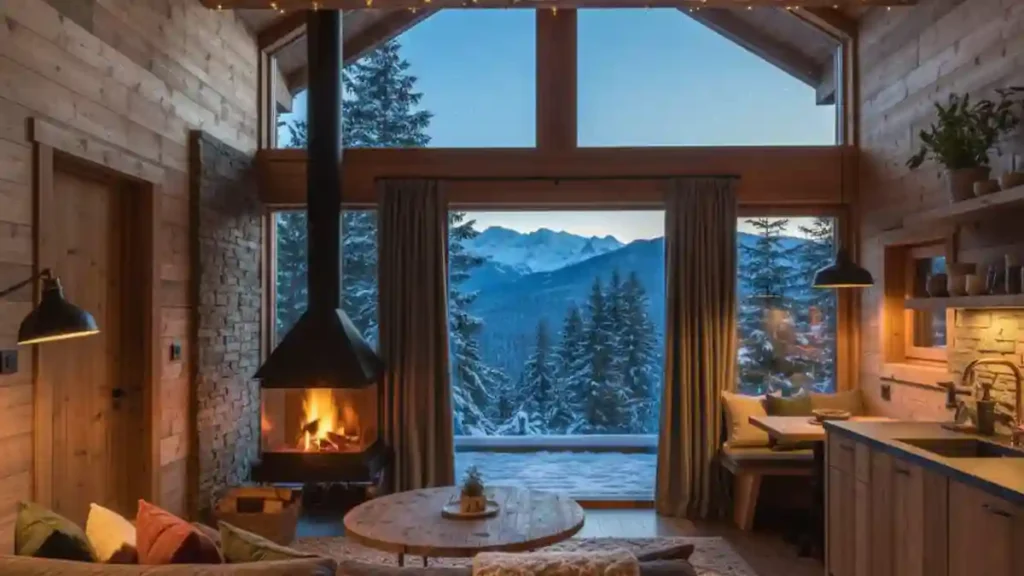
The Transparent Corridor: In a space this narrow, balance is everything. Mirroring the large window on the left with an equally large one on the right creates a “pass-through” effect, where your eye travels straight through the cabin to the woods, effectively erasing the walls.
The Pop-Up Dining Room: Fixed dining tables are space-killers in tiny homes. Using a slide-out surface from the kitchen cabinet directly opposite a fold-down wall desk creates a temporary, full-width dining zone that vanishes completely when the meal is over.
14. Historic Chinking & Primitive Greens
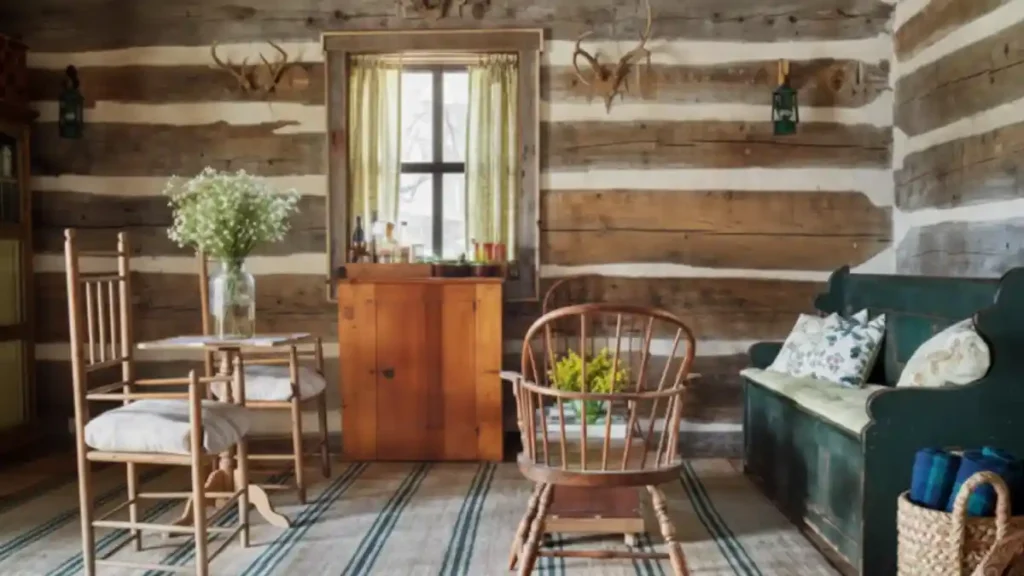
Visual Rhythm: The bold horizontal stripes created by the dark logs and bright white chinking are the defining feature here. They visually stretch the walls, making the compact room feel wider while adding a graphic, almost modern quality to the traditional structure.
Painted Character: Relying entirely on brown wood can get monotonous. Introducing the painted green settle bench breaks up the timber tones and adds a layer of “pioneer chic” that feels curated rather than just old.
15. Glazed Nooks & Treehouse Texture
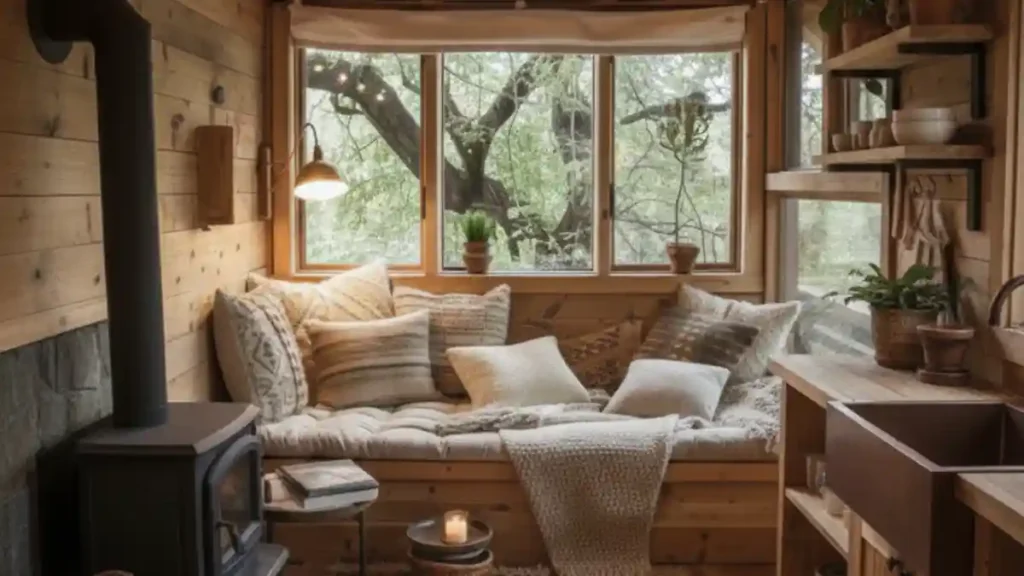
The Reading Nest: Standard sofas can feel bulky in small rooms. Constructing a custom, wall-to-wall daybed beneath the window maximizes every inch of width, creating a deep, pillowed sanctuary perfect for curling up with a book. It turns a tight corner into the most coveted spot in the house.
Living Art: The window placement here is intentional, framing the twisting tree trunk outside as if it were a sculpture. This specific framing connects the rustic wood interior with the living forest, making the cabin feel like a secluded treehouse.
16. Mountain Majors & Sculptural Heat
The Scenic Stage: The architecture here knows exactly who the star of the show is. By centering the design around those massive glass doors, the snowy mountain peaks become the room’s primary focal point, making the interior feel vast and majestic.
Modern Hearth: Instead of a bulky stone wall, choosing a sleek, freestanding black metal fireplace keeps the sightlines open and airy. It provides intense warmth and acts as a modern sculptural element that contrasts beautifully with the traditional wood paneling.
17. Reclaimed Timber & Nesting Utility
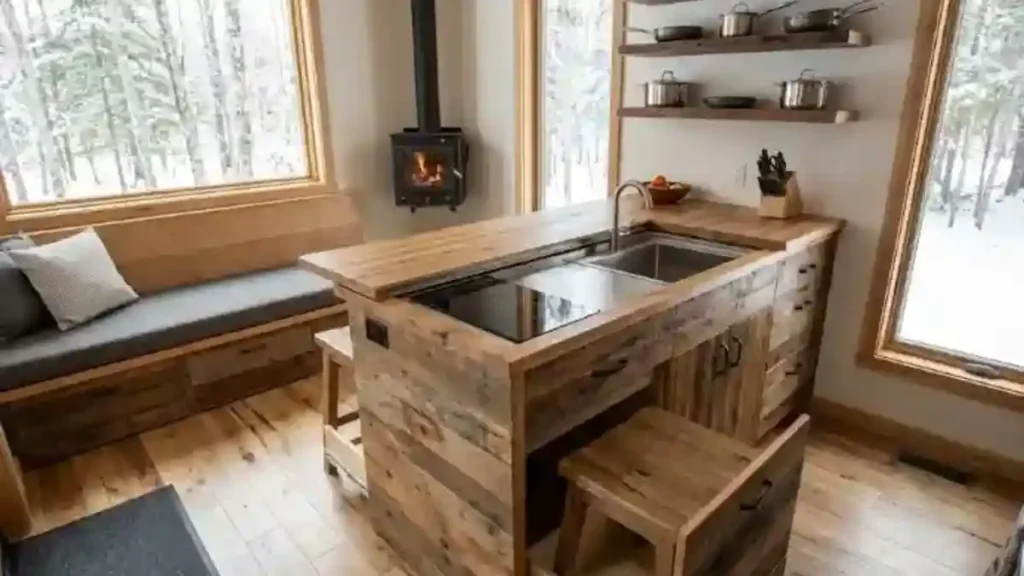
Nesting Necessity: In a compact footprint, furniture that tucks away is essential. This custom kitchen island features a unique wooden stool that nests perfectly inside the cabinetry, ensuring the workspace remains obstacle-free until dinner is served.
Raw Texture: Using rough-sawn, reclaimed timber for the cabinetry adds an incredible amount of warmth and history to the room. The rich, varied grain of the wood provides a stunning, earthy contrast against the clean white snow visible through the large windows.