
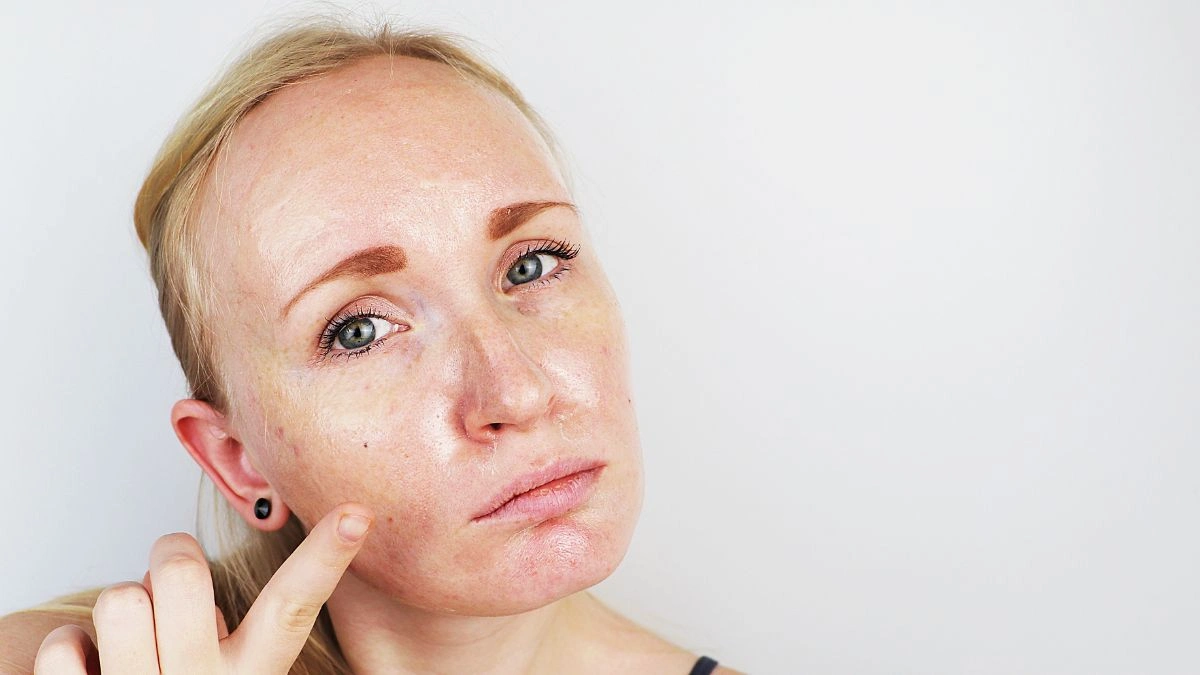
Think about wearing a seatbelt tested on crash dummies half your size. That is exactly what the skincare industry did with sunscreen for fifty years. If you have melanin rich skin, you know the struggle well.
You have likely dealt with chalky white casts and greasy formulas. You also probably noticed these products do absolutely nothing to stop your dark spots from getting darker. Skincare is finally catching up to reality.
We will uncover how a 1970s medical scale skewed decades of product development. You will learn the real science of how visible light affects darker skin.
Finally, you will discover how to find the new wave of 2026 sunscreens that actually work for you. Let us explore the truth behind Fitzpatrick scale bias and how to find the right sunscreen for skin of color.
Why The Fitzpatrick Scale Bias Failed Your Skin

Dr. Thomas Fitzpatrick created a famous skin scale in 1975. Doctors originally used it just to measure UV light treatments for white patients with psoriasis. But the industry started using it for everything.
The scale categorized deep skin tones as Types V and VI. It operated on the dangerous assumption that darker skin types never burn. This created a massive medical blind spot.
Traditional testing only focused on UVB rays. These are the rays that cause sunburn in fair skin. Testing completely ignored the wavelengths that damage darker skin. This caused a massive gap in photoprotection.
Science shows a clear difference in natural protection. Pale skin has an inherent SPF of roughly 3.3. Very dark skin has an inherent SPF of about 13.4. While higher, 13.4 is still far below the dermatologist recommended SPF 30 plus standard.
Many professionals still get this wrong. A 2019 survey showed 31% of dermatologists mistakenly used the scale to describe race rather than UV sensitivity.
The Fitzpatrick scale bias left millions without proper protection. This is why standard sunscreen for skin of color has failed for so long.
Why Melanin Fails to Stop Visible Light Damage
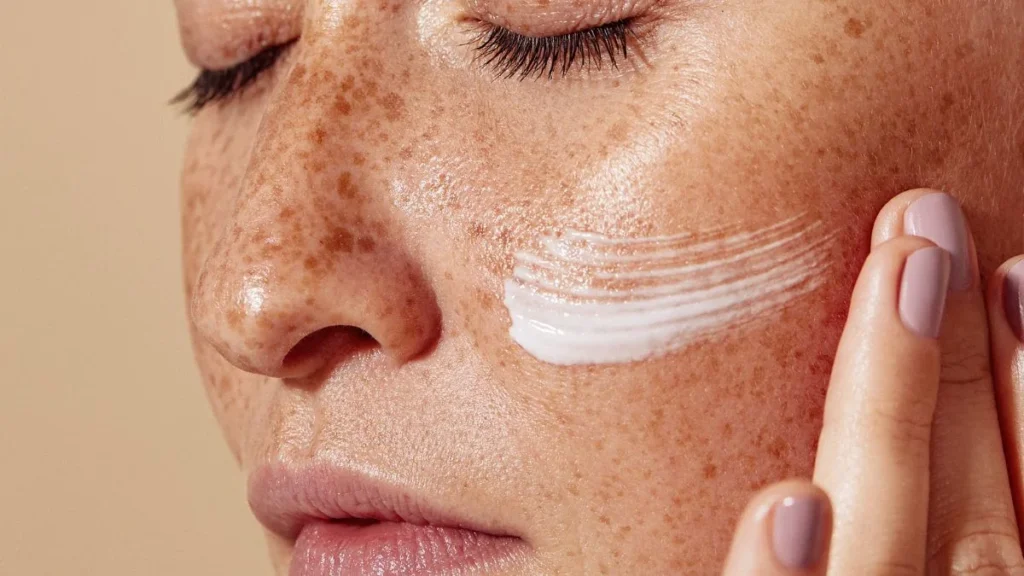
Melanin provides incredible natural defense. But it is definitely not a bulletproof shield. People used to think dark skin did not crack or burn. We now know that is completely false.
Sunburn is not your only enemy. We need to shift the focus from UVB rays to UVA1 and High Energy Visible light. This visible light comes from the sun and causes serious damage. In melanin rich skin, visible light directly triggers melanocytes. These are the cells that make skin pigment.
When visible light hits these cells, they create excess pigment. This leads to persistent pigment darkening and melasma. It also causes stubborn dark spots known as PIH or post inflammatory hyperpigmentation.
Recent 2025 and 2026 clinical studies from top dermatological institutes prove this point. These studies demonstrate that UVA1 and visible light cause more severe pigment disorders in darker skin types than in lighter ones.
For skin of color, the primary enemy is hyperpigmentation instead of just sunburn. You need strong visible light protection to keep your skin even and healthy.
3 Reasons Tinted Mineral Sunscreen is the 2026 Solution
If you have ever rubbed a mineral SPF in until your face was raw, you know the struggle. Standard physical filters like zinc oxide and titanium dioxide use large particles.
These particles physically bounce light off your face. This creates an ashy, purple, or white residue on brown skin.
Up to 61% of South Asian consumers report experiencing a terrible white cast. But the industry is finally changing. We are seeing a massive shift to functional sunscreens.
These formulas treat sunscreen as an aesthetic and pigment management tool. In fact, 2026 saw a 25% increase in hybrid sunscreen launches.
These new products use a hero ingredient called Iron Oxides. These pigments naturally tint the sunscreen to match your skin perfectly.
But they do much more than just look good. Iron Oxides actually absorb and block the light that causes dark spots.
This makes tinted mineral sunscreen the ultimate tool for clear skin. You get flawless blending without the white cast.
You also get superior protection against pigment changes. Finding the right sunscreen for skin of color is much easier with these modern formulas.
How to Find the Best Sunscreen for Skin of Color Today
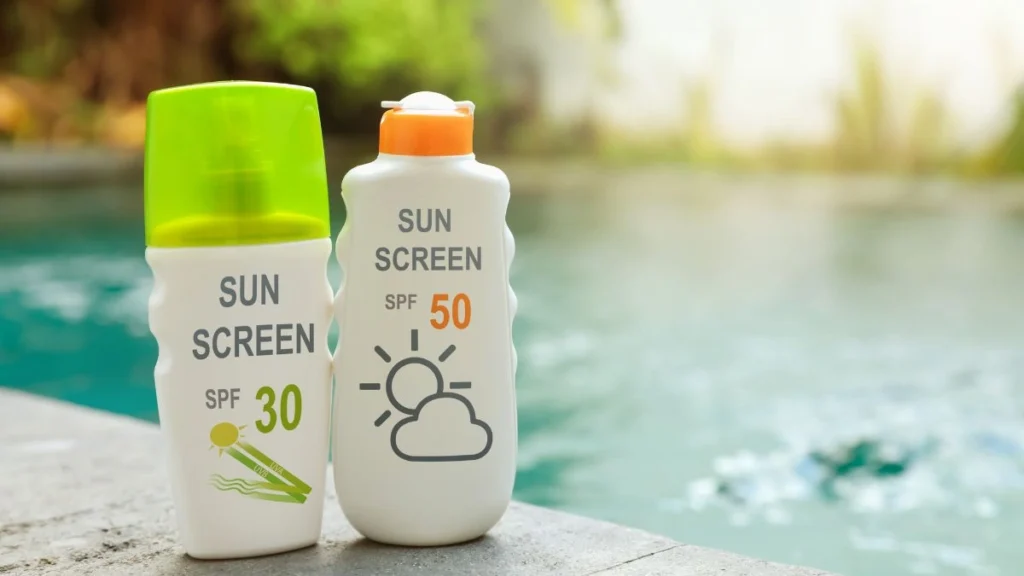
You deserve a sunscreen that protects your skin and looks great. Choosing the right product is simple when you know what to look for. Use these straightforward rules to upgrade your daily routine.
- Look for Broad Spectrum SPF 50 plus to block burning rays.
- Check the label for a PA++++ rating to ensure top UVA protection.
- Flip the bottle and verify Iron Oxides are in the ingredient list for true visible light protection.
- Look for added antioxidants like Vitamin C or Niacinamide to fight oxidative stress. Oxidative stress is cell damage caused by the sun and pollution.
Having the right tinted mineral sunscreen is half the battle. You also must apply it correctly.
The Two-Finger Rule
Clinical SPF Application Standards
Step 1: The Pointer Finger
Squeeze the sunscreen along the full length of your pointer finger, ensuring a continuous, unbroken line of product from base to tip.
Step 2: The Middle Finger
Squeeze a second line along your middle finger. This doubles the volume, creating the precise standard dose required for the face.
Step 3: Face & Neck Distribution
Apply this two finger rule amount evenly across your face and neck, making sure not to neglect the hairline, jawline, and ears.
Step 4: Clinical Coverage
Rub the product in completely to ensure full coverage of 2 milligrams per square centimeter, the dermatological standard for testing SPF ratings.
3 Sunscreen Mistakes Making Your Dark Spots Worse
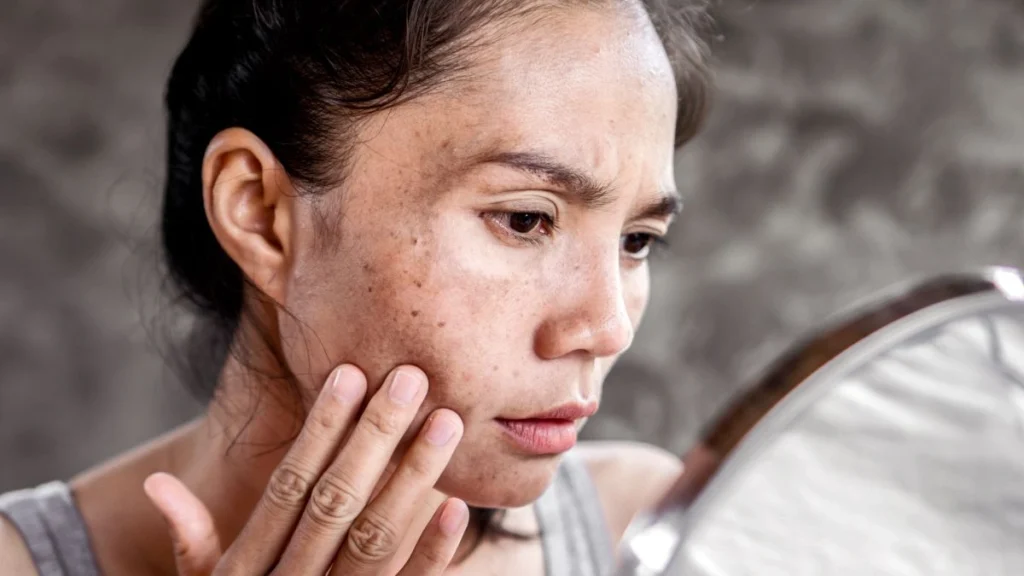
Many people try to protect their skin but still see dark spots growing. You might be making a few common errors without realizing it. Let us fix these habits right now to keep your skin clear.
First, relying on makeup with SPF is a huge mistake. Your foundation might claim to have SPF 30. But you would need to apply a very thick layer of makeup to get that actual protection.
Nobody wears that much foundation on a normal day. You must use a dedicated sunscreen for skin of color underneath your makeup.
Second, skipping sunscreen indoors hurts your skin. You might think being inside keeps you totally safe. UVB rays do stop at the window glass.
But UVA rays and visible light pass right through your windows. These rays trigger melanin production while you sit at your desk or drive your car.
Third, applying your sunscreen only once a day leaves you exposed. Sun protection breaks down on your skin after two hours. Sweating and touching your face also removes the product.
You need to reapply your tinted mineral sunscreen throughout the day to keep fighting stubborn dark spots.
Conclusion
The days of accepting chalky and inadequate sun protection are over. Knowing the history of testing bias helps us demand better formulas. You need products that protect against both sunburn and hyperpigmentation.
Check your current daily SPF right now. Does it contain Iron Oxides? If it lacks this crucial ingredient, it is time to upgrade your routine to protect your skin.