

The RV looks perfect when you first walk through it. The kitchen is neat, the bed is made, every storage door is empty, and nobody has wet towels hanging from the shower or three pairs of muddy shoes beside the entrance.
Then you actually use it. Suddenly you are thinking about fresh water, tire pressure, tank valves, campground voltage, roof seals, storage, reservations, and whether that strange smell is normal. The glamorous part of RV ownership is real, but so is the work behind it.
That is why the most useful RV secrets they don’t tell you have little to do with fancy countertops or theater seats. They are the small lessons that make an RV safer, easier to manage, and less expensive to own.
1. Your RV Can Be Overweight Much Faster Than You Think
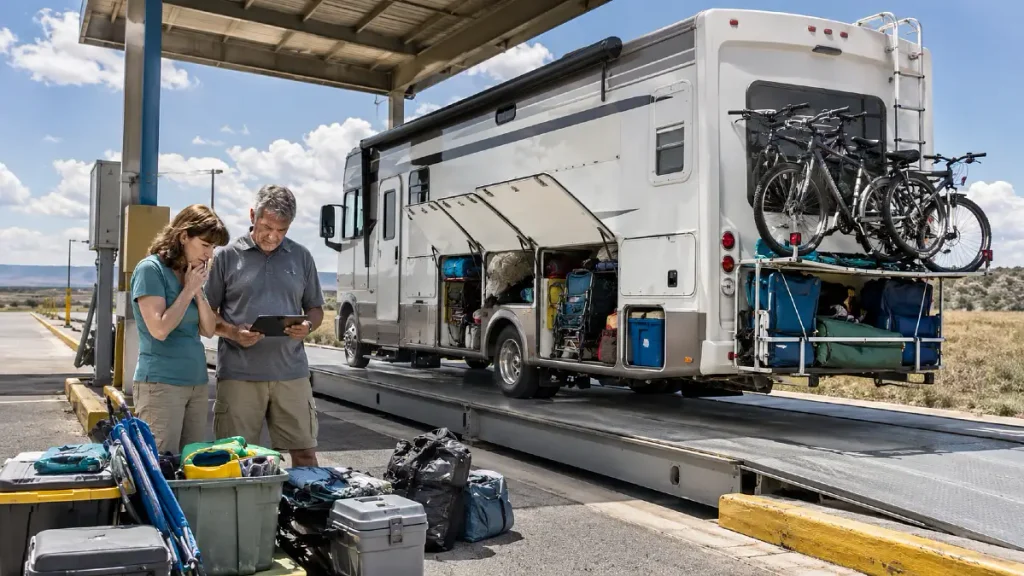
An empty RV can feel like it has endless storage. That does not mean you should fill every cabinet, exterior compartment, closet, and drawer.
Every RV has weight limits. NHTSA says the manufacturer’s certification label must show the Gross Vehicle Weight Rating, or GVWR, and owners should consider the weight of water, luggage, and added equipment when deciding whether the RV has enough cargo capacity.
Fresh water is one easy example. Water weighs roughly 8.3 pounds per gallon, so carrying 50 gallons adds about 415 pounds. Then you add people, food, camping chairs, tools, batteries, clothing, bicycles, kitchen supplies, and dealer installed accessories.
| What Adds Weight | Why Owners Miss It | What to Do |
|---|---|---|
| Fresh water | It feels like part of the RV | Carry only what you need when hookups are available |
| Food and drinks | Small items add up | Avoid stocking the RV like a full pantry |
| Tools | Heavy metal tools hide in storage bays | Carry a focused repair kit |
| Batteries | Upgrades can add real weight | Check weight before changing battery systems |
| Outdoor gear | Chairs, grills and bikes pile up | Weigh the loaded RV |
A public vehicle scale can tell you far more than guessing from the number of open cabinets. Michelin also recommends weighing RVs because tire pressure requirements depend on the actual loaded weight of the vehicle.
The secret: available storage space and available carrying capacity are two different things. You can run out of safe payload long before you run out of cabinets.
2. Campground Electricity Is Not Always Clean and Reliable
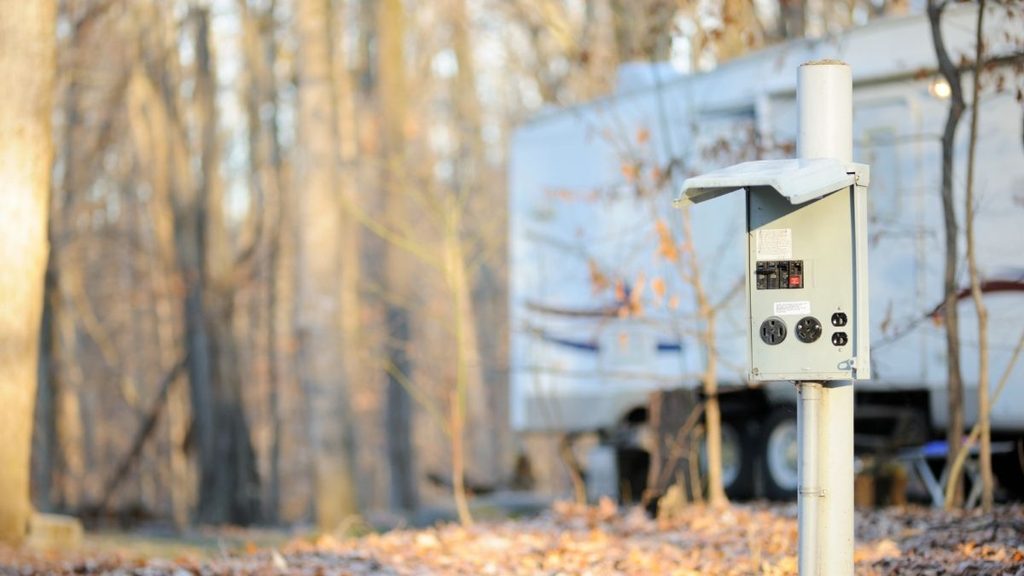
Plugging an RV into a campground pedestal feels simple. You connect the cord, turn on the air conditioner, and expect the electricity to behave like power at home.
That assumption can cause trouble. Campground electrical systems can have low voltage, high voltage, an open ground, an open neutral, or other wiring faults. RVIA has specifically addressed grounding problems in its electrical safety work because a damaged cord or faulty campground connection can create dangerous conditions.
A basic surge protector helps with voltage spikes. An electrical management system can go further by checking the incoming power and disconnecting the RV when certain unsafe conditions appear.
For example, Hughes Autoformers says its Power Watchdog models with automatic shutoff can detect problems such as low voltage, high voltage, open ground, and open neutral. Its system disconnects power when voltage drops below 104 volts or rises above 132 volts.
You still need equipment that matches your RV’s electrical service and manufacturer’s instructions. A 30 amp RV and a 50 amp RV do not use the same setup.
The secret: the campground pedestal is part of your RV’s electrical system the moment you plug into it. Treat it like equipment you need to check, not a power outlet you automatically trust.
3. Your Fresh Water Disappears Faster Than Expected
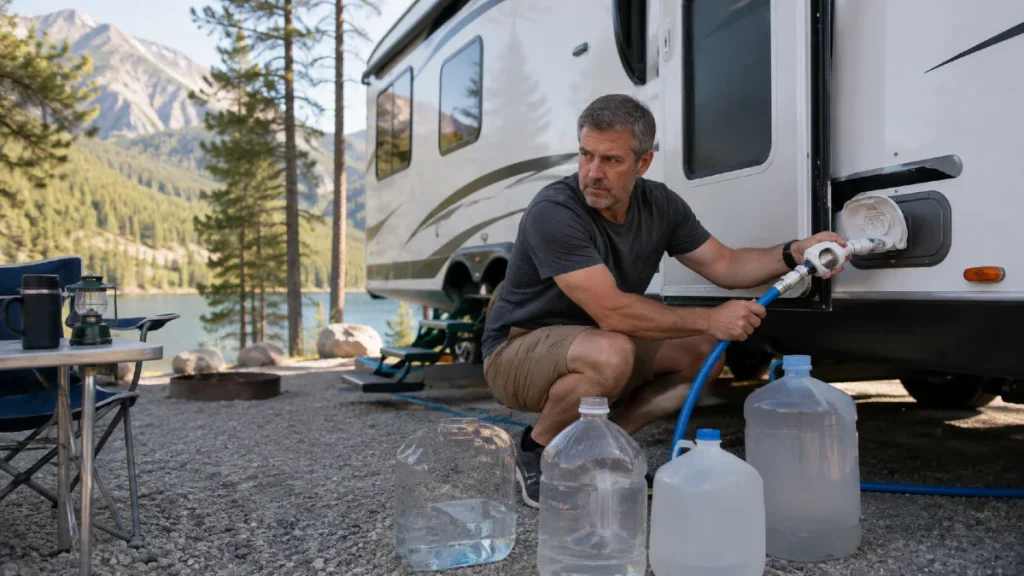
Running out of water at home means there is probably a utility problem. Running out of water while camping away from hookups may simply mean you took a normal shower.
Gadget Review highlighted water management as one of the less glamorous realities of RV living. Once you depend on an onboard tank, everyday habits such as washing dishes, flushing the toilet, brushing your teeth, and showering suddenly become measurable.
A few small changes can make your supply last much longer:
- Turn the shower off while washing.
- Fill a small basin instead of washing dishes under running water.
- Fix dripping faucets quickly.
- Carry separate drinking water when practical.
- Learn the actual capacity of your fresh, gray, and black tanks.
- Check campground water availability before arriving.
You should also maintain the tank itself. Thetford sells an EPA registered fresh water tank sanitizer and recommends a two step cleaning and sanitizing process for its product. The product is for tank sanitation rather than something added continuously to drinking water.
The secret: water management changes the way you camp. Once you know your normal daily use, planning stops feeling like guesswork.
4. Leaving the Black Tank Valve Open Can Create a Bigger Problem
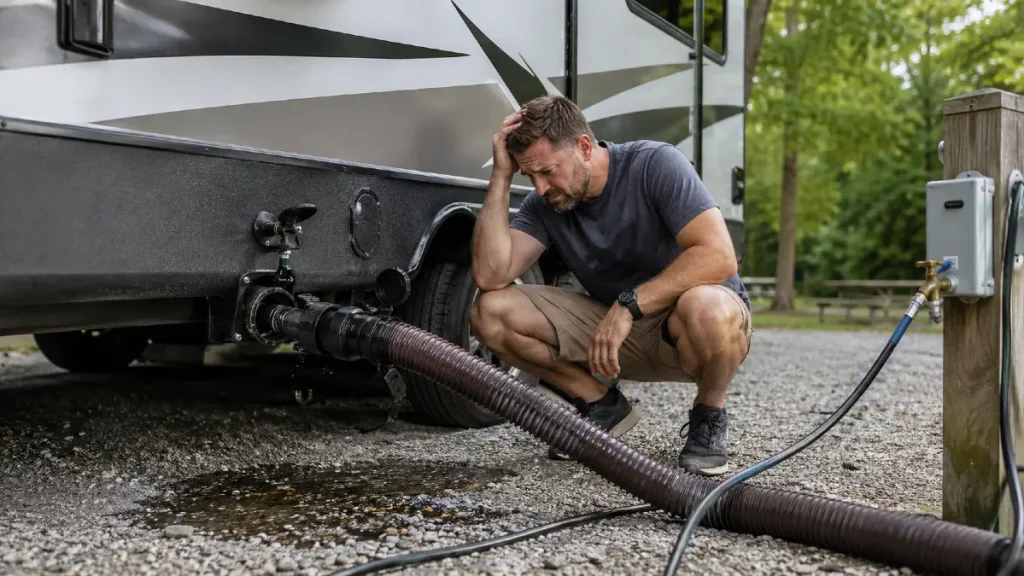
A sewer connection at your campsite can look like permission to leave every drain valve open. The gray valve may be handled differently depending on your setup, but the black tank deserves special attention.
Thetford specifically says not to leave the black tank dump valve open during use, even when the RV has a sewer hookup. When liquids drain continuously, solids can remain behind and collect below the toilet. That buildup can cause odors and block the tank.
A more useful routine is to let the black tank collect enough liquid before dumping. Dump the black tank, then use the gray tank discharge to help rinse wastewater from the sewer hose.
| Tank | What Goes Into It | Basic Habit |
| Fresh tank | Usable water | Keep it clean and sanitized |
| Gray tank | Sink and shower water | Watch capacity closely |
| Black tank | Toilet waste | Keep valve closed during normal use |
| Water heater | Heated fresh water | Drain or service only as directed by the manufacturer |
Thetford also notes that its enzyme treatments are designed to help break down waste and toilet paper. Tank products should be used according to their directions rather than assuming that more chemical treatment is always better.
The secret: a sewer hookup does not turn an RV toilet into a household sewer system. The holding tank still needs enough liquid to work properly.
5. Your RV Refrigerator May Care Whether You Are Level
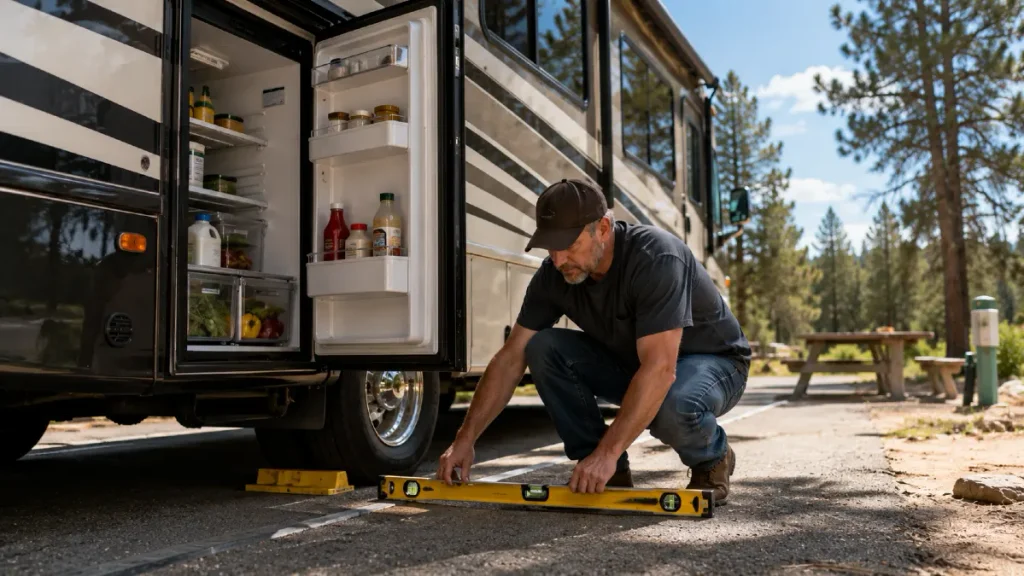
You may level the RV because sleeping on a slope feels strange. Depending on your refrigerator, leveling can also matter for the appliance.
Dometic’s instructions for one of its absorption refrigerator models state that leveling is required for proper operation. When the RV is parked for several hours with the refrigerator operating, Dometic says the vehicle should be level enough that there is no noticeable slope inside.
That does not mean every modern RV refrigerator works the same way. Compressor refrigerators and other systems can have different requirements, which is why your exact appliance manual matters.
Before setting up camp, identify what refrigerator you own. Save a digital copy of its manual on your phone so you can check operating limits when something seems wrong.
Leveling blocks are also useful for comfort, cooking, doors, and sleeping. Just make sure you use them within the limits set by your RV and leveling system manufacturer.
The secret: leveling is sometimes about more than keeping your coffee from sliding across the table. Know what equipment depends on it.
6. Tiny Roof Seal Problems Can Become Expensive Interior Problems
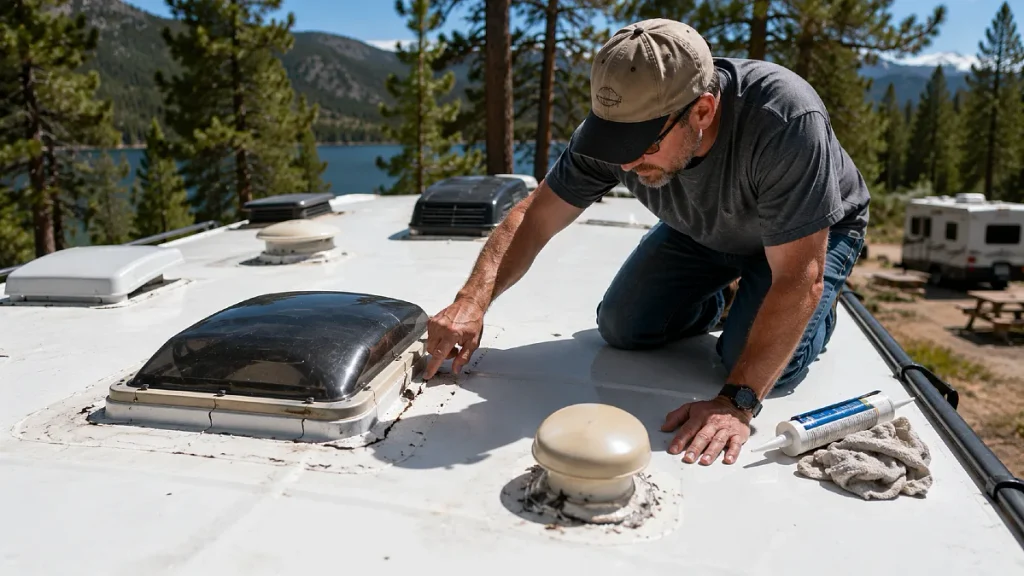
Water does not need a dramatic hole in the roof to damage an RV. A failing seam around a vent, window, light, or roof attachment may be enough.
Winnebago’s 2026 View operator manual says sealants should be inspected at least every six months and replaced when necessary. It tells owners to check windows, moldings, exterior doors, attachments, and other sealed areas for cracks, gaps, breaks, or loss of adhesion.
That makes seal inspection one of the least exciting but most useful RV maintenance habits you can build. Look at roof vents, plumbing vents, air conditioner openings, windows, doors, lights, and body seams.
Do not assume any tube of sealant from the hardware store is suitable. Winnebago specifically tells owners to replace sealant with the same type that was removed, and other RV makers may have their own approved materials.
If you are not comfortable working on an RV roof, use a qualified technician. Falls are a serious risk, and some manufacturers discourage owners from walking on certain roof areas.
The secret: the cheapest water leak is the one you catch before you see a stain inside.
7. Your RV Tires Need More Attention Than Your Car Tires
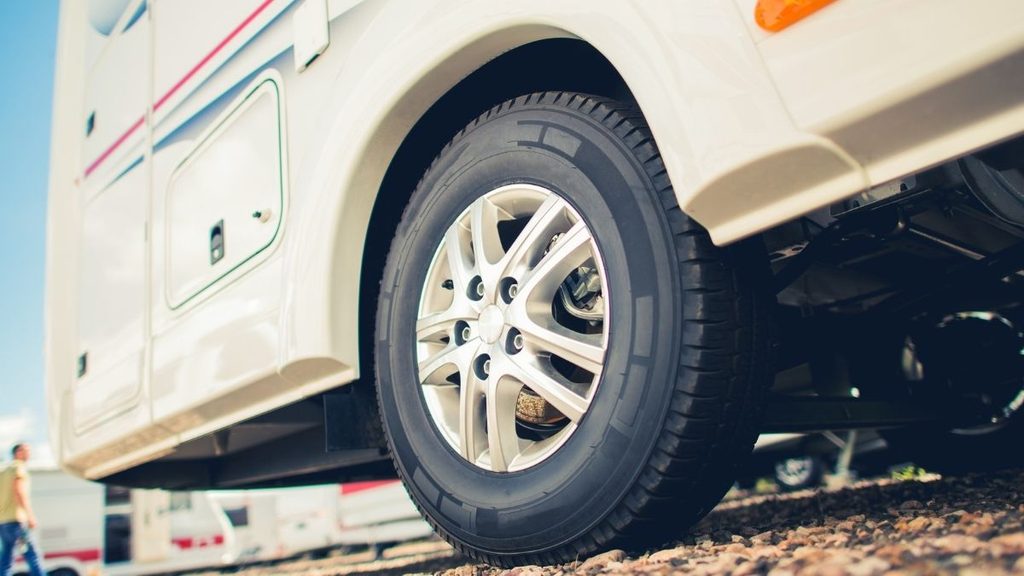
RV tires can sit for long periods and then suddenly carry a very heavy load for hundreds of miles. That makes tire care something you should actively manage.
Michelin says the proper inflation pressure depends on the weight of the fully loaded RV, including passengers, cargo, fuel, and water. It recommends checking pressures at least weekly, before long trips, and each morning during long distance travel.
Goodyear provides similar RV guidance. Its tire information explains that pressure should be based on actual loading and the manufacturer’s load and inflation information rather than choosing a random number because another RV owner uses it.
Check tires when they are cold and inspect them for cuts, cracking, objects, damage, and unusual wear. Do not forget the spare tire if your RV carries one.
A tire pressure monitoring system can also make changes easier to spot while driving. It does not replace manual inspections, but it can give you another layer of information.
The secret: a tire can look fine and still be carrying the wrong pressure for its load. Your scale weight and tire manufacturer’s table are more useful than guessing.
8. Popular Campsites May Require Planning Months Ahead
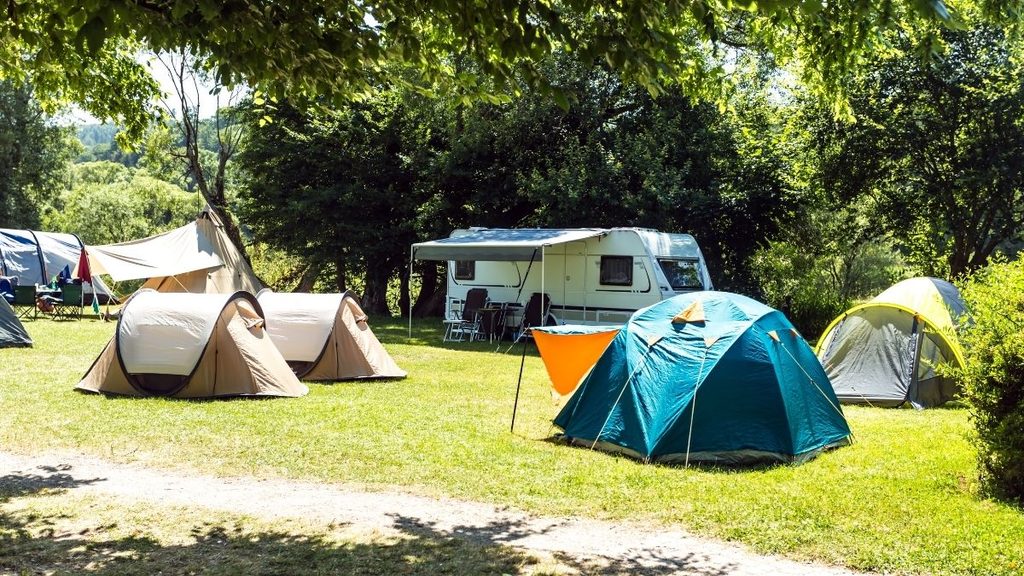
Buying an RV gives you freedom to travel. It does not guarantee a campsite at the place you want to visit.
Recreation.gov says most campsites in its system can be booked six months before arrival, and some popular sites can fill very quickly. Individual campgrounds may also use shorter release windows for part of their inventory.
Olympic National Park provides a good 2026 example. Hoh Rainforest Campground releases different loops six months, two weeks, and four days before arrival. That means knowing the booking system can matter almost as much as choosing the campground.
Size matters too. Recreation.gov lists a total vehicle length limit of 30 feet at Timber Creek Campground in Rocky Mountain National Park. Some larger rigs simply cannot use certain campsites.
Before reserving, check:
- Maximum RV or combined vehicle length
- Electrical service
- Generator rules
- Water availability
- Dump station access
- Arrival hours
- Road restrictions
- Site slope and parking dimensions
The secret: the RV may be ready to go whenever you are, but the campsite might require planning months earlier.
9. The RV Gets Messy Much Faster Than a House
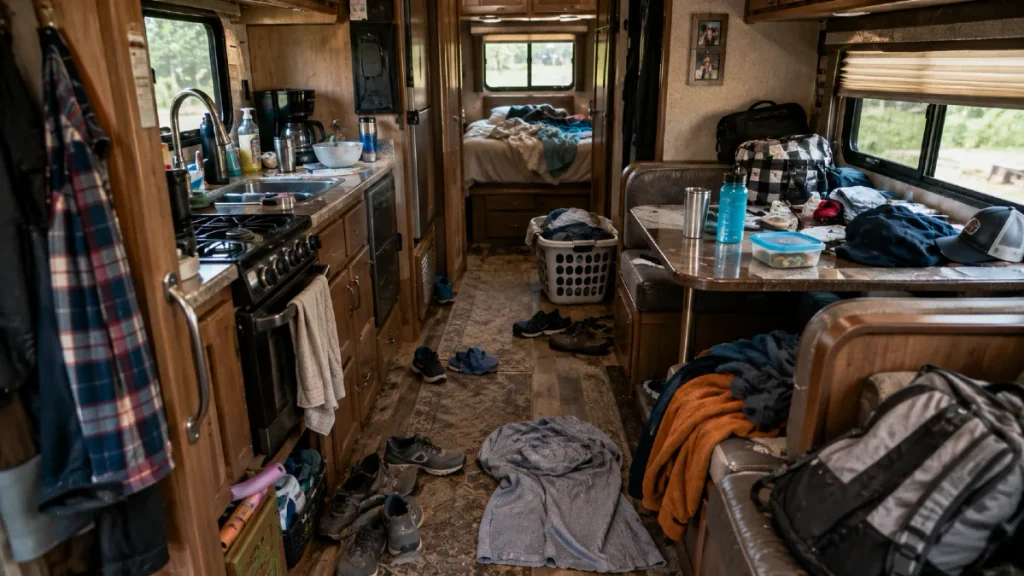
A jacket on a chair does not ruin a living room. Put two jackets, four shoes, a dog leash, groceries, charging cables, and a backpack inside an RV, and suddenly you have lost half the usable floor.
Small RV spaces reward routines. Everything needs a place because loose items can become clutter while parked and hazards while driving.
Use storage that earns its space. Nesting bowls, stackable containers, collapsible laundry baskets, hooks, drawer dividers, and storage under seats can help without filling the RV with organizing products.
The best rule is simple: do not organize things you do not need. If an item has not been used after several trips, ask whether it deserves permanent space in the RV.
Keep frequently used items near the place where you use them. Coffee supplies near the coffee maker and outdoor gear near the door save constant searching.
The secret: good RV organization comes from owning less, not finding 40 clever containers for too much stuff.
10. Hot and Cold Weather Affect Almost Everything

An RV reacts to outside weather much faster than most houses. It has less interior volume, large windows, exposed plumbing, and much thinner walls than a typical home.
Summer sun can heat the living area quickly. Window shades, awnings, fans, ventilation, and parking orientation can reduce the work your air conditioner has to do.
Cold weather creates a different set of problems. Water lines and tanks can freeze, propane use may increase, condensation can collect on cold surfaces, and batteries can perform differently.
Moisture deserves special attention. Cooking, showering, breathing, and drying clothes all add water vapor to a tiny space. Vent fans and controlled ventilation can help remove it before moisture gathers on windows and walls.
Your RV’s cold weather limits depend on its design, insulation, plumbing location, heating system, and equipment. Read the manufacturer’s winterizing instructions instead of trusting a broad “four season” label by itself.
The secret: weather changes how you use the whole RV. Heating and cooling are connected to power, propane, condensation, water, and where you choose to camp.
11. Maintenance Is a Normal Part of RV Ownership
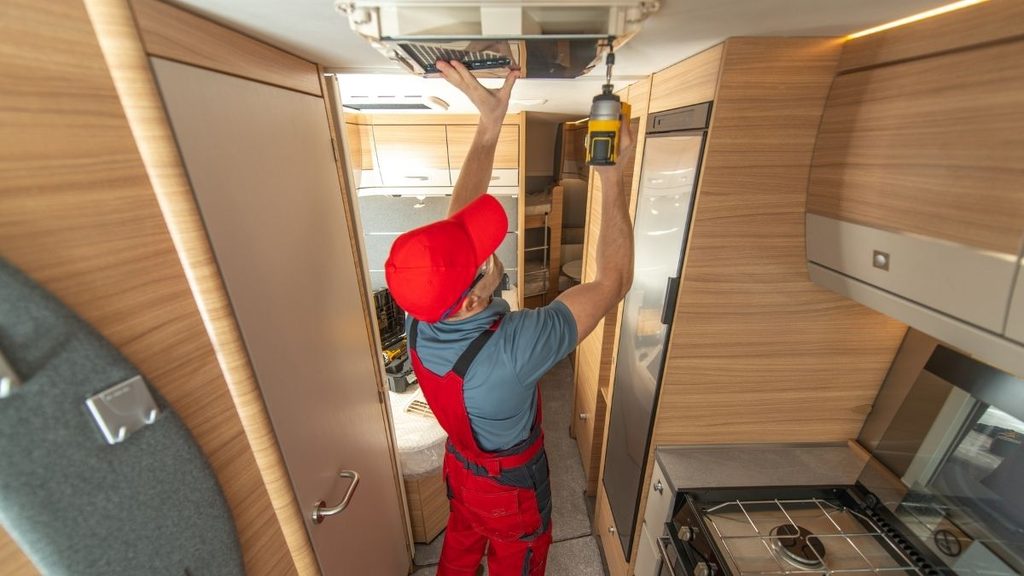
A house stays still. An RV shakes, flexes, heats up, cools down, gets rained on, sits in the sun, and moves down rough roads.
Gadget Review points to this constant vibration and exposure as one reason doors, plumbing, appliances, suspension parts, and seals need regular attention. Winnebago also maintains a library of service guidance covering sealants, batteries, loading, tires, winterizing, and other RV systems.
You do not need to become an RV technician. You do need to notice small changes before they become big problems.
| Check | Why It Matters | Simple Routine |
| Roof and exterior seals | Helps catch possible water entry | Inspect on the maker’s schedule |
| Tires | Supports safe handling and load capacity | Check before travel |
| Batteries | Powers important RV systems | Watch charge and condition |
| Plumbing | Vibration can expose loose fittings | Check for drips and damp areas |
| Detectors | Warn about smoke, carbon monoxide or propane | Test as the manufacturer directs |
| Hinges and latches | Road vibration loosens hardware | Inspect during routine cleaning |
The RV Industry Association lists the 2026 edition of NFPA 1192 among the standards used for recreational vehicles. That standard addresses areas including fuel systems, plumbing, and fire and life safety provisions.
The secret: RV maintenance is not proof that you bought a bad RV. Regular inspection is part of owning a house that moves.
12. Full Time RV Living Still Needs a Permanent Paper Trail
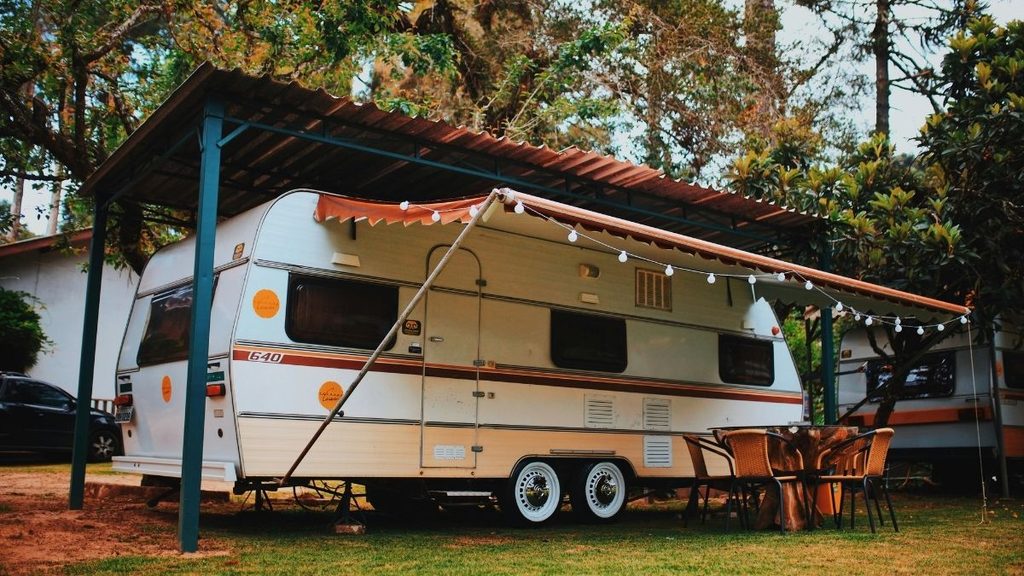
You can change campsites every week, but banks, insurers, motor vehicle departments, tax agencies, and medical providers still ask where you live.
Escapees RV Club explains that an address can affect your driver’s license, vehicle registration, health insurance, auto insurance, banking, and other parts of daily life. Full time travelers therefore need to think about domicile as well as where mail should be sent.
Mail forwarding services can receive your physical mail and send it to you later. Escapees currently offers mail forwarding with address options in Texas, Florida, and South Dakota, plus optional mail scanning.
Do more research before changing legal domicile because tax rules, insurance networks, vehicle registration requirements, and voting requirements vary by state and situation. Mail forwarding by itself does not answer every legal residency question.
For packages, campground offices, carrier pickup points, lockers, and local shipping stores may help. Always ask the campground before sending anything there because some do not accept guest packages.
The secret: giving up a fixed house does not remove the need for an address strategy. Handle that paperwork before you spend months moving from state to state.
13. The Best RV Life Still Needs Routine and Community
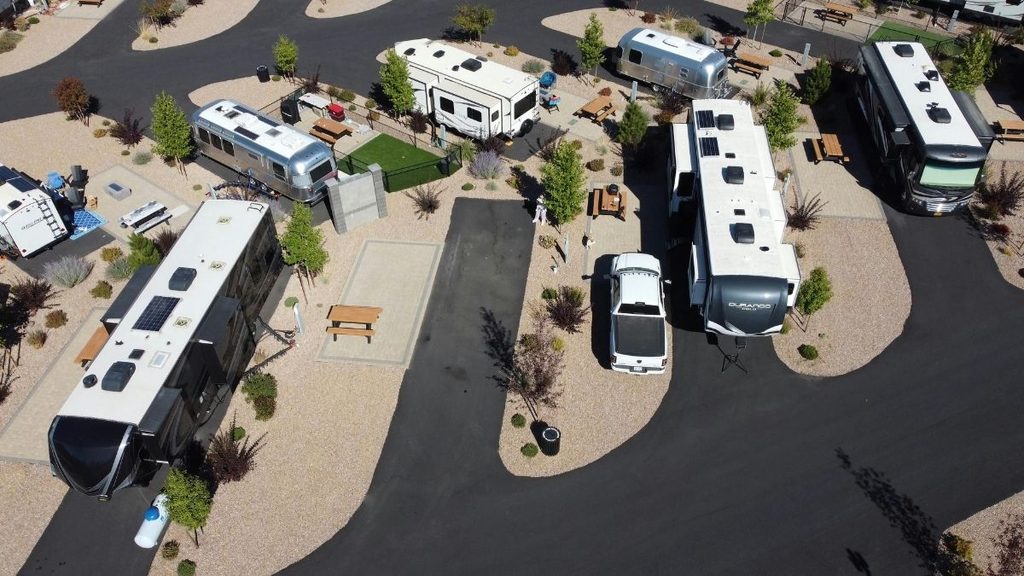
RV travel can give you beautiful mornings, new places, and far more control over where you spend your time. It can also create a surprising amount of decision making.
Where are you sleeping tomorrow? Where will you dump the tanks? Is there fuel nearby? Can the RV fit into the next campground? Will there be cell service? When can you refill propane?
Moving constantly can become tiring even when you love travel. Gadget Review also points to loneliness and social isolation as issues some full time RV travelers face when they keep changing locations.
One solution is to stop treating every day like a vacation. Stay longer in places you enjoy, create regular work or exercise hours, return to favorite campgrounds, and leave empty days between long drives.
RV clubs, campground events, rallies, hobby groups, and recurring seasonal stops can also create familiar faces. You do not have to choose between movement and community.
The secret: freedom feels better when you have a few routines holding everything together.