
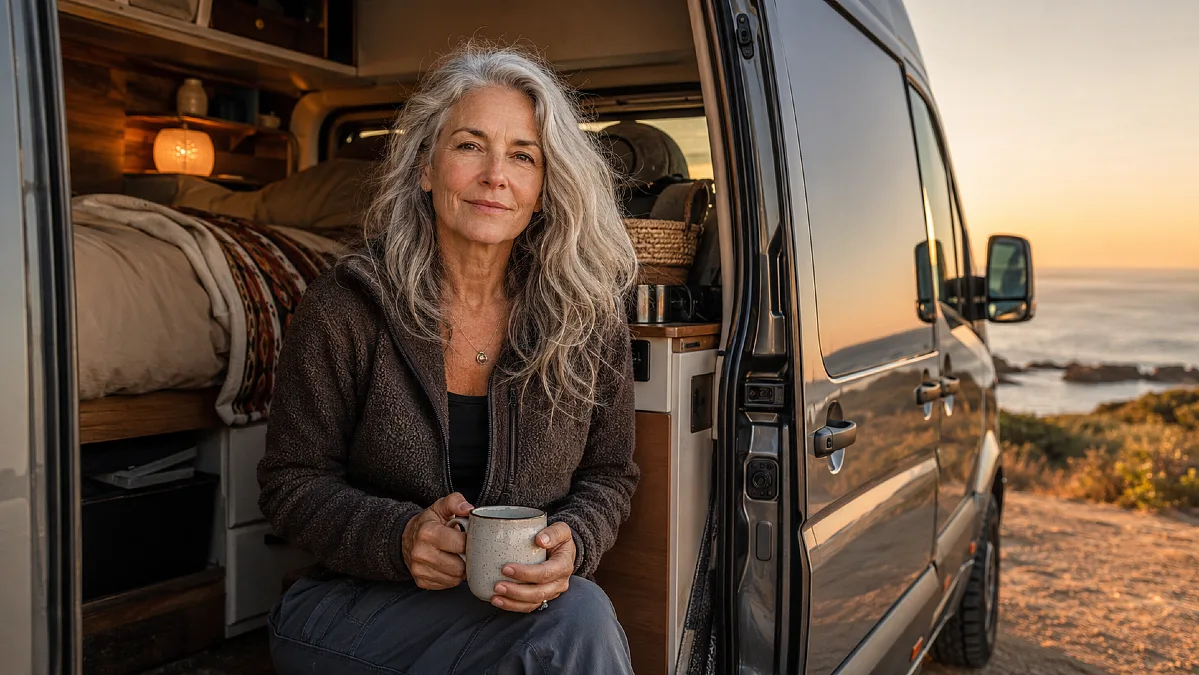
You may be picturing quiet mornings by a lake. Your coffee is hot. The doors are open, and there is no schedule telling you where to be.
Then the practical questions begin.
Where will you sleep tonight? Will you feel safe there? What happens when you need a bathroom at 2 a.m.? How will you receive medicine, deal with a sore back, or find a mechanic in a town you have never visited?
Those questions do not mean you are too old, too cautious, or too late. They mean you are thinking past the pretty pictures.
1. Freedom Feels Real, but It Requires Daily Planning

The freedom is not fake. You can wake up, look at the weather, and decide that you would rather spend another week near the coast.
But each choice creates another set of tasks.
You need to check fuel, water, food, road conditions, weather, internet service, and legal parking. A simple move between campsites can take hours once you pack loose items and refill supplies.
Traveling slowly helps. Staying five nights in one place usually gives you more time to enjoy it than changing locations every morning.
It can also reduce fuel use and decision fatigue.
Keep a short moving day checklist:
- Fill drinking water.
- Check tire pressure.
- Secure drawers and loose objects.
- Download your route.
- Save a backup sleeping place.
- Tell someone where you are going.
Public land does not mean you can remain forever. The Bureau of Land Management says dispersed camping is generally limited to 14 days within a 28 day period, though local rules vary. Some offices also require campers to move a set distance before returning.
The lifestyle offers freedom. It does not remove planning.
2. Feeling Safe Depends More on Your Routine Than Your Gear

Many women worry that solo van life requires them to feel fearless.
It does not.
You need a routine that lets you leave quickly when something feels wrong. That matters more than trying to prove that you are brave.
Try to reach each sleeping place before dark. Daylight lets you see nearby roads, other vehicles, broken glass, flood risks, signs, and possible exits.
Park so you can drive away without moving chairs or storage boxes. Keep your keys in the same reachable place every night. Avoid creating a bed setup that blocks the front seats.
You can also follow a basic check in plan:
- Share your location with one trusted person.
- Tell that person when you expect to move.
- Choose a check in time.
- Keep your phone and backup battery charged.
- Save local emergency and ranger numbers.
- Leave when your instincts tell you to leave.
Do not announce online that you are alone at a remote location. Post photos after you move.
Campgrounds can feel safer because they offer hosts, neighbors, gates, lights, or staff. They are not risk free, but they may reduce worry during your first trips.
The National Park Service also advises campers to learn the safety rules for each site, store food correctly, and pay attention to hazards that change by location.
You never owe a parking place the benefit of the doubt. Starting the engine and leaving is enough.
3. You May Sleep Better Than Expected, Until You Do Not

Your van can become a small, familiar home. Once your body knows the sounds and layout, you may sleep better than you did in hotels.
But sleep can change from one night to the next.
A nearby truck may idle for hours. Streetlights may shine through a curtain. Wind can shake the van. A slightly sloped parking space can leave you sliding toward one side of the mattress.
Temperature may be the biggest problem.
A van can become very hot in direct sun and cold after sunset. Insulation slows temperature changes, but it does not create heat or cooling by itself.
Choose your mattress with the same care you would use at home. A thin foam pad may feel fine during a weekend. After several weeks, pressure on your hips, shoulders, or lower back may become harder to ignore.
Ventilation is also a safety issue. Never treat a heater, camping stove, or running engine as a casual source of indoor warmth.
The CDC recommends placing a battery powered or battery backup carbon monoxide detector near sleeping areas. Carbon monoxide cannot be seen or smelled, and a sleeping person may not notice symptoms before becoming seriously ill.
A comfortable van bed should include:
- A supportive mattress
- Washable bedding
- Window covers
- Airflow
- A carbon monoxide alarm
- A clear path to the driver seat and toilet
Good sleep makes every other part of van life easier.
4. Your Body Will Decide Whether the Layout Works
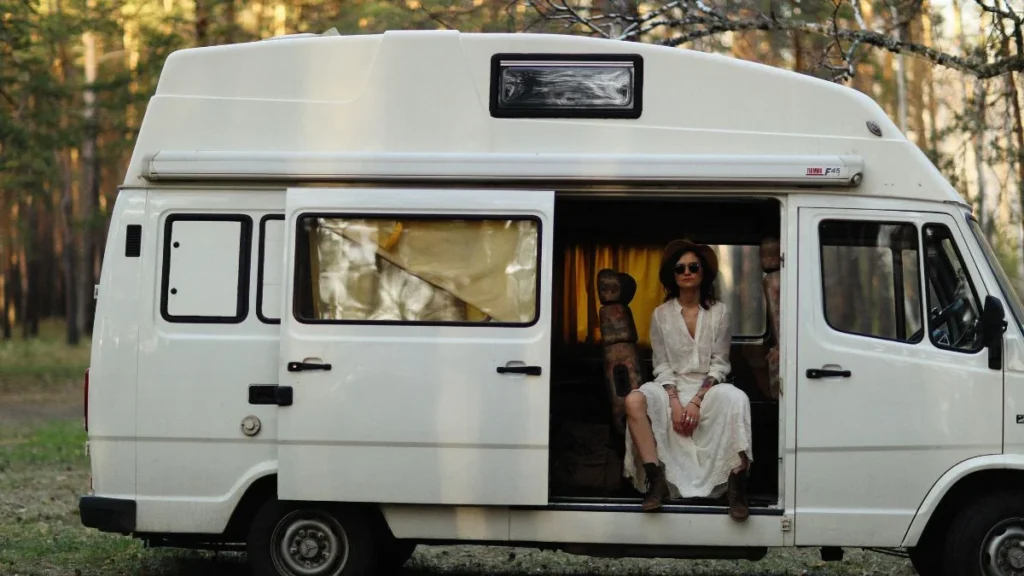
A beautiful camper layout can still be wrong for you.
Small daily movements matter more after 50. Repeatedly bending under a low ceiling, climbing over a partner, or lifting a heavy bed panel may become painful.
This is why a test trip is so important.
Sit inside the van for several hours. Cook a meal. Change your clothes. Use the toilet. Reach every cupboard. Get into bed without holding your breath or twisting your knee.
Pay special attention to:
- The height of the entrance step
- The amount of standing headroom
- The distance between the bed and ceiling
- The weight of tables and bed panels
- The location of heavy kitchen items
- The ease of turning around inside
- Access to the bathroom at night
A permanent bed takes up space, but it removes the daily job of building and folding a bed. That trade may be worth it if your back, hands, or knees become sore easily.
Swivel seats can create a sitting area without adding another chair. Grab handles can make entering the van easier. Full extension drawers may be more comfortable than deep floor level cabinets.
The best layout is not the one with the most features. It is the one that asks the least from your body.
5. Bathrooms Become Part of Your Daily Strategy
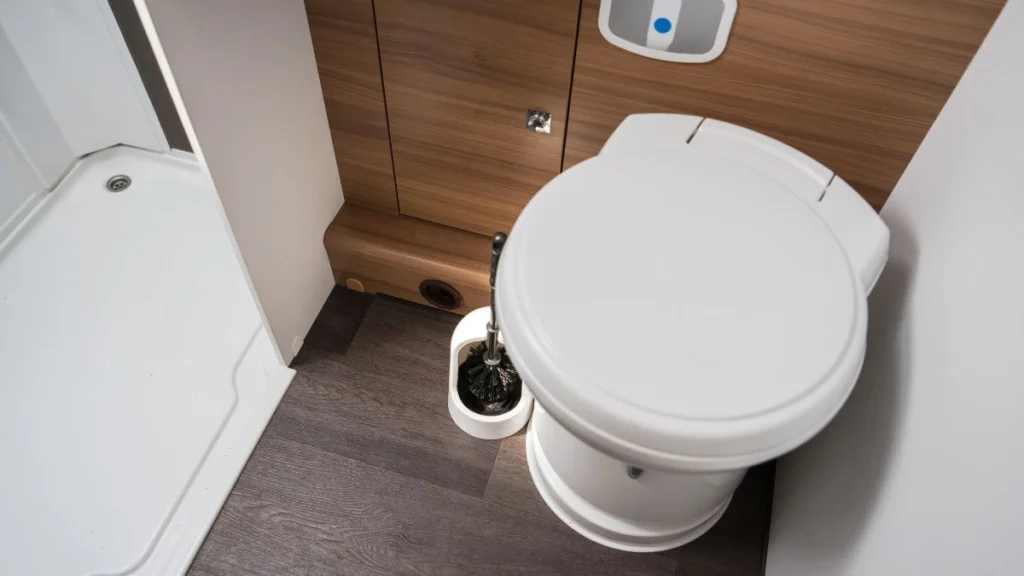
Bathroom planning is one of the least glamorous parts of living in a van after 50.
Public toilets are useful, but you cannot depend on them every night. Facilities may close early, lock during winter, or be miles from your sleeping place.
A portable toilet gives you more control. It can also create odor, storage, and cleaning work.
Before choosing one, ask:
- Can I use it without hitting the ceiling?
- Can I empty it without lifting too much weight?
- Where will it stay during the day?
- Can I reach it without opening an outside door?
- Does the lid lock securely while driving?
Showers require their own plan.
Some travelers use campground showers. Others use gyms, recreation centers, truck stops, or private camping facilities. A built in shower offers privacy, but it needs water, drainage, waterproof surfaces, and regular cleaning.
You may discover that a full shower inside a small van uses more room than it is worth. A simple wash at the sink, body wipes, and regular outside showers may suit you better.
There is no prize for making hygiene difficult. Pay for a campground or hotel room when you need a long shower, laundry, air conditioning, or a quiet bathroom.
Comfort is a valid expense.
6. Van Life Can Cost Less, but It Is Not Automatically Cheap
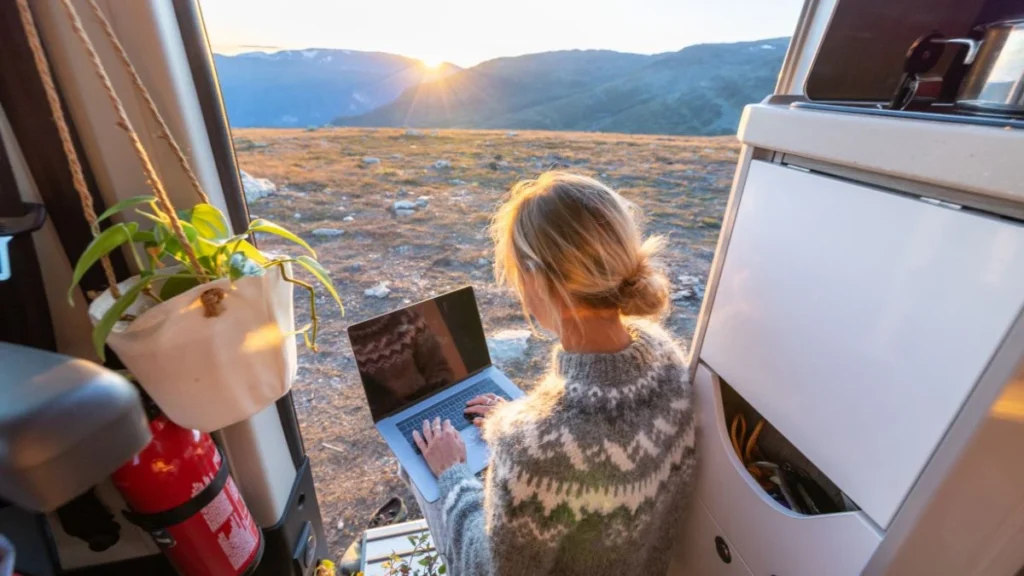
A van may remove rent or a mortgage payment. It replaces those costs with a different set of bills.
You may need to pay for:
- The van purchase or loan
- Vehicle insurance
- Registration
- Fuel
- Oil and tires
- Mechanical repairs
- Camper system repairs
- Campsites
- Mobile data
- Laundry
- Showers
- Propane or electricity
- Mail service
- Roadside assistance
Free camping can lower your monthly total. It may also place you farther from groceries, water, medical care, and reliable phone service.
Campgrounds can become expensive during summer, weekends, and holidays. Reservations may also reduce your freedom because popular areas fill early.
The RV Industry Association reported about 8.1 million RV owning households in its 2025 profile. It also found that 36 percent of owners were first time owners. The data shows continued interest in mobile travel, but it does not prove that full time van living is cheap or common.
Create three separate funds before moving into a van:
- Normal monthly spending
- Van repairs and replacement parts
- Emergency housing and travel
A major repair can leave both your vehicle and your home inside a mechanic’s lot. You may need a hotel, rental car, meals, and transportation while the work is completed.
Track your spending during a one month van rental. Include every fuel stop, coffee, shower, campsite, repair item, and convenience purchase.
A realistic test budget is more useful than someone else’s perfect monthly total.
7. Health Care Requires a Mobile Plan

Health care does not stop because you are traveling.
Before leaving your home area, check how your insurance handles routine care in other states. Do not assume that any doctor will be treated as an in network provider.
Some Medicare Advantage plans require members to use doctors and facilities within a defined network for routine care. Emergency and urgent care rules are different, but regular appointments may still need to happen in your plan’s service area.
Build a simple health folder with:
- Your medicine list
- Allergies
- Insurance details
- Doctor contact information
- Recent test results
- Emergency contacts
- Copies of important prescriptions
Keep one digital copy and one paper copy.
Refill medicine before entering a remote area. Check whether your pharmacy offers locations across the country or allows transfers. Some medicines have stricter refill rules, so ask before you travel.
Schedule dental work, eye exams, screenings, and routine appointments around longer stays. Try not to move every few days when you are waiting for results or follow up care.
HealthCare.gov notes that moving can sometimes create a special enrollment opportunity, but moving only for a vacation does not qualify. Your legal residence and insurance service area therefore need careful attention.
Mobility does not make medical planning impossible. It makes advance planning more important.
8. Loneliness Can Appear Even When You Love Being Alone

You can enjoy solitude and still feel lonely.
This often surprises women who have wanted more personal space for years. Van life may finally give you quiet mornings and control over your time. It can also remove the small contacts that once shaped your day.
You may miss:
- A familiar neighbor
- Your regular grocery store
- Sunday lunch with family
- A local exercise class
- A friend who knows when something is wrong
- Being part of a place instead of passing through it
Campground conversations are pleasant, but they may stay brief. People leave. You leave. Friendships require more effort when everyone is moving.
Create social structure before loneliness becomes heavy.
Plan weekly calls. Stay in some locations for two or three weeks. Attend library events, walking groups, craft classes, church gatherings, volunteer days, or van meetups.
You do not need to spend every night alone on remote land. Private campgrounds, state parks, hosted camping, and visits with friends can create a healthier mix.
The goal is not to prove how independent you are. The goal is to build a life that still feels connected.
9. Parking Rules Remove Some of the Spontaneity
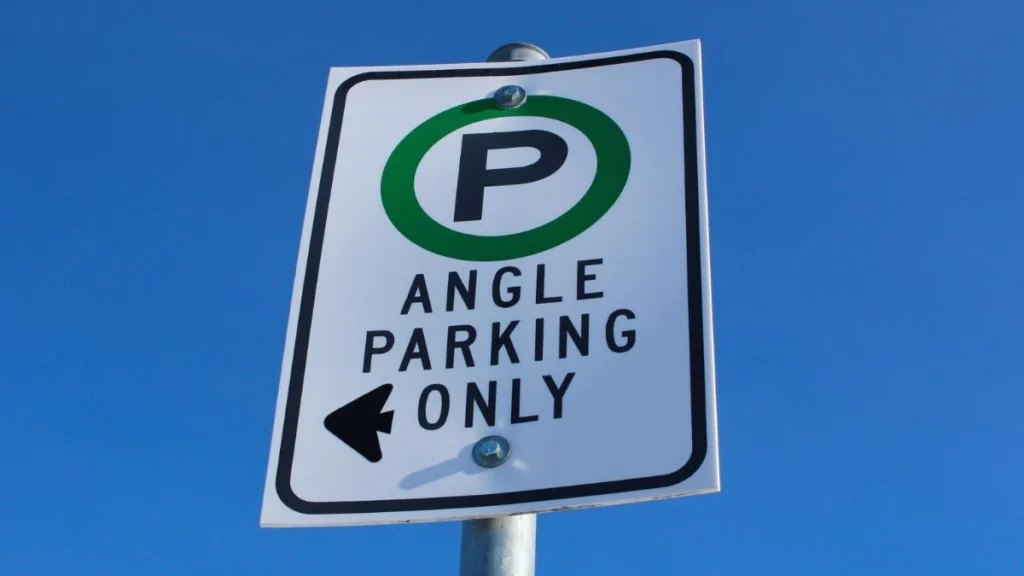
One of the biggest van life myths is that you can sleep wherever you park.
You cannot.
Rules change by city, county, park, forest, business, and public land office. A place that welcomed overnight vehicles last year may now have signs, barriers, time limits, or active enforcement.
National parks commonly limit sleeping in a vehicle to designated campsites. Joshua Tree National Park, for example, states that visitors may sleep in a vehicle at a lawfully occupied campsite but not in parking lots, trailheads, roadsides, or other areas outside campgrounds.
Yellowstone also prohibits overnight vehicle camping outside designated campgrounds.
Do not rely on an old app review as proof that camping is legal.
Check:
- The official land or park website
- Signs at the location
- Recent local notices
- The field office or ranger station
- The current date of any app report
Keep two backup options for every night. One may be a paid campground.
Paying for a legal site is often better than spending hours driving in circles while tired.
Spontaneity feels best when it is supported by a backup plan.
10. Weather Controls More of Your Life Than You Expect

In a house, weather happens outside. In a van, it changes your whole living space.
Sun can turn the interior into an oven. Cold can drain batteries and freeze water lines. Wind can make cooking outside unsafe. Heavy rain may trap you on a soft dirt road.
Humidity creates another problem. Breathing, cooking, and wet clothing add moisture to the air. That moisture can settle on windows, walls, bedding, and metal surfaces.
A roof vent and open window can reduce condensation, but weather may limit how much ventilation is possible.
Build each route around conditions, not just attractions.
Check:
- Daily and overnight temperatures
- Flood warnings
- Wind speed
- Wildfire conditions
- Air quality
- Snow and ice
- Road closures
- Elevation
Do not wait until you feel sick from heat to move. Do not remain on an exposed ridge because you already unpacked your chair.
Some van travelers follow mild seasons, moving north during warmer months and south before winter. This can improve comfort, but it also requires fuel and planning.
Weather is not background scenery. It is part of your housing system.
11. Driving Less Often Can Make the Lifestyle Better
Van life can slowly turn into a driving job.
At first, you may try to see several places in one week. That pace can leave you tired, sore, and too busy to enjoy any of them.
Long driving days are especially hard when followed by the search for water, food, fuel, and a safe sleeping place.
Set a personal driving limit. It might be two hours, three hours, or a set number of miles. Stop before you become exhausted.
Night driving deserves special attention. A 2026 AAA survey found that six in ten drivers said glare was a problem after dark. Female respondents reported glare more often than male respondents.
There is no reason to force yourself to drive after sunset.
You can:
- Leave earlier.
- Avoid rush hour.
- Schedule rest days.
- Stop before bad weather arrives.
- Choose routes with easier roads.
- Take a driver refresher course.
- Adjust mirrors, seat height, and steering position.
AAA also supports CarFit, a program designed to help older drivers check how well their vehicle fits their body and needs.
The van is your home. You do not need to race it across the country.
12. You May Become More Confident, but You Still Need an Exit Plan

Living alone in a van can show you how capable you are.
You learn to reverse into a narrow campsite. You replace a fuse. You ask a mechanic better questions. You change plans when weather closes a road.
Small wins begin to stack up.
But confidence should not trap you in the lifestyle. You are allowed to stop.
Your needs may change because of health, family, money, loneliness, climate, or simple preference. A life that feels right at 54 may feel different at 64.
Protect your choices by keeping:
- An emergency savings fund
- Good credit when possible
- Current identification
- A legal mailing address
- Copies of housing and financial records
- A plan for temporary accommodation
- Contact with people who can help
- A clear idea of where you could live next
Avoid selling everything before your first long trip. Store key household items for several months if you can. Rent a van or use a simple conversion before paying for a costly custom build.
Test regular life, not vacation life.
Buy groceries. Do laundry. Spend a rainy day inside. Handle a minor repair. Stay somewhere ordinary. Drive through traffic. Spend a week without a perfect view.
That is how you learn whether you love van life or simply love road trips.
Is Van Life for Women Over 50 Worth It?
It can be.
You may gain freedom, confidence, time outdoors, and a clearer sense of what you truly need. You may also face poor sleep, mechanical trouble, loneliness, health care limits, and days when basic chores feel harder than they should.
Neither side cancels the other.
The smartest way to explore van life for women over 50 is to begin with a trial. Rent a van for two weeks. Then try a month. Include bad weather, normal errands, and several nights without a scenic view.
Pay attention to your body, budget, sleep, and sense of safety.
The right question is not whether you are brave enough to live in a van. It is whether the daily reality supports the life you want.