
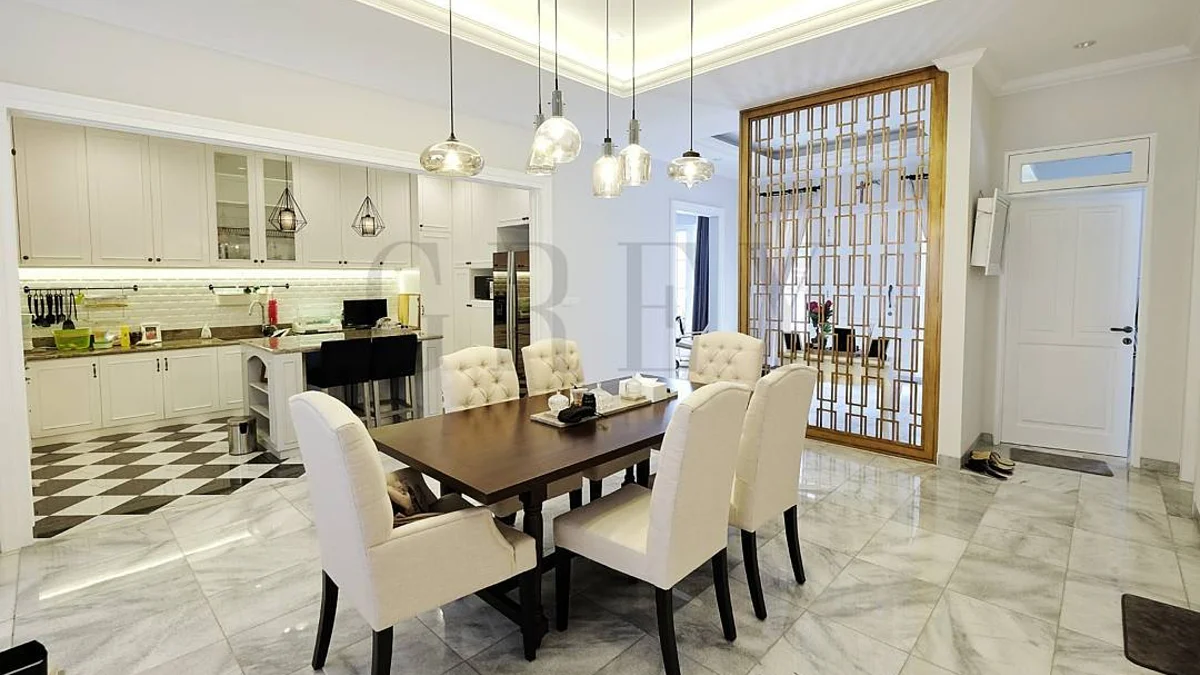
Open floor plans offer a spacious feel in modern homes. Large rooms often struggle with a lack of clear purpose. You might find it hard to separate your kitchen from the living area. Strategic design choices solve this common layout problem.
Creative furniture placement helps establish distinct zones without building permanent walls. Using rugs and lighting defines where one room ends and another begins.
This guide showcases smart ways to organize your expansive layout. Every corner of your home will feel intentional and cozy. Discover how to balance flow and function through clever visual cues.
Mastering the Open Concept: Defining Zones for Function and Flow
While open floor plans create a sense of breathability and light, they can often feel unanchored without a clear structural strategy.
By utilizing visual boundaries rather than physical barriers, you can transform a vast, echoing room into a series of intimate, purpose-driven “micro-spaces.”
- Anchor Spaces with Area Rugs: Use different textures and sizes of rugs to create “islands” for specific activities, such as a plush rug for the lounge and a flat-weave for the dining area.
- Layer Your Lighting: Install distinct light fixtures, like a statement pendant over the dining table and warm floor lamps near the sofa, to signal a change in the room’s mood and purpose.
- Strategic Furniture Placement: Position larger pieces, such as the back of a sofa or a low-profile console table, to act as a “soft wall” that guides foot traffic and separates the kitchen from the living zone.
- Incorporate Vertical Interest: Use open bookshelves, tall indoor plants, or even hanging partitions to provide a sense of enclosure and privacy without sacrificing the airy feel of the layout.
1. Exposed Ceiling Trusses
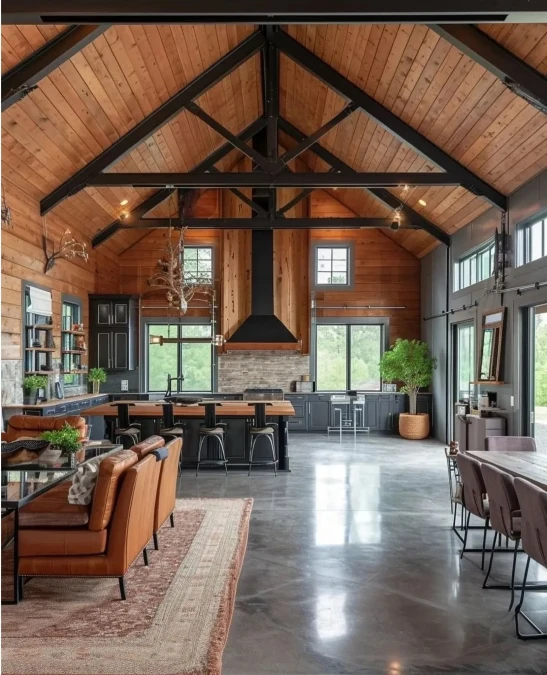
Steel beams create a striking visual boundary overhead. These dark metal supports draw the eye upward and emphasize the height of the vaulted roof.
Architectural elements like these provide structure to a vast room. Wood planks on the ceiling add warmth to the industrial frame.
2. Woven Pendant Lights
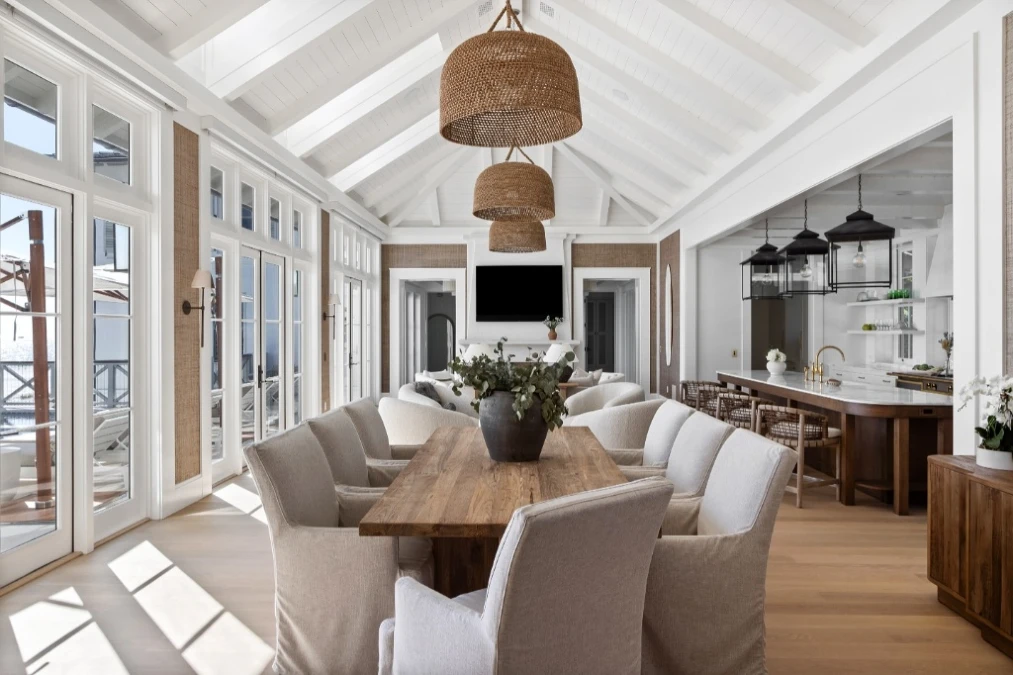
Large rattan light fixtures hang in a row to anchor the dining table. These natural textures contrast beautifully against the crisp white vaulted ceiling.
Hanging multiple lights at the same height creates a clear path through the home. This repetition draws your gaze toward the living area fireplace.
3. Vertical Loft Mezzanine
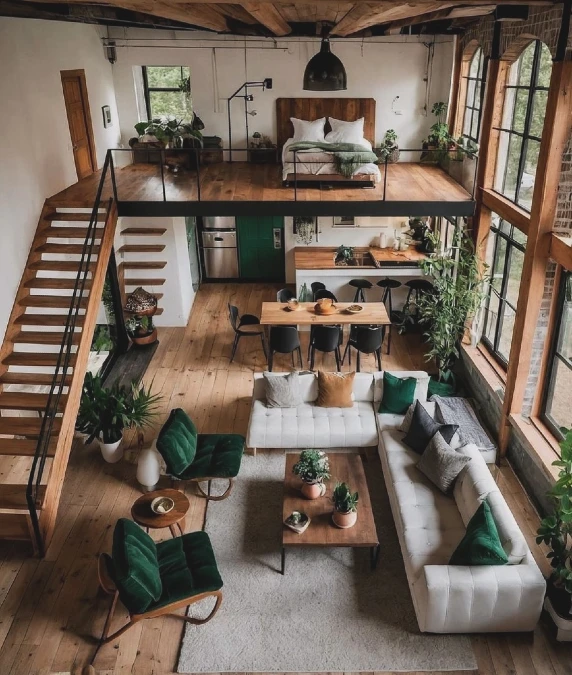
A raised platform separates the sleeping quarters from the main living area. This vertical approach keeps the floor plan open while providing private zones.
Wooden stairs with thin black railings guide you to the upper level. This smart layout maximizes the high ceilings of a compact industrial space.
4. Wide Cased Openings
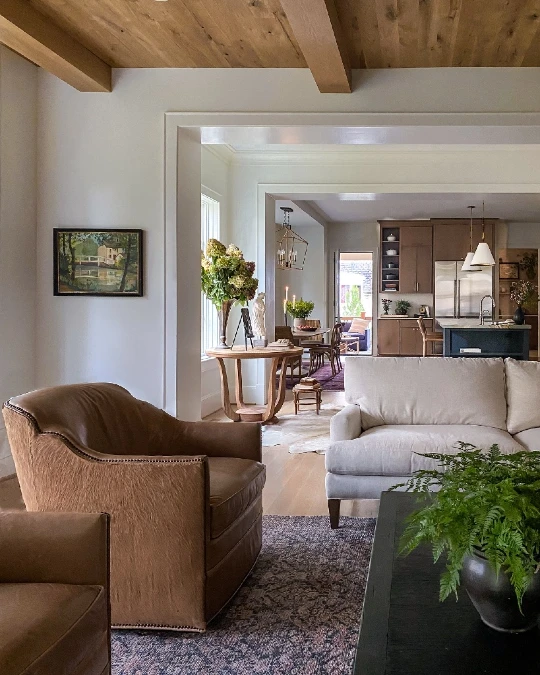
Thick white trim frames the transition between the lounge and the kitchen. This architectural detail acts like a doorway without a door to maintain flow.
Cased openings create a sense of moving into a new room. Large beams on the ceiling further define the shift in space.
5. Arched Accent Windows
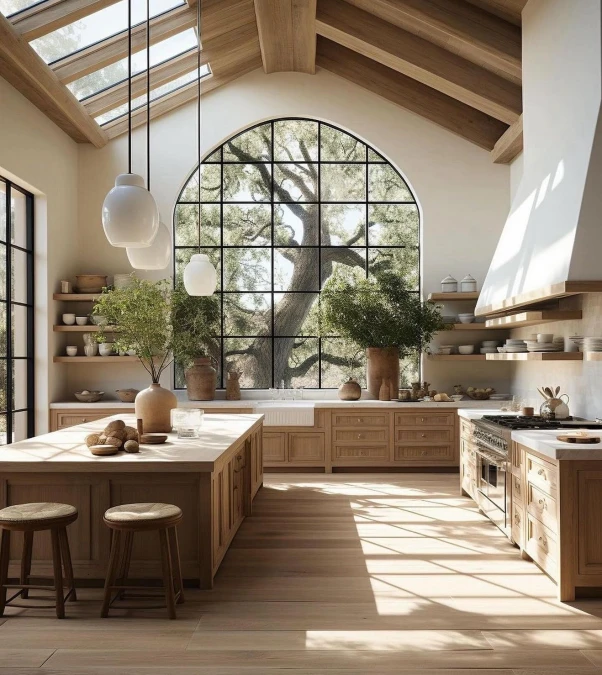
A massive arched window acts as a natural focal point for the kitchen area. This architectural feature frames the outdoor scenery and floods the room with soft light.
Large glass panes help separate the cooking zone from the rest of the home. Sunlight creates shifting patterns on the floor to mark the different areas.
6. Seamless Indoor Outdoor Transitions
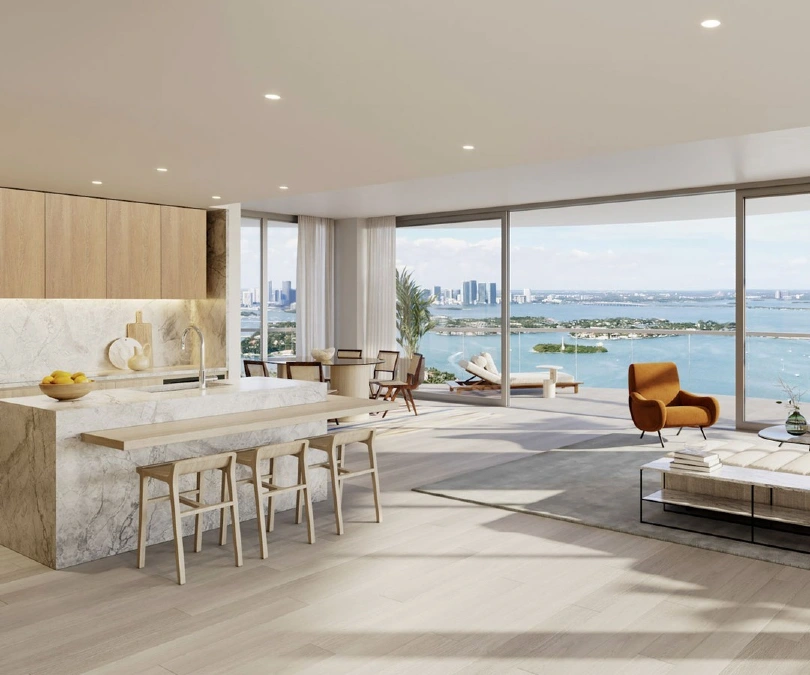
Floor to ceiling glass walls merge the kitchen and living area with a stunning balcony view. This expansive boundary eliminates solid walls while keeping the layout organized.
Natural light floods the light wood floors to connect the different zones. Minimalist furniture ensures the focus remains on the beautiful coastal landscape.
7. Contrast Floor Textures
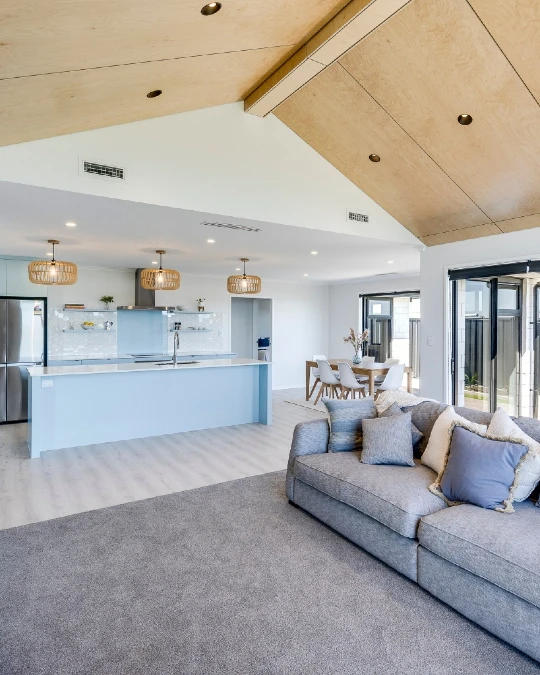
Dark gray carpeting meets light wood planks to signal a shift in room function. This tactile change clearly separates the cozy lounging area from the kitchen workspace.
Plywood ceiling panels slope downward to further define the living zone. Recessed lights and cage pendants provide targeted illumination for each specific area.
8. Large Area Rugs
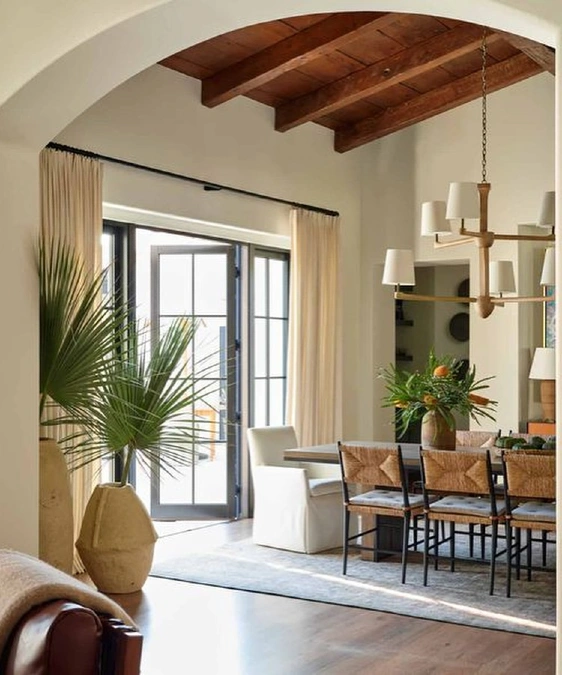
A spacious gray rug sits under the dining table to anchor the eating zone. This soft boundary separates the neutral chairs and wooden table from the surrounding hardwood floor.
Using a rug creates a room within a room for dining. It provides a visual break that tells the eye where the social space begins.
9. Tall Indoor Plants
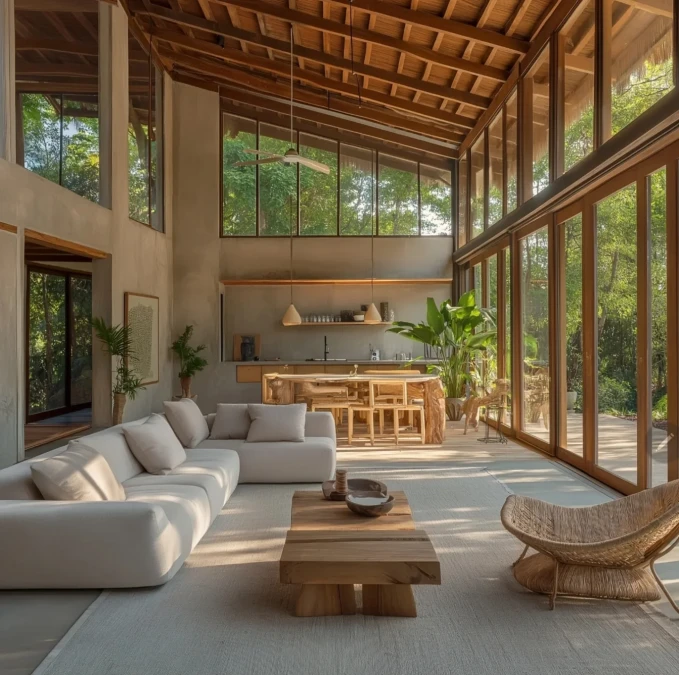
A lush green tree stands in a large woven pot to bridge the gap between the kitchen and living area. This natural element adds height and softness to the open layout.
Placing greenery in transition zones creates a living wall. It provides a gentle visual screen that separates functional spaces without blocking the view.
10. Floor to Ceiling Curtains
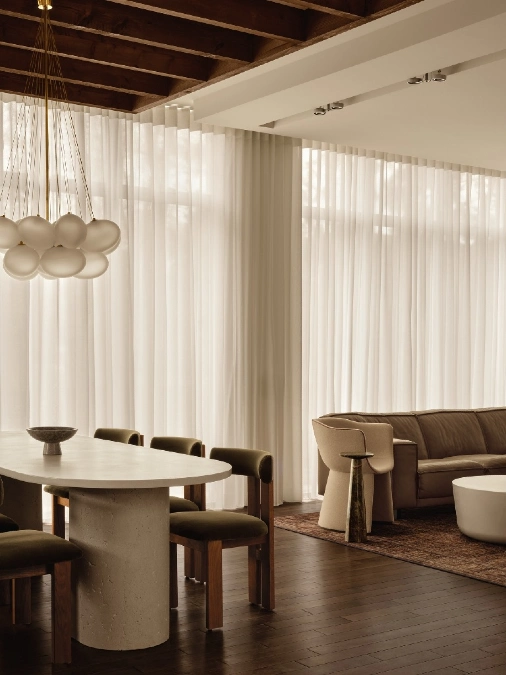
Sheer white curtains span the entire length of the back wall to unify the dining and living zones. These soft drapes provide a consistent backdrop that makes the large room feel cohesive.
Drawing the curtains creates an intimate environment for evening gatherings. This simple textile choice adds a layer of privacy without losing the airy feel of the open plan.
11. Large Architectural Arches
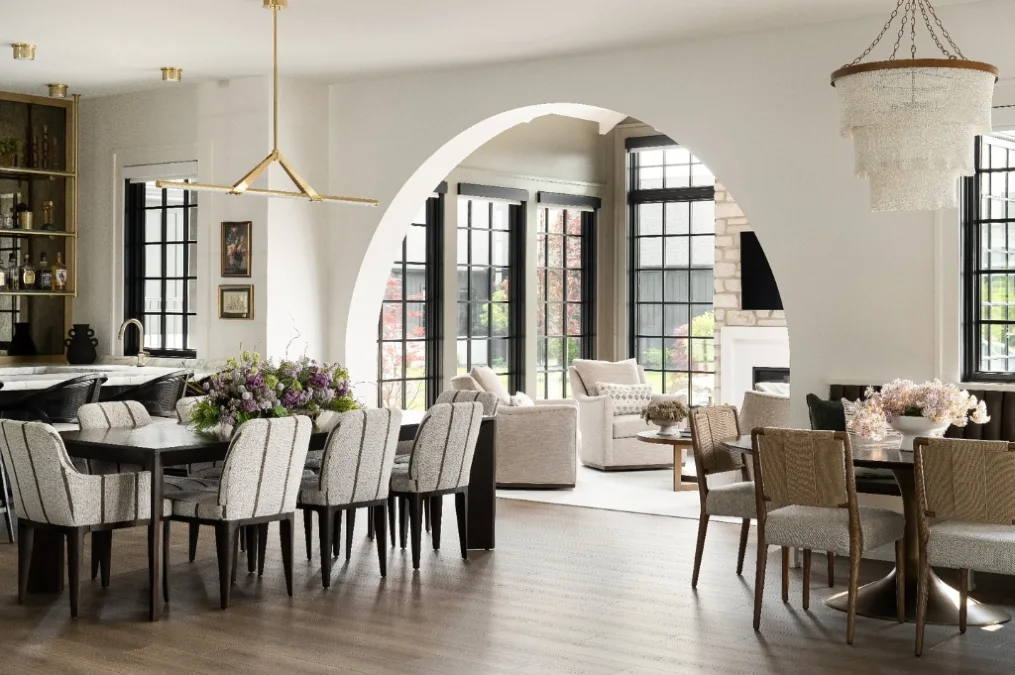
A wide curved archway serves as a grand portal between the dining hall and the sunlit lounge. This structural feature creates a psychological boundary that divides the home without using doors.
The white plaster finish of the arch contrasts with the dark window frames in the background. This design choice maintains an airy feeling while giving each area a specific identity.
12. Glass Staircase Railings
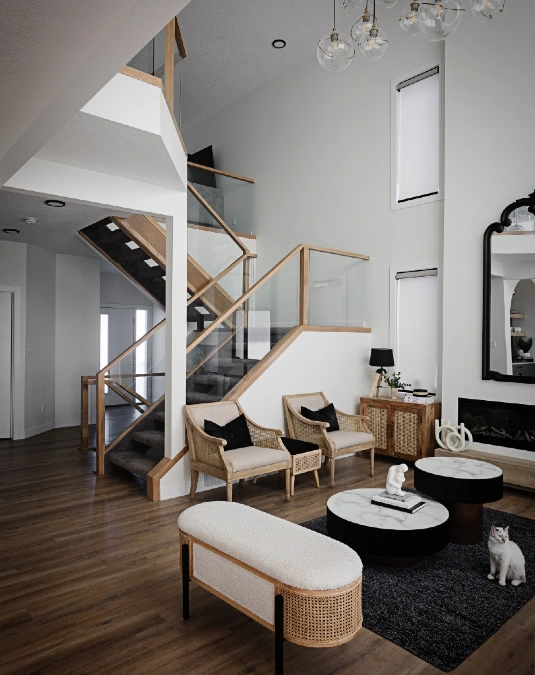
A modern staircase uses clear glass panels to maintain sightlines across the entryway and lounge. This transparent barrier provides safety while keeping the visual field completely open.
Natural wood handrails add a warm touch to the minimalist design. This choice allows light to travel freely through the different levels of the home.
13. Skylights and Dark Stone Walls
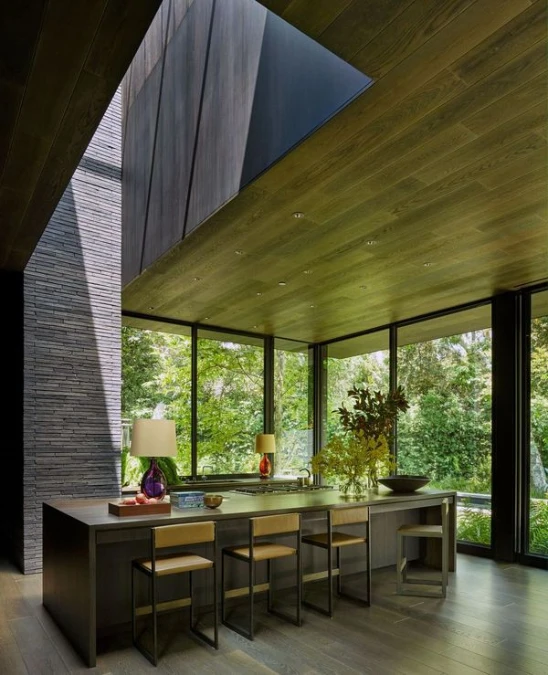
A narrow skylight cuts through the wooden ceiling to drop natural light directly onto the kitchen island. This vertical opening creates a bright pillar of sun that separates the cooking zone from the rest of the room.
Stacked dark gray stone walls provide a heavy texture that contrasts with the glass windows. This material choice builds a solid corner for the kitchen to feel like a private nook within the open layout.
14. Decorative Metal Screens
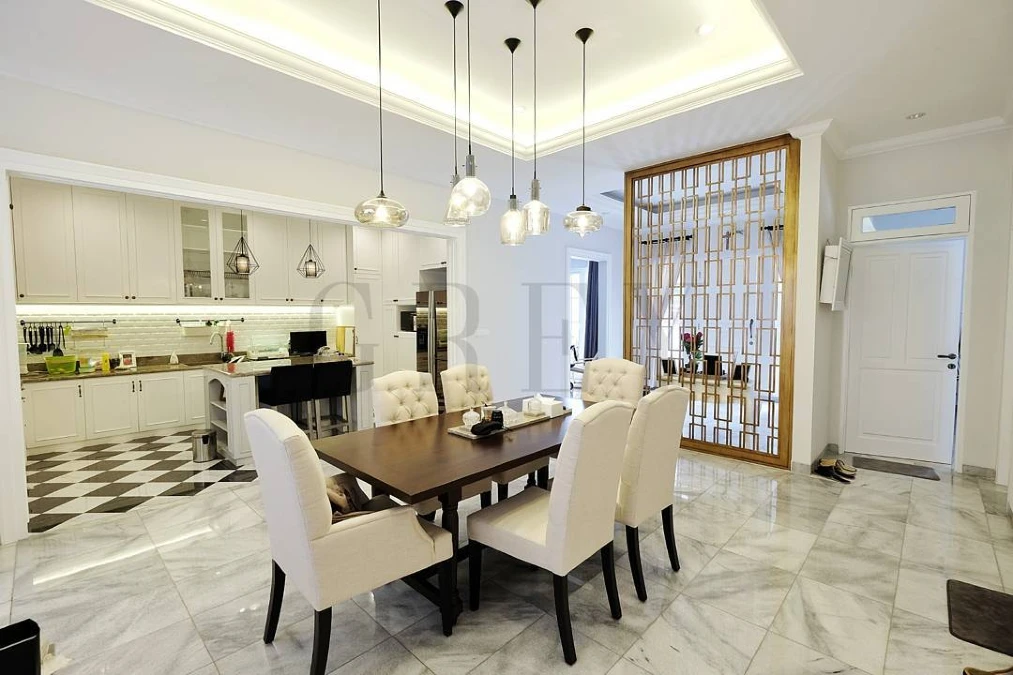
A gold geometric screen stands as a semi transparent divider between the dining room and the hallway. This intricate metalwork provides a sense of enclosure while allowing light to filter through the patterns.
Marble floors flow under the screen to maintain a cohesive look across the entire level. This elegant feature adds a touch of luxury to the transition area.
15. Sofa Console Tables
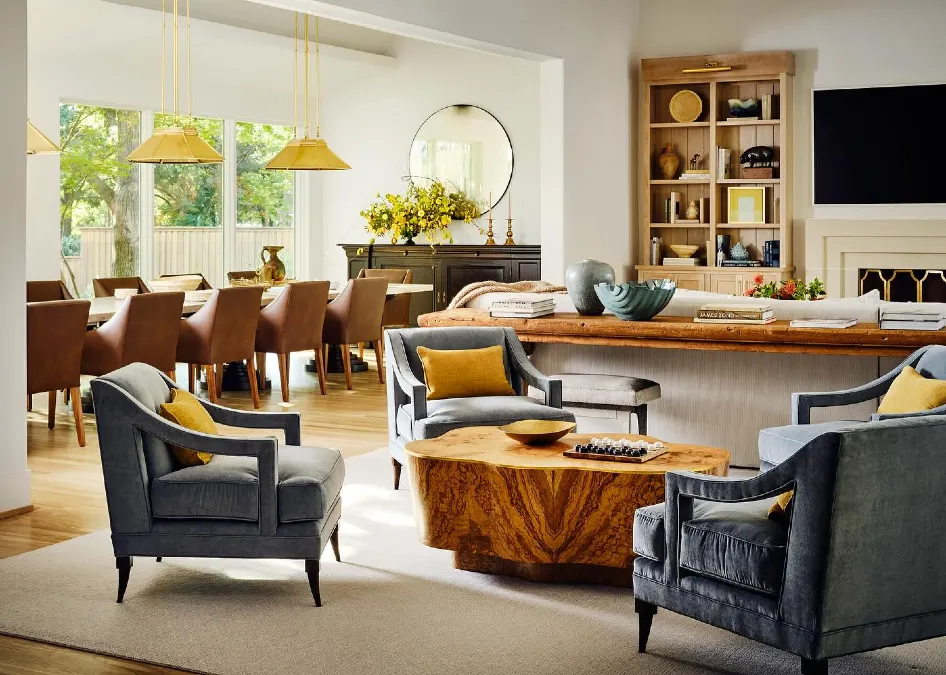
A long wooden console table sits behind the sofa to separate the lounge from the dining area. This slim piece of furniture provides a surface for books and decor while acting as a low-profile wall.
Using a table this way creates a clear physical boundary in the middle of the room. It keeps the open feel intact but establishes where the sitting zone ends.
16. Decorative Ceiling Beams
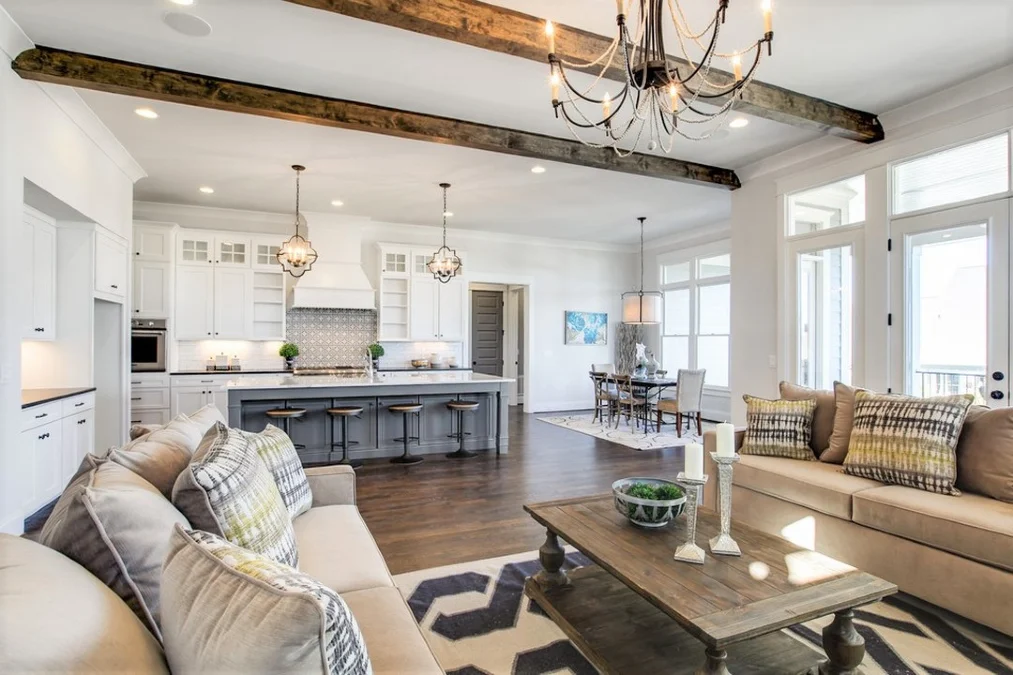
Dark wooden beams stretch across the white ceiling to add architectural interest and scale. These horizontal lines guide the eye toward the kitchen while visually lowering the high ceiling for a cozier feel.
Exposed timber provides a warm contrast to the bright walls. This structural detail creates a sense of unity across the expansive living and dining zones.
17. High-Contrast Loft Zones
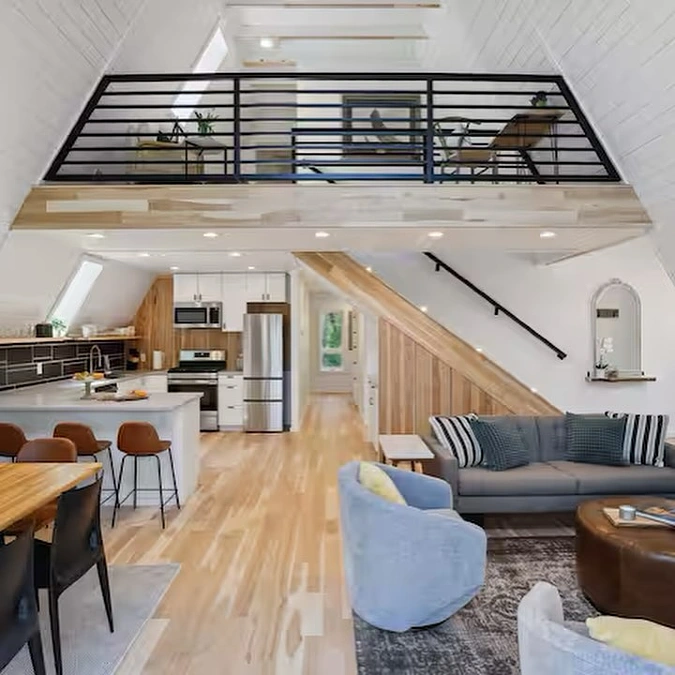
Horizontal black bars create a sharp boundary for the upper sleeping platform. This dark railing stands out against the white shiplap walls of the A-frame to mark the separate level.
The metal barrier defines the loft without blocking light from the windows. A thick wooden beam supports the structure while adding a natural touch to the modern space.