
If you are over 50 and lately find yourself struggling to open a stubborn jar or feeling exhausted after a routine grocery trip, you are not just getting older. You might be experiencing a silent health crisis.
Most people and even some general practitioners dismiss early weakness as natural aging. They miss the critical window to halt sarcopenia before it steals your independence.
Sarcopenia is the medical term for the loss of muscle mass and strength as we age. It affects an estimated 10 to 20 percent of older adults.
But here is the truth: It is not inevitable.
You need to spot the sarcopenia symptoms in 50s before they lead to serious falls or metabolic issues. In this guide, you will learn the early signs of muscle loss after 50. You will also discover the exact steps you can take today to rebuild your strength.
1. Your Grip Strength is Noticeably Weaker
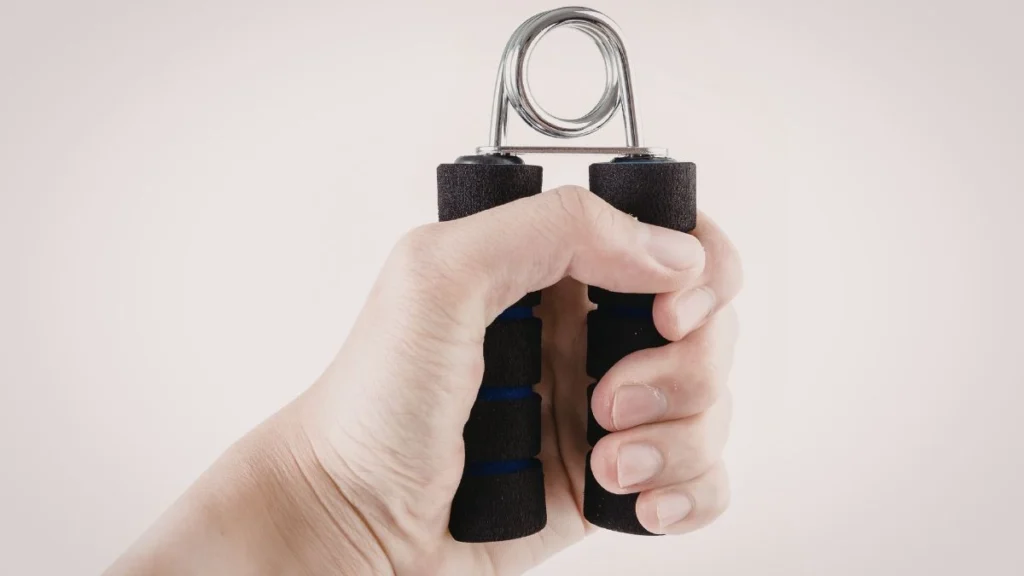
Think about the last time you bought a new jar of pasta sauce. Did you have to hand it to someone else to open?
This is a classic sign of reduced grip strength. Doctors use your grip as a reliable proxy for total body strength. If your hands are weak, the rest of your body is likely weak too. This means your risk of age related muscle loss is high.
Weak hands are frustrating. But when that weakness spreads, it becomes dangerous. Weak grip correlates directly with a shorter lifespan and poor overall health.
You might think you just have stiff joints. But a sudden inability to carry a standard grocery bag in one hand is a major red flag.
Your Quick Self Test: Grab a heavy grocery bag with one hand. Can you carry it across the room without dropping it or needing to use two hands? If not, your grip needs work. You can also ask your doctor to test it with a grip dynamometer.
2. Slower Walking Speed and Gait Changes
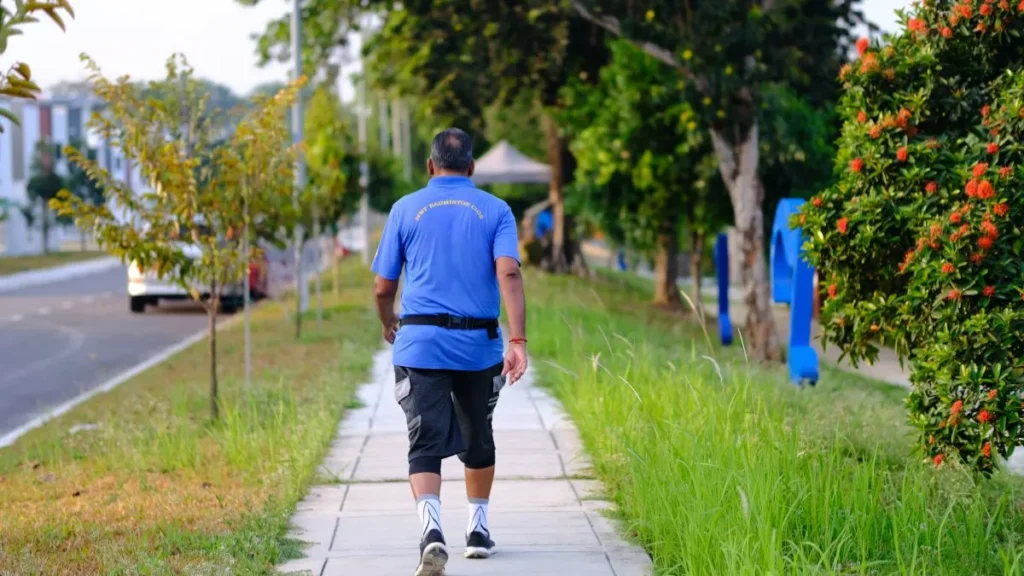
Picture yourself crossing a busy street. Do you feel rushed by the flashing crosswalk sign?
Taking longer to cross a street is a primary diagnostic metric for muscle health. A slower walking speed shows that your calf and glute muscles are losing power. These muscles are your engine for propulsion.
Walking slowly might seem harmless. But it often leads to a dangerous shuffling habit. Clinical assessments for sarcopenia often use a 4 meter to 6 meter walking speed test.
Your healthy walking speed should remain steady as you age. A noticeable drop is a clinical warning of sarcopenia symptoms in 50s.
Weaker legs mean less stability. You become much more likely to trip and fall.
Your Quick Self Test: Time yourself walking a 15 foot stretch of flat hallway. Walk at your normal pace. If it takes you more than 5 seconds, your walking speed is too slow and your leg muscles need attention.
3. The Chair Stand Struggle

Think about how you got out of your car or off the sofa today. Did you use your hands to push off the armrests?
Relying on momentum or your hands to stand up points to major quadricep and core weakness. The chair stand test is a key part of the SARC F diagnostic tool. Doctors use this tool to catch the early signs of muscle loss after 50.
Needing a boost to stand up is a bad sign. It means your lower body is already wasting away. This severely increases your fall risk. Your legs act like a car engine. A smaller engine struggles to lift a heavy frame.
The good news is that reversing muscle loss after 50 is entirely possible with targeted leg exercises.
Your Quick Self Test: Sit in a firm dining chair. Cross your arms over your chest. Now try to stand up without using your arms or rocking back and forth. If you cannot do it smoothly, your leg muscles are failing.
4. Unexplained Fatigue Doing Routine Tasks
Do you feel wiped out just from standing at the stove to cook dinner?
Being tired after a long day of work is normal. But sudden exhaustion from doing simple dishes points to muscular fatigue. This is a subtle marker of age related muscle loss.
When you lose muscle mass, your remaining muscles must work at maximum capacity just to do basic chores. This leads to rapid energy depletion. Routine tasks suddenly feel like a heavy gym workout.
You probably thought you just slept wrong. But it gets worse if you ignore it. This constant drain on your energy steals your motivation to stay active.
Your Quick Self Test: Pay attention to how your legs and back feel while folding laundry or cooking. If you need to sit down after just 10 minutes of standing, you are experiencing abnormal muscle fatigue.
5. Difficulty Getting Up from the Floor
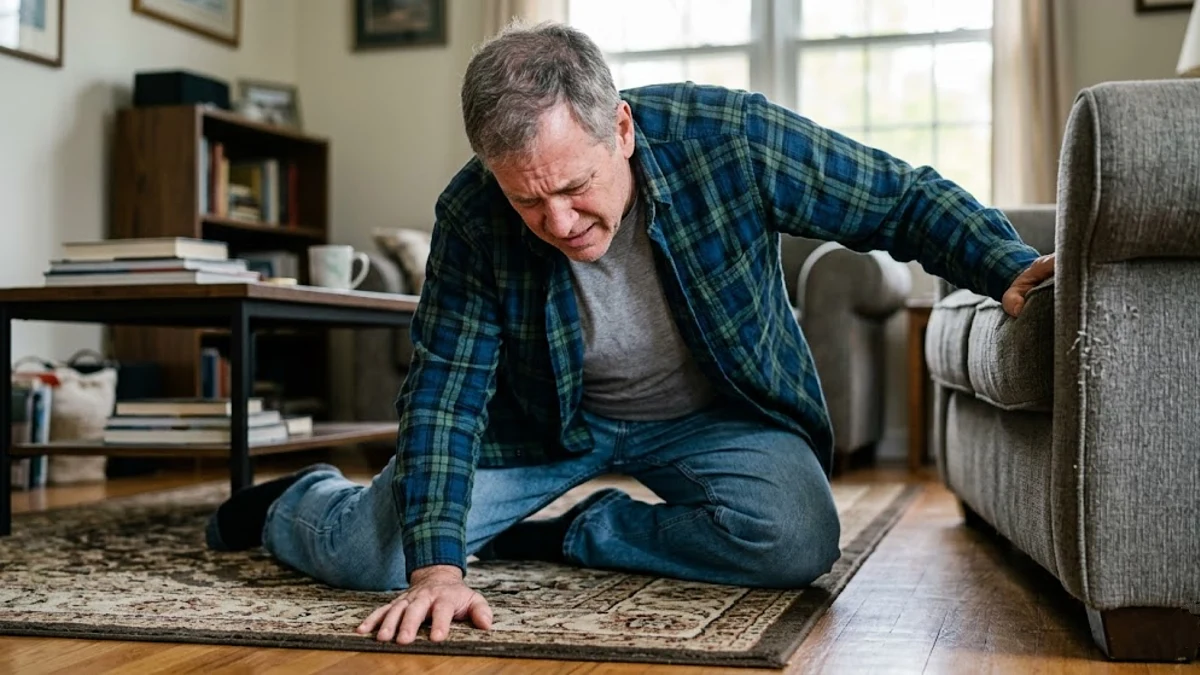
Picture yourself playing with your grandkids on the living room rug. When it is time to get up, do you have to crawl over to the couch to pull yourself to your feet?
Moving from the floor to a standing position requires complex strength across multiple joints. It uses your core, hips, and legs. Failing this movement is a massive warning sign for future loss of mobility.
Losing floor mobility is one of the most critical early signs of muscle loss after 50. If you fall and cannot get back up alone, you face serious danger.
This lack of power means your hip and leg strength has critically declined.
Your Quick Self Test: Sit flat on the floor. Try to stand up using only one hand or no hands for support. If you need to crawl to furniture to hoist yourself up, your functional strength is in the danger zone.
6. Skinny Fat Body Composition Changes
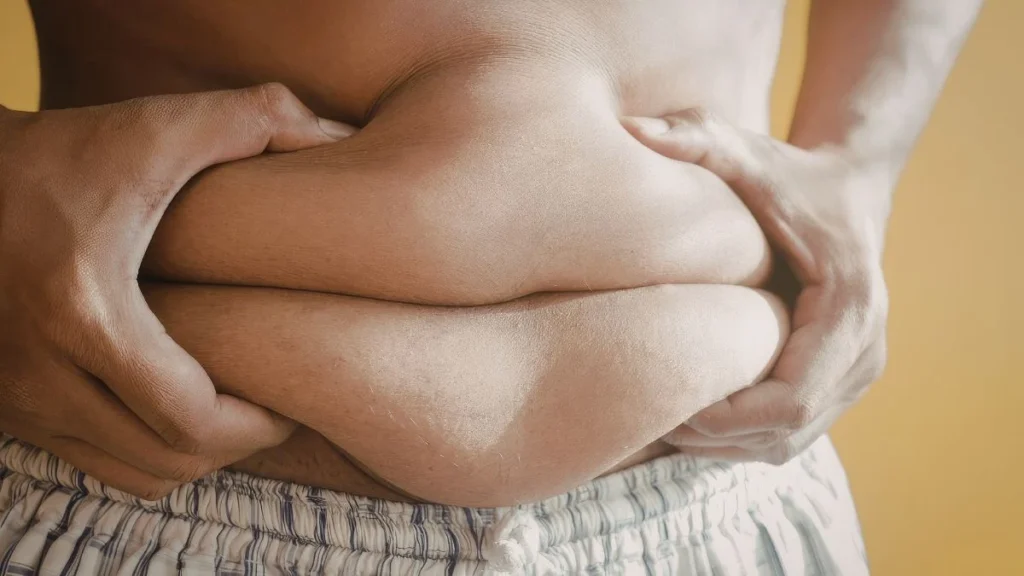
Have you noticed your pants feeling tight around the waist, even though the scale says you weigh exactly the same?
You might have limbs that look thinner while your midsection grows. This is a condition called sarcopenic obesity. It happens when fat replaces your fading muscle tissue. Muscle burns more calories at rest than fat does.
Adults lose 1 to 2 percent of their muscle mass annually after age 50 if they stay inactive. This slows your metabolism.
This hits postmenopausal women especially hard. Insights from osteopathic physicians like Dr. Susan Ratay show that a drop in estrogen drastically lowers your body’s ability to build muscle. This makes women highly susceptible to these body changes.
These shifts are clear sarcopenia symptoms in 50s.
Your Quick Self Test: Look at how your clothes fit. If your belts are tighter but your arms look smaller, you are losing muscle. Ask your doctor for a DEXA scan to check your exact body composition.
7. Increased Micro Stumbles and Balance Issues
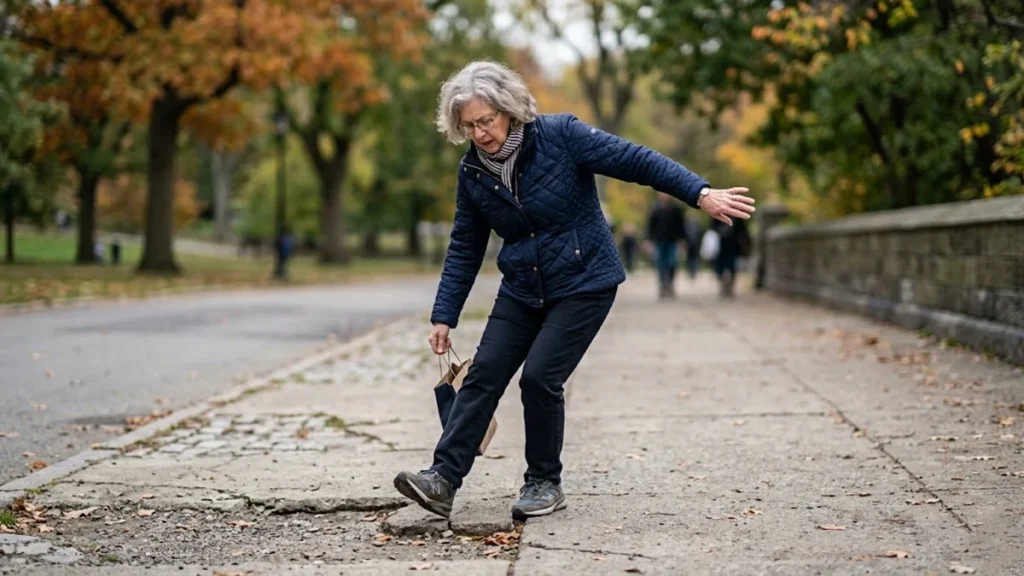
Have you caught yourself tripping over the edge of a rug or an uneven sidewalk crack recently?
These little trips are called micro stumbles. They happen because muscle loss hurts your body awareness and stability. Weaker leg and core muscles equal poor balance.
Stumbling might seem clumsy. But there is a direct pipeline from this weakness to broken bones. Falls are a leading cause of hospitalizations in older adults. These falls are heavily linked to undetected age related muscle loss.
By age 70, adults can lose 20 to 30 percent of their total muscle mass. Do not wait until then to fix your stability.
Your Quick Self Test: Stand near a wall for safety. Lift one foot off the ground. Can you hold this pose for 10 solid seconds without grabbing the wall? If you wobble immediately, your balance needs urgent work.
8. Stairs Feel Like a Mountain Climb
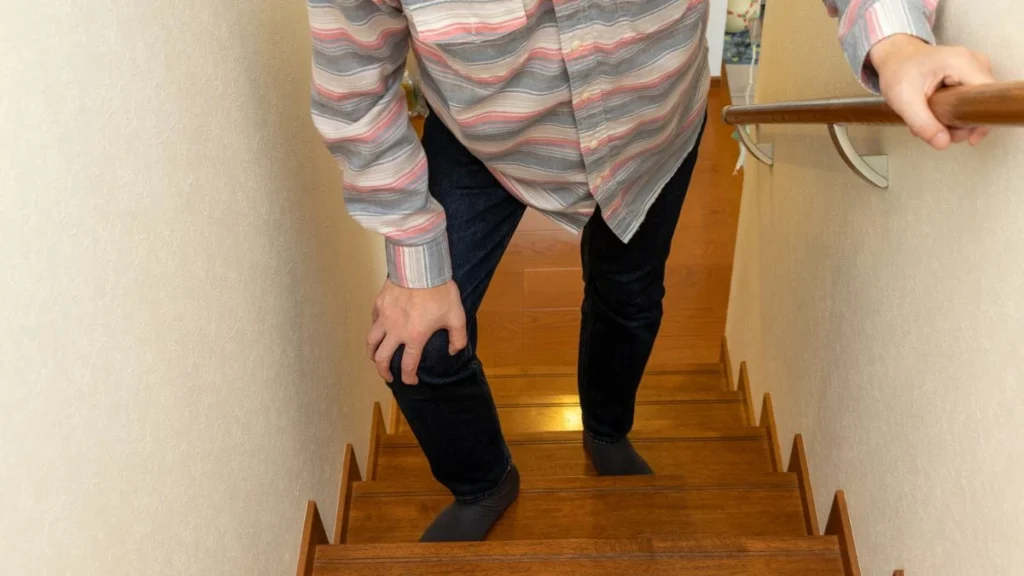
Think about the stairs in your home. Do your legs feel heavy like lead halfway up?
Climbing stairs forces your legs to lift your entire body weight against gravity. This is one of the first functional movements to break down. If you need to pull yourself up using the handrail rather than just touching it for balance, your quadriceps are deteriorating.
Heavy legs on stairs are classic early signs of muscle loss after 50.
Your Quick Self Test: Walk up a flight of stairs without touching the handrail at all. If your legs burn or you feel unsafe, you need to start reversing muscle loss after 50 with resistance training right away.
9. Slower Recovery from Minor Tweaks
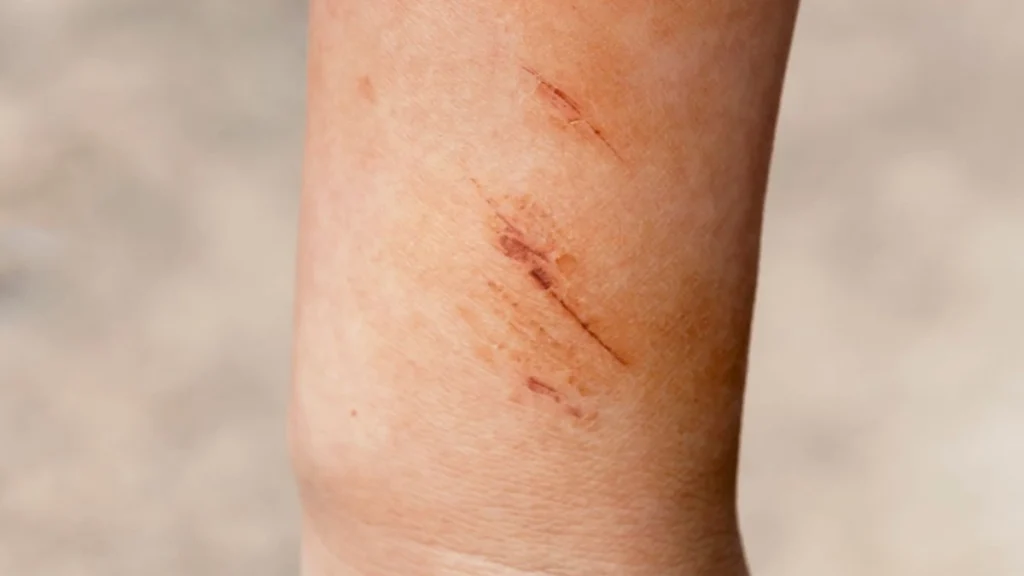
Did a simple afternoon of gardening leave your back sore for a whole week instead of just two days?
Your muscles are taking much longer to repair themselves. Aging cells experience anabolic resistance. This means your body is less efficient at using protein to fix muscle damage.
This slower healing keeps you on the couch longer. It is a major driver of age related muscle loss because it forces you to be inactive. Do not ignore these delayed recovery times. They are sneaky sarcopenia symptoms in 50s.
Your Quick Self Test: Track your soreness after a mildly active day. If simple tasks leave you aching for more than 48 hours, your muscles are failing to recover properly.
Protect Your Independence
Sarcopenia is common, but it is never inevitable.
Tracking early signs like weak grip strength, failed chair stands, and low energy levels can catch the decline before it ruins your life. You have the power to fix this.
Here is your action plan:
Vitality & Recovery
Strength Building Fundamentals
Resistance Training
Start a simple resistance training routine 2 days a week based on guidelines from the Office of Disease Prevention and Health Promotion.
Protein Intake
Increase your daily protein. Aim for 1.0 to 1.2 grams of protein per kilogram of body weight daily to support muscle synthesis.
Rest & Recovery
Get plenty of rest to help your body heal. Sleep is critical for repairing tissue and fully absorbing the benefits of your training.