

All that sweat and soreness at the gym could be a complete waste of time. You show up consistently and push yourself, but the results are disappointing and you’re collecting more aches than gains.
Good intentions don’t build a better body when your technique is quietly sabotaging you. The very habits you think are helping can lead straight to injury, burnout, and a dead-end plateau. This isn’t another list of generic tips.
We’re breaking down 13 brutal mistakes that are hurting your body, not helping it. You’ll learn the simple, science-backed fixes to stop spinning your wheels and finally start building the strength you’re working so hard for.
1. Ego Lifting: When Your Pride Is Heavier Than the Weight

Ego lifting is when you care more about the amount of weight on the bar than how you lift it. You might see people using momentum to swing dumbbells, doing shallow squats with too much weight, or letting their form fall apart just to move a heavy load.
This often happens because people want to impress others, compete, or see fast progress.
This can hurt your body in a few big ways. First, it messes up your form. A good exercise targets a specific muscle. When you ego lift, the weight shifts from your muscle to your joints, ligaments, and tendons, which aren’t meant to handle that load.
For example, bouncing a barbell off your chest during a bench press puts a ton of stress on your sternum and shoulder tendons. This can lead to serious joint injuries.
Second, it stops muscle growth. The main thing that makes muscles grow is tension. When you use momentum or cut your range of motion short, you reduce the time your muscle is under tension.
This means you get less growth and your progress stalls. The shoulder, lower back, and knee are the most common places people get hurt from weight training. Ego lifting is a direct cause of these injuries.
Ego lifting often comes from comparing yourself to others, which can create a bad mental cycle. When people compare themselves to someone they think is stronger, it can make them feel bad about their own body and less motivated to work out.
So, the person who ego lifts to “keep up” is doing something that gets bad physical results and makes them feel worse mentally.
The fix is both physical and mental. You need to think of “strength” as control, not just heavy weight. A good rule to follow is the “two-rep rule”: if you can’t do the last two reps of a set with the same good form as the first two, the weight is too heavy.
You should also try filming your sets. It gives you honest feedback on your form that you might not notice yourself.
2. Skipping the Dynamic Warm-Up

A common mistake is jumping right into a workout without warming up, or doing the wrong kind of warm-up, like holding long stretches. This treats the warm-up like it’s optional, but it’s a key part of your workout. It leaves your body unprepared for hard exercise.
A good warm-up is necessary for both safety and performance. There are two main types: dynamic warm-ups and static stretching. Science shows that dynamic warm-ups are better before a workout.
They involve active movements that take your joints through their full range of motion. This improves mobility, increases muscle temperature, and helps your nerves fire faster, so your muscles can contract with more force.
Static stretching, where you hold a stretch for a long time, is better for your cool-down. Holding static stretches for more than 60 seconds before exercise can actually make you weaker and less powerful during your workout.
Warming up is proven to prevent injuries. People who do dynamic warm-ups have far fewer muscle strains and sprains.
A dynamic warm-up also gets your brain and nervous system ready. It improves coordination and your body’s awareness of its position.
Skipping it means your nervous system isn’t ready, which leads to sloppy movements and makes the workout feel harder. Think of the dynamic warm-up as the on-ramp for your body to go from rest to high performance.
A good warm-up only takes 10 minutes. Start with 3 to 5 minutes of light cardio, like jogging or cycling, to raise your body temperature.
Then, do 5 to 7 minutes of dynamic movements that copy the exercises you’re about to do. For a leg day, this could be leg swings and bodyweight squats. For an upper-body day, arm circles and band pull-aparts work well.
3. Ignoring Mobility in Your Ankles and Mid-Back

Many people focus on building strength in big muscles like their chest and quads but ignore mobility in key joints. This is a big problem, especially with the ankles and the thoracic spine (your mid-back).
Stiff joints in these areas are often the hidden cause of bad form, forcing your body to move in unsafe ways and leading to injuries that seem unrelated.
Your body works like a chain. If one joint can’t move well, the joints above and below it have to pick up the slack. This is easy to see in a squat. To squat deep with a straight back, your shins need to move forward over your feet.
This is called ankle dorsiflexion. If your ankles are stiff, your body will find another way to go down. Your heels might lift off the floor, your chest might fall forward (stressing your lower back), or your knees might cave in, which strains your knee ligaments.
Your mid-back is meant to rotate and extend, but sitting all day often makes it stiff. When you do overhead presses or bench presses, your mid-back needs to extend so your shoulder blades can move freely.
If it can’t, your body will force the movement from your lower back or your shoulder joint, which can cause injuries like shoulder impingement or rotator cuff tears. The problem is that the pain shows up in your shoulder or back, but the real issue is your stiff mid-back.
The fix is to add mobility drills to your warm-up. For your ankles, you can do wall ankle mobilizations (gently pushing your knee over your toes with your heel down). For your mid-back, use a foam roller for thoracic extensions or do cat-cow stretches.
4. Doing Compound Lifts Wrong (Squats, Deadlifts, Bench Press)
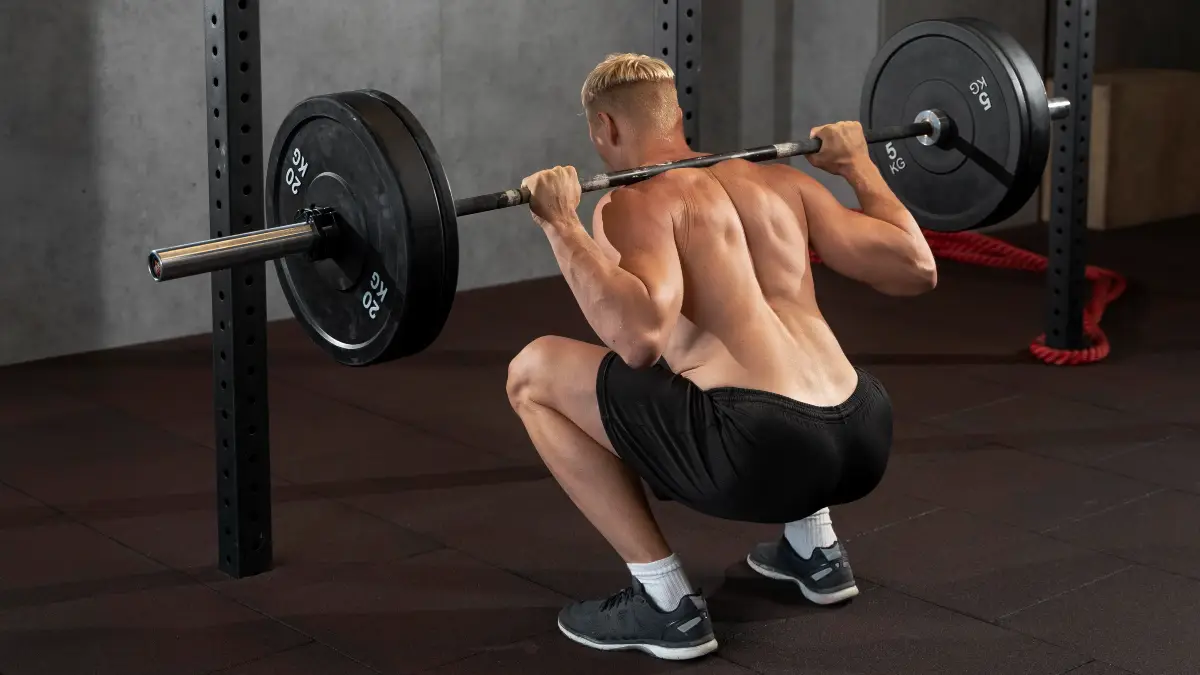
Compound exercises like the squat, deadlift, and bench press are the best way to build strength. They use a lot of muscle, trigger a good hormone response, and build strength you can use in everyday life. But because they are complex, it’s easy to make mistakes. When you repeat these mistakes with heavy weight, you risk getting hurt.
The secret to doing these lifts safely is to create and hold tension through your whole body during the entire lift. Most mistakes happen when this tension breaks down.
The Squat:
A common mistake is letting your knees cave inward. This isn’t just a knee problem; it’s often because your glutes aren’t working to keep your hips turned out. This puts a lot of stress on your knee joint and can lead to ACL or meniscus injuries.
To fix this, think about “screwing your feet into the floor.” This will activate your hips and push your knees out. Make sure your kneecap stays lined up with your second toe.
The Deadlift:
The biggest mistake is rounding your lower back. This happens when you don’t use your lats and core to keep your back straight. It puts a lot of pressure on your spinal discs and can cause a herniation.
To fix this, create tension before you lift by squeezing your lats, like you’re “squeezing an orange in your armpits.” Also, make sure your hips are higher than your knees but lower than your shoulders when you start.
The Bench Press:
A common error is flaring your elbows out to a 90-degree angle. This puts your shoulder in a bad position and can cause shoulder impingement. The right way is to tuck your elbows to a 45 to 75-degree angle.
This uses your lats to create a stable base for pressing. Think about “bending the bar in half” as you lower it. And always use a spotter or a power rack with safety arms when lifting heavy.
5. Only Training Your “Mirror Muscles”

A common mistake, especially for men, is focusing too much on the muscles you can see in the mirror—chest, arms, shoulders, and abs. At the same time, they ignore the muscles on the back of their body, called the posterior chain.
This includes your upper back, lats, lower back, glutes, and hamstrings. This creates muscle imbalances that can lead to injury.
Your body is a balanced system. When your “pushing” muscles (like your chest) get much stronger than your “pulling” muscles (like your back), your shoulders get pulled forward. This creates a rounded posture and can cause shoulder and neck pain.
Many people also misunderstand core training. They do endless crunches, which only work the front of your abs. They neglect the deep muscles that keep your spine stable. A weak core forces your lower back to do too much work, which is a major cause of chronic lower back pain.
This mistake creates a body that looks good but isn’t strong. Your posterior chain is where your real power comes from. It’s what you use for explosive movements like sprinting and jumping.
Your core transfers that power through your body. If you neglect these areas, you build a weak engine. This limits your athletic ability and greatly increases your risk of back injury.
To fix this, you need to balance your workouts. A good rule is the push-pull ratio: for every set of a pushing exercise (like a bench press), do at least one set of a pulling exercise (like a row).
Build your workouts around posterior chain exercises like deadlifts and hip thrusts. And train your core for stability with exercises like planks and Pallof presses.
6. Rushing Your Reps and Ignoring the Pace

To get through a set, many people lift weights quickly and without control. They use momentum instead of muscle. This is a big mistake because it shows they don’t know what makes a muscle grow. It turns a good exercise into a risky one that doesn’t help you much.
A key factor for muscle growth is Time Under Tension (TUT). This is how long your muscle is under a heavy load. When you rush your reps, especially the lowering part, you cut down the TUT. This means you get less of a signal for your muscles to grow.
The lowering (or eccentric) part of a lift is very important. It’s where a lot of the muscle fiber damage happens, which triggers your body to repair and grow the muscle. If you let gravity do the work on the way down, you’re wasting half the rep.
Fast, jerky movements also put more stress on your joints, tendons, and ligaments. At the same time, they put less stress on your muscle. This is the worst of both worlds: a high risk of injury with very little muscle gain. People who rush their reps are cheating their muscles out of the work they need to grow.
The fix is to control the pace of every rep. A great method is to use a tempo code. A 3-0-1 tempo is a good place to start. Take 3 seconds to lower the weight, no pause at the bottom, and then lift the weight in 1 second with control.
This focus on the lowering phase keeps your muscle under tension longer and helps you get the most out of every rep. If you can’t control the lowering part of a lift, the weight is too heavy.
7. Forgetting the Mind-Muscle Connection

Lifting weights can feel like just moving a weight from point A to point B. But if you don’t focus on the muscle you’re trying to work, you can limit your growth. There’s a big difference between “lifting the weight” and “working the muscle.” Your focus can change the result of your workout.
There are two main ways to focus during a lift. An external focus is when you think about the outcome of the movement, like “push the floor away” during a squat. This is best for lifting the heaviest weight possible because it lets your nervous system figure out the most efficient way to do it.
An internal focus is when you think about the feeling of the muscle contracting, like “squeeze the pecs” during a dumbbell flye. For muscle growth, an internal focus can be better. Studies have shown that an internal focus can increase the activation of the target muscle.
One study found that people who used an internal focus on their biceps during curls had almost double the muscle growth compared to those who used an external focus. This works best with light to moderate weights.
Your brain tells your muscles what to do. An external focus tells your brain to move the weight as efficiently as possible. An internal focus tells your brain to use a specific muscle as much as possible, even if it’s less efficient. This creates more stress in that muscle, which helps it grow.
How to use this:
- For Max Strength (heavy weight, 1-5 reps): Use an external focus.
- For Muscle Growth (moderate weight, 8-15 reps): Use an internal focus.
8. Skipping the Cool-Down
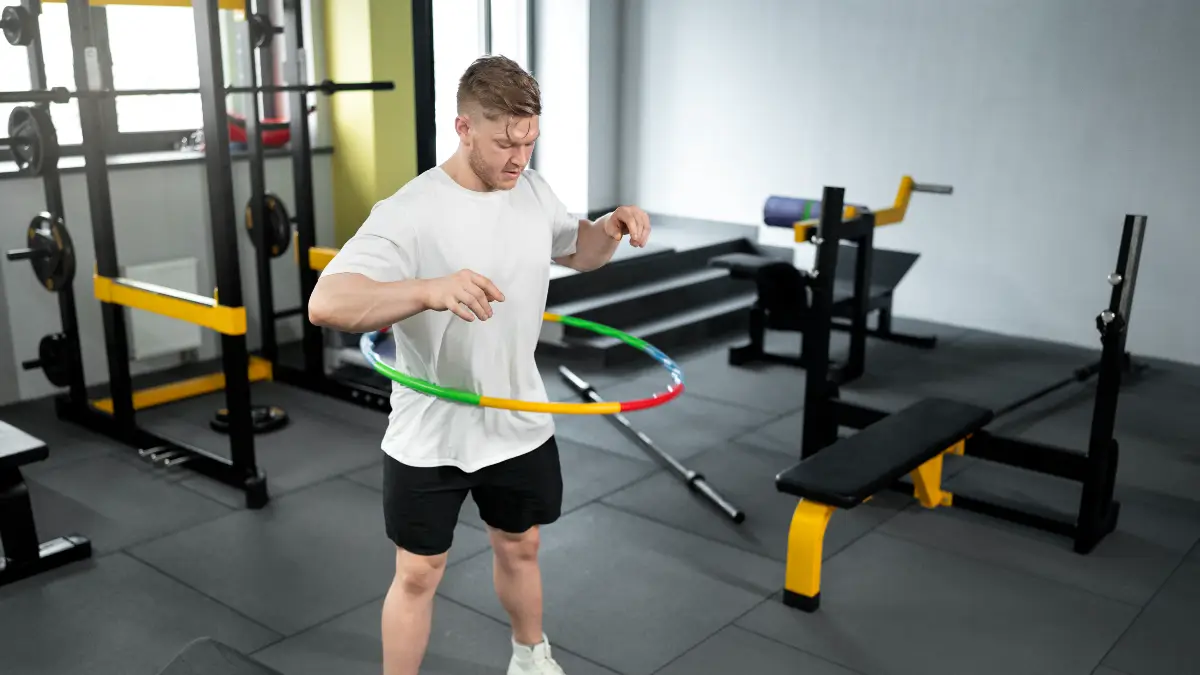
After the last rep, many people just pack up and leave. But this skips a key part of the workout: the cool-down. Skipping it can slow down your recovery, make you more sore, and cause you to miss a great chance to improve your flexibility.
Exercise raises your heart rate, blood pressure, and body temperature. Stopping suddenly is a shock to your system. A cool-down lets your body return to its resting state slowly and safely.
Hard exercise also creates waste products, like lactate, in your muscles. A light cool-down keeps your blood flowing, which helps clear these waste products out of your muscles. This can reduce muscle soreness and help you recover faster.
The time right after a workout is also the best time to do static stretching. Your muscles are warm and more flexible.
Trying to stretch cold muscles is less effective and can cause injuries. The cool-down isn’t just the end of your workout; it’s the start of your preparation for the next one.
A good cool-down follows the 5+5 Rule. First, do 5 minutes of active cool-down, like light walking or cycling. Then, do 5 minutes of static stretching for the muscles you just worked. Hold each stretch for 30 to 60 seconds without bouncing.
9. Ignoring Rest Days and Overtraining

Many people think “more is better” and see rest days as a sign of weakness. This is a big mistake. It can lead to poor recovery, bad performance, and a serious condition called Overtraining Syndrome. The problem is that people forget a basic rule of fitness: you grow during rest, not during the workout.
Exercise creates tiny tears in your muscle fibers. The repair and growth of these fibers happens during rest.
This process stays active for 24 to 72 hours after a workout. If you train the same muscles again before they have time to recover, you’re just breaking them down without letting them rebuild stronger.
This is explained by the General Adaptation Syndrome model. A workout is the “Alarm” that stresses your body. The recovery period is the “Resistance” phase, where your body adapts. If you keep interrupting this recovery, you push your body into the “Exhaustion” phase, which is overtraining.
Overtraining causes a lot of problems: constant fatigue, poor performance, a higher resting heart rate, trouble sleeping, mood swings, and getting sick often.
It also tires out your central nervous system, which can take up to 72 hours to recover. A tired nervous system leads to poor coordination and low motivation.
The fix is to treat rest as seriously as you treat training. Schedule 1 to 3 rest days per week. Get 7 to 9 hours of quality sleep each night.
This is when your body releases growth hormone and muscle repair is at its peak. On rest days, you can do “active recovery,” like a light walk or gentle yoga, to help the recovery process.
10. Forgetting About Nutrition and Hydration

Focusing on your workout but ignoring what you eat and drink is a common way to ruin your efforts. The idea that you can “out-train a bad diet” is a myth. Your workout provides the reason for your body to change, but food and water provide the materials it needs to do it.
For changing your body composition, especially losing weight, what you eat is the most important factor. Some experts say that results are about 90% diet and 10% exercise. A hard workout might burn a few hundred calories, but you can eat that back in just a few minutes with unhealthy food.
For performance and recovery, some nutrients are essential. Protein gives you the amino acids needed to repair your muscles. If you don’t eat enough protein, especially on rest days, your muscles can’t rebuild.
Carbohydrates are your body’s main fuel for hard exercise. If you train without enough carbs, you’ll get tired quickly and your performance will suffer.
Staying hydrated is just as important. Water is needed for almost every process in your body. Even being a little dehydrated can hurt your performance. Losing just 2% of your body weight in fluid can make you weaker, make workouts feel harder, and slow down your reaction time.
Eat a meal with carbs and protein 1 to 3 hours before your workout. After your workout, have another meal with protein and carbs within about 2 hours to start the recovery process. Drink water all day, not just during your workout.
11. Doing the Same Workout Forever

Many people find a workout they like and stick with it for months or even years. Then they wonder why they’ve stopped making progress. This happens because of a rule in exercise science called the Law of Accommodation.
Your body is great at adapting. When you give it a new challenge, it adapts and gets stronger. But if you do the same thing over and over, your body gets used to it. The workout that used to make you stronger now just maintains what you have. This is a plateau.
To keep making progress, you have to change your workout over time. This doesn’t mean doing random “muscle confusion” workouts every day. It means making planned changes. The consistency that helps you at first will eventually hold you back if you don’t change things up.
The fix is to follow a good program for 4 to 8 weeks. During this time, you should try to lift a little more weight or do more reps. After that period, you should change some things to give your body a new challenge.
You could switch to a different exercise (like from a back squat to a front squat), change your rep range (like from 8-12 reps to 5-8 reps), or change your workout split (like from a full-body routine to an upper/lower split). This cycle of consistency followed by planned change is how you break through plateaus.
12. Not Tracking Your Progress

Working out without keeping a record of what you’ve done is a huge mistake. It makes it impossible to use progressive overload, which is the most important rule for getting stronger and building muscle over time.
Not tracking your workouts is like a scientist doing an experiment without taking notes. You’re creating data with every workout, but you’re throwing it away.
Progressive overload means that to get stronger, you have to keep challenging your muscles more over time. You can do this by adding more weight, doing more reps with the same weight, or doing more sets. Without a log of your last workout, you’re just guessing. Your progress becomes random and depends on your memory.
Tracking your progress also has big mental benefits. Progress in fitness is slow, and it’s hard to see day-to-day. A workout log gives you proof that you’re getting better over weeks and months. This can be a huge source of motivation.
The act of tracking your workouts is a powerful tool. People who track their exercise are much more likely to stick with it and reach their goals. It creates a feedback loop of accountability.
The fix is simple. Use a notebook, a spreadsheet, or a fitness app. For each workout, write down the date, the exercises you did, the weight you used, and the sets and reps you completed.
Before each workout, look at your last one and set a small, specific goal to improve. This turns your workout from a random activity into a planned process.
13. Skimping on Cardio (or Only Doing Cardio)

The fitness world is often split into two groups. One group, focused on building muscle, thinks cardio will kill their gains. The other group, focused on weight loss, spends hours on cardio machines and avoids weights.
This is especially common among women who are afraid of getting “bulky.” Both of these ideas are wrong.
If you avoid cardio, you’re ignoring the foundation of your fitness. A strong heart and lungs are important for lifting weights. Better cardio health helps your body deliver oxygen to your muscles and clear out waste. This improves your ability to recover between sets and workouts.
If you avoid strength training, the results are just as bad.
Metabolism: Muscle burns more calories at rest than fat. By not lifting weights, you miss the best way to boost your metabolism.
Bone Density: Lifting weights puts stress on your bones, which signals your body to make them stronger. This is a key way to prevent osteoporosis, a condition of brittle bones that affects many women as they get older.
The “Bulky” Myth: The fear that lifting weights will make women huge is mostly wrong. Women have much lower levels of testosterone than men, which is the main hormone for building large muscles. The “bulky” look is usually from having a higher body fat percentage covering the muscle, not from having too much muscle. Strength training helps build lean muscle and reduce body fat, which creates a leaner, more “toned” look.
The choice between cardio and weights is a false one. They work together. A balanced approach is better for almost every goal.
A good plan for general fitness is 2 to 4 days of strength training per week, hitting all major muscle groups. Add 75 to 150 minutes of cardio per week, which can be anything from a brisk walk to high-intensity interval training (HIIT).