You’re eating clean and hitting the gym, but the scale refuses to move. It’s a frustrating reality for so many people over 40. For years, the story was simple: your metabolism just slows down.
This narrative made weight gain feel like a personal failure, a battle of willpower you were destined to lose. But groundbreaking science tells a different story. A massive 2021 study revealed your metabolism is surprisingly stable through midlife.
The real culprits are a predictable mix of hormonal shifts and muscle loss that create a perfect storm for weight gain. This guide breaks down that storm and gives you a new playbook—one that works with your body, not against it, by targeting the true causes.
What’s Really Happening to Your Body?
Losing weight after 40 is hard because of a few key shifts in your body. These changes work together, creating cycles that can make old weight loss methods useless. Knowing what these factors are is the first step to beating them.
The Metabolism Myth: What’s Really Going On?
The 2021 Science study showed that you don’t burn fewer calories at rest just because you’re older. The real reason your daily calorie burn goes down is because of sarcopenia, which is just a fancy word for losing muscle as you age.
You start losing muscle in your 30s, about 3-8% each decade, and it gets faster after 40. This matters a lot. Muscle tissue burns about three times more calories than fat tissue, even when you’re just sitting on the couch.
As you lose muscle, your body’s calorie-burning engine gets smaller. This creates a new reality. To stay the same weight in your 50s, you might need 200 fewer calories a day than you did in your 30s.
If you keep eating the same way, you will gain weight. Your metabolism isn’t broken. You’ve just lost some of your main calorie-burning engine: muscle.
How Your Hormones Work Against You After 40
Hormones are messengers that tell your body what to do with food, fat, and energy. After 40, your hormone signals change in big ways, making weight loss feel like an uphill battle.
For Women: The Perimenopause Effect
For women, the 40s often bring perimenopause, which means estrogen levels start to drop. This one change causes a lot of problems for weight management.
Fat Moves to Your Belly: Lower estrogen tells your body to stop storing fat on your hips and thighs and start storing it around your belly. This is called visceral fat, and it’s the unhealthy kind that surrounds your organs.
Harder to Build Muscle: Estrogen helps your body use protein to build muscle. When it drops, your body gets worse at this, making muscle loss happen even faster.
Your Body Stores Sugar as Fat: Estrogen also helps your body handle sugar. With less of it, your body can become resistant to insulin. This makes it easier to store carbs as fat instead of burning them for energy.
For Men: The Testosterone Drop
Men go through a similar change called andropause, where testosterone levels slowly go down. Testosterone is key for keeping muscle. As it drops, men lose muscle faster, their metabolism slows, and they gain more body fat, especially around the middle. Low testosterone can also make you feel tired and less motivated to work out, which makes the problem even worse.
The Big Problem for Everyone: Stress and Cortisol
The 40s can be a super stressful time with work and family. This isn’t just a feeling; it’s a physical state caused by a hormone called cortisol. A little cortisol is fine, but high levels all the time work against you in three ways:
It Tells Your Body to Store Belly Fat: Cortisol directly signals your body to store fat, and it loves to put it right in your abdomen. This is where the term “cortisol belly” comes from.
It Makes You Crave Junk Food: Cortisol cranks up your appetite and makes you crave high-calorie, sugary, and fatty foods.
It Breaks Down Muscle: To get quick energy, high cortisol can break down your muscle tissue. This directly hurts your efforts to keep the muscle that burns calories.
Why You’re Hungrier: Appetite Hormones Go Haywire
The last piece of the puzzle is the hormones that control hunger. Poor sleep, which is common after 40, messes this system up badly.
The Sleep-Hunger Link: When you don’t get enough sleep (less than seven hours), your body makes more ghrelin, the “I’m hungry” hormone, and less leptin, the “I’m full” hormone. This makes you feel hungry even when your body doesn’t need food.
Insulin Resistance: As we talked about, hormone changes can make your body less responsive to insulin. When this happens, your body has to pump out more insulin to control blood sugar. High insulin is a strong signal for your body to store fat, which makes losing weight feel almost impossible.
These problems all feed each other. Stress raises cortisol, which ruins your sleep. Bad sleep messes up your hunger hormones, so you crave junk food. Eating junk food makes you gain weight and feel guilty, which causes more stress. It’s a vicious cycle. This is why just cutting calories doesn’t work anymore.
| The Factor | What’s Changing in Your Body | How It Affects Your Weight | The Fix (A Quick Look) |
| Metabolism | You lose muscle, which is what burns most of your calories. | You burn fewer calories all day, so it’s easier to gain weight. | Lift weights to build muscle back. |
| Key Hormones | Estrogen and testosterone levels drop. | Your body stores more fat on your belly and struggles to build muscle. | Eat the right foods to support your hormones. |
| Stress Hormone | Cortisol levels stay high from stress and bad sleep. | You crave junk food and your body stores more belly fat. | Manage your stress and fix your sleep. |
| Muscle Mass | You lose muscle faster as you get older. | Your body’s main calorie-burning engine gets smaller. | Eat more protein to protect your muscle. |
A 3-Step Plan That Actually Works After 40

Knowing why weight loss is harder after 40 is the first step. It’s not about blame; it’s about biology. Now you can use a smart plan that works with your body. This action plan has three key parts that work together to fight the changes of midlife.
Step 1: Eat Smarter to Rebuild Your Body’s Engine
Eating right after 40 isn’t about starving yourself. It’s about giving your body the right materials to fight muscle loss, balance hormones, and stay healthy.
Make Protein Your Top Priority
The most important change you can make to your diet after 40 is to eat more protein. As you get older, your muscles don’t respond to protein as well as they used to. This is called “anabolic resistance.” To get past this, you need to eat more protein than you did when you were younger.
Aim for $1.2$ to $1.6$ grams of protein for every kilogram you weigh. For a 150-pound person, that’s about 82-109 grams of protein a day.
A simple way to do this is to get 20-30 grams of protein at every meal and 10-15 grams in your snacks. Starting your day with a high-protein breakfast like eggs or Greek yogurt is a great way to control your blood sugar and feel full all day.
Eat Foods That Fight Inflammation
Long-term inflammation can make hormone problems worse. A diet based on whole, natural foods is the best way to fight this.
Stick to Whole Foods: Eat lots of vegetables, fruits, lean proteins, and whole grains. These give you nutrients and fiber without the junk in processed foods.
Get More Fiber: Try to get at least 30 grams of fiber a day. Fiber helps control blood sugar, makes you feel full, and feeds the good bacteria in your gut.
Choose Healthy Fats: Good fats from avocados, nuts, olive oil, and fatty fish help reduce inflammation and are needed to make hormones.
Avoid the Bad Stuff: Cut way back on processed foods, added sugar, and alcohol. They are full of empty calories and mess with your sleep, stress, and hormones.
Don’t Forget These Key Nutrients
Not getting enough of certain vitamins and minerals can cause problems like tiredness, cravings, and a slower metabolism. Key nutrients to watch for are:
Vitamin D: Important for your bones and immune system.
Magnesium: Helps with hundreds of body functions, including blood sugar control.
Iron: If you’re low on iron, you’ll feel very tired, which makes it hard to be active.
Eating lots of different colorful plants can help you get these nutrients. A good goal is to try to eat 30 different types of plants each week. If you think you’re low on something, ask your doctor about getting tested.
Step 2: How to Exercise for a Faster Metabolism
Your workouts after 40 need to be smart. The main goal is to rebuild and protect your body’s calorie-burning engine.
You Must Do Strength Training
If you only do one type of exercise after 40, make it strength training. It’s the best way to fight muscle loss. Lifting weights boosts your metabolism at rest, helps your body use sugar better, and makes your bones stronger. Aim for 2-3 full-body strength workouts a week.
A simple routine to start with could be:
- Goblet Squats: 3 sets of 8-12 reps
- Dumbbell Bench Press or Push-ups: 3 sets of 8-12 reps
- Dumbbell Rows: 3 sets of 8-12 reps
- Romanian Deadlifts: 3 sets of 8-12 reps
- Plank: 3 sets, hold for 30-60 seconds
Use HIIT for a Quick Boost
High-Intensity Interval Training (HIIT) is a fast way to improve your heart health and boost your metabolism. It’s just short bursts of hard work followed by short rests.
This creates an “afterburn effect,” where your body keeps burning extra calories for hours after you’re done. A 20-minute HIIT session is all you need. You can do it with bodyweight exercises or on a cardio machine.
Get More NEAT in Your Day
NEAT stands for Non-Exercise Activity Thermogenesis. It’s all the calories you burn doing things that aren’t formal exercise, like walking, fidgeting, or gardening. As we get older and sit more, our NEAT drops, which means we burn fewer calories each day.
Making an effort to increase your NEAT can make a big difference. Try to get 8,000-10,000 steps a day, take short walks during your workday, and pick active hobbies.
Step 3: Fix Your Sleep and Stress to Stop Fat Storage
You can eat perfectly and exercise hard, but if you’re stressed out and not sleeping, you won’t get results. Fixing these two things is critical for balancing your hormones and losing weight.
Why Sleep Is Your Secret Weapon
Not getting enough sleep (less than 7 hours) creates the perfect storm for weight gain. It raises cortisol and messes with your hunger hormones, making you hungry and tired. Good sleep is not a luxury; it’s a requirement for a healthy metabolism.
Here’s how to get better sleep:
Stick to a Schedule: Go to bed and wake up around the same time every day, even on weekends.
Make Your Room a Cave: Keep your bedroom cool, dark, and quiet.
No Screens Before Bed: Turn off your phone, TV, and computer at least 30-60 minutes before you go to sleep.
Don’t Eat a Big Meal Late: Finish eating at least 2-3 hours before bed.
How to Lower Your Stress Hormone
Stress puts your body in fat-storing mode because of cortisol. That’s why managing your stress is just as important as your workouts.
Here are some proven ways to lower stress:
Try Mindfulness or Meditation: Just 10-15 minutes a day with an app like Calm or Headspace can lower cortisol.
Do Gentle Movement: Yoga, stretching, or a quiet walk in nature can calm you down.
Practice Deep Breathing: A simple technique like box breathing (breathe in for 4 seconds, hold for 4, breathe out for 4, hold for 4) can stop the stress response instantly.
Write It Down: Journaling or writing down things you’re grateful for can help you process stress.
These three steps work together. Strength training builds muscle, and a high-protein diet feeds that muscle.
Good sleep gives you energy for workouts and keeps your hunger hormones in check. Managing stress lowers the cortisol that tries to break down your muscle and store fat. Success comes from doing a little bit in each area, consistently.
Your Weekly Plan and Tools for Success
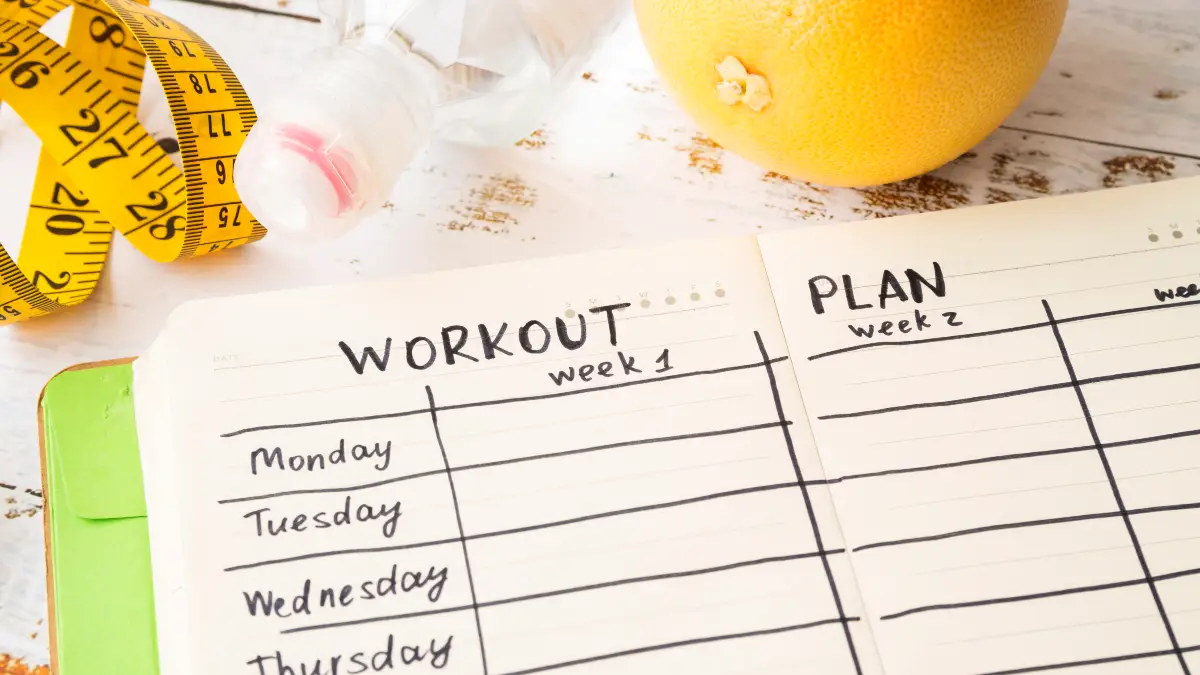
Knowing the science is one thing, but putting it into practice is what gets results. Here is a sample plan and some tools to help you succeed.
A Sample Week: What This Looks Like in Real Life
This table shows how you can fit everything together in a normal week. It combines strength training, cardio, recovery, and meals focused on protein.
| Day | Morning/Breakfast (Protein Focus) | Lunch (Protein & Fiber Focus) | Afternoon/Workout | Evening/Dinner (Protein & Veg Focus) | Wind-Down |
| Monday | 3-egg omelet with spinach (~25g protein) | Large salad with 6oz grilled chicken (~40g protein) | Full Body Strength Training | 6oz baked salmon, quinoa, asparagus (~40g protein) | 10 min deep breathing |
| Tuesday | Greek yogurt with berries & nuts (~20g protein) | Lentil soup with whole-grain bread (~20g protein) | 20-min HIIT (Treadmill Sprints) | Turkey meatballs with zucchini noodles (~35g protein) | Read a book |
| Wednesday | Protein smoothie (~25g protein) | Leftover turkey meatballs (~35g protein) | Active Recovery (45-min brisk walk) | Shrimp stir-fry with brown rice (~35g protein) | Gentle stretching |
| Thursday | Scrambled tofu (~20g protein) | Tuna salad on whole-grain crackers (~30g protein) | Full Body Strength Training | Lean steak (4oz) with sweet potato (~35g protein) | Journaling |
| Friday | Oatmeal with protein powder (~30g protein) | Leftover steak salad (~30g protein) | 20-min HIIT (Bodyweight Circuit) | Rotisserie chicken (6oz) with a large salad (~45g protein) | Social time with family |
| Saturday | Cottage cheese with peaches (~25g protein) | Quinoa bowl with black beans, corn, avocado (~20g protein) | Active Recovery (Long walk or hike) | Turkey burgers on lettuce wraps (~35g protein) | Relaxing hobby |
| Sunday | High-protein pancakes (~30g protein) | Meal prep for the week | Full Body Strength Training | Leftover chicken with roasted vegetables (~45g protein) | 15 min meditation |
Helpful Apps to Keep You on Track
Technology can help you stay consistent and see your progress. These apps are great for following this plan:
For Tracking Food: Use MyFitnessPal or MacroFactor to make sure you’re hitting your protein and fiber goals.
For Tracking Workouts: Use Strong, Hevy, or JEFIT to log your exercises, sets, reps, and weights so you can see yourself getting stronger.
For Guided Workouts: Apps like Nike Training Club, Peloton, or FitOn have tons of strength and HIIT workouts you can follow.
For Sleep & Stress: Calm and Headspace have guided meditations to help lower stress. Sleep Cycle can help you track your sleep and see how to improve it.
When You Should Talk to a Doctor

While these lifestyle changes are powerful, sometimes you need a doctor’s help. You should always talk to a doctor before starting a new diet or exercise plan, especially if you have any health issues.
You should also see a doctor if:
You gain weight quickly for no reason, or if you also feel very tired, are losing hair, or feel cold all the time. This could be a sign of a thyroid problem that needs treatment.
You are following the plan but not seeing any results. A doctor can run blood tests to check your hormone levels. This can help create a plan that is more specific to you.
Sometimes, lifestyle changes aren’t enough. A doctor might talk to you about other options, like Hormone Replacement Therapy (HRT) for menopause symptoms or prescription weight-loss medicines. These can be helpful tools when used with a doctor’s guidance.