
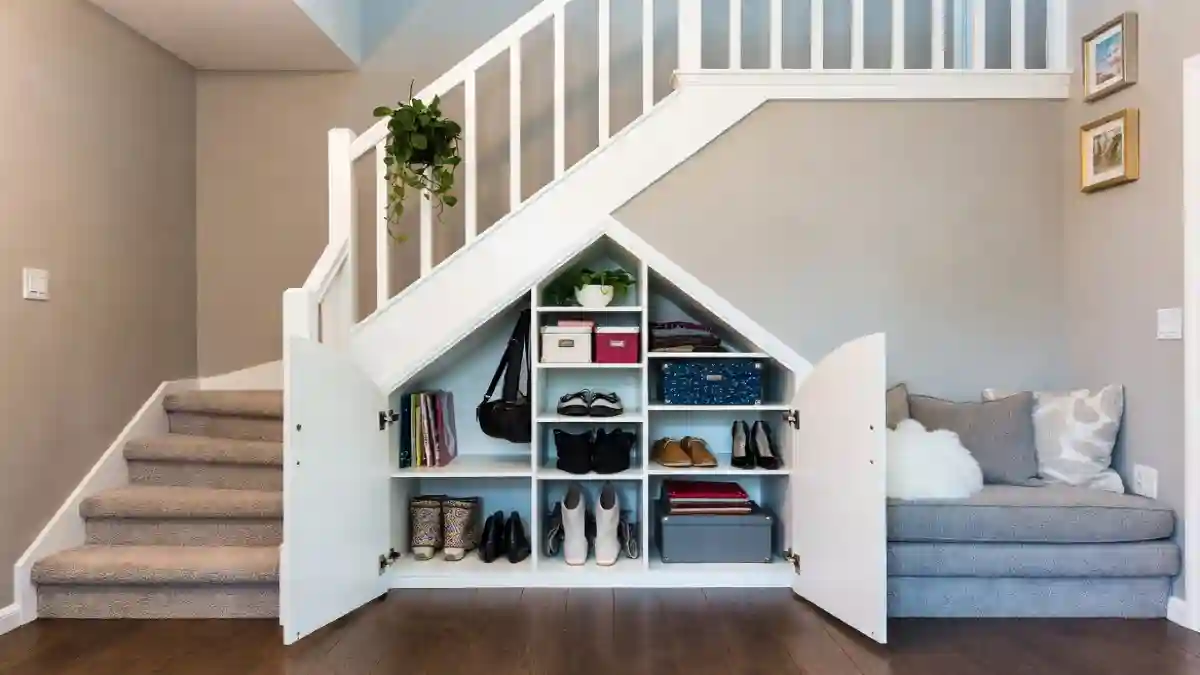
Square footage costs a fortune. Yet, vast potential often sits unnoticed under everyday staircases. Seeing awkward gaps collect dust while closets burst drives homeowners mad. I’ve felt such frustration personally.
Why let prime real estate go to waste? Transforming that dark triangle creates magic. Smart designs build function where voids once existed.
Deep drawers hide winter boots, or open shelves display beloved books. Every inch counts when trying to organize a chaotic life. Reclaiming dead zones feels incredibly satisfying.
These twenty-one genius concepts offer brilliant ways to maximize efficiency without requiring major renovations. Your home deserves better than empty shadows.
Unlock the Hidden Potential Under Your Stairs
Square footage is a premium commodity, yet the valuable space beneath your staircase often sits empty and collecting dust. Instead of letting this prime real estate go to waste, you can transform that awkward dark triangle into a highly functional area that alleviates storage woes.
With reclaiming this “dead zone,” you can maximize your home’s efficiency and organization without needing major renovations.
Under-Stair Storage
Utilize Deep Drawers
Conceal bulky items like winter boots or sports equipment to keep entryways clear.
Create Open Displays
Install shelves to showcase beloved books, turning a shadow into a focal point.
Maximize Every Inch
Turn wasted voids into practical storage to help organize a chaotic lifestyle.
Smart Design Solutions
Implement efficient updates that add function without heavy construction.
1. Minimalist White and Grey Haven

Modern living often demands clever solutions for tight corners. Installing low-profile cabinetry beneath an open staircase turns a wasted void into a functional focal point.
Sleek white drawers hide mess while open cubbies offer a spot for favorite books or plants.
Natural light floods the space, bouncing off the clean surfaces to keep the nook feeling expansive. Form meets function beautifully here.
- Visual lightness matters immensely. Open risers allow sunlight to penetrate through to the storage unit, ensuring the corner never feels dark or cramped, effectively maintaining an airy atmosphere.
- Hidden organization creates calm. Handle-less drawers provide a seamless look that conceals everyday chaos, making it easy to stash away toys or papers while keeping the exterior pristine.
- Contrast defines the zone. A moody grey accent wall behind the white joinery adds necessary depth, grounding the floating staircase visually and making the storage area stand out as a piece of art.
2. The Invisible Storage Solution
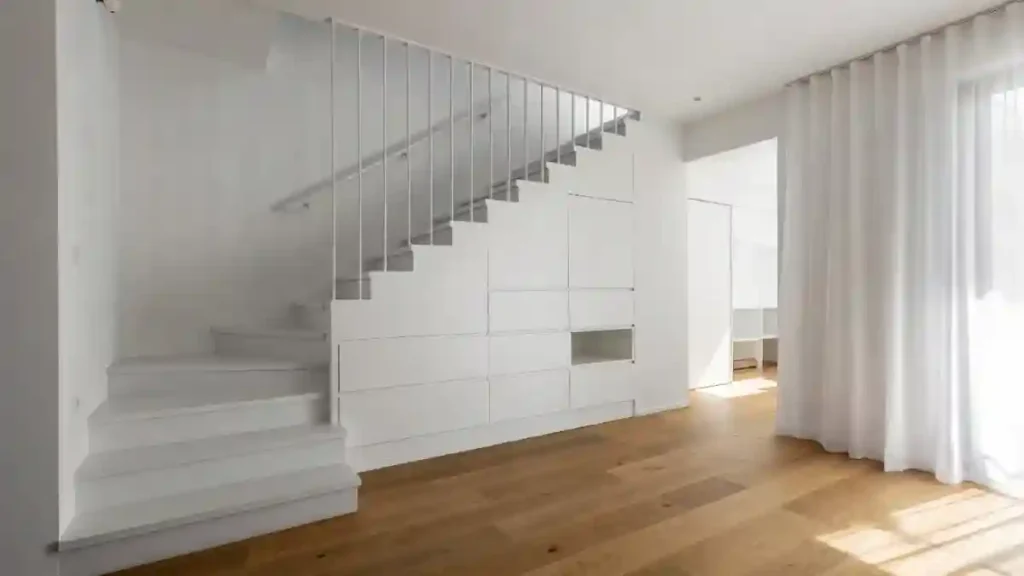
Clutter destroys calm, yet this design fights back with pure invisibility. White panels blend perfectly with the staircase structure, creating a solid architectural block rather than a mere cupboard.
Everyday items from shoes to seasonal coats vanish behind smooth, handle-less fronts, leaving the hallway looking pristine.
It feels less like furniture and more like a smart wall working hard to maintain serenity.
- Vertical lines elongate the room. Thin, white metal spindles stretching to the ceiling draw the eye upward, making the ceiling feel higher while acting as a sleek safety barrier.
- Handle-less facades maintain flow. Push-to-open mechanisms eliminate visual noise, ensuring the storage wall looks like a deliberate design feature rather than a utility closet.
- Strategic openness breaks the solid block. A single open cubby interrupts the grid of white drawers, providing a dedicated stage for a favorite sculpture or a convenient charging station.
3. Practical Storage with a Soft Touch

Finding a balance between hiding clutter and displaying treasures is often a struggle. Soft beige tones here transform a utilitarian cupboard into a warm design feature that complements the carpeted steps perfectly.
Closed cabinets swallow up bulky items like vacuum cleaners or winter coats, while the tall open shelving unit offers a sliver of personality for plants and books.
It represents a gentle approach to organization that feels inviting rather than clinical.
- Neutral palettes soothe the eye. Matching the cabinetry paint to the warmth of the carpet creates a cohesive look that feels intentional and high-end, effectively softening the architectural angles.
- Tiny details make big impacts. Small, dark minimalist knobs provide just enough contrast against the greige doors to add visual interest without overwhelming the serene vibe.
- Vertical niches offer versatility. Dedicating the tallest, narrowest section to open shelving breaks up the wall of doors, providing a perfect spot for decor that needs to be seen.
4. A Curator’s Corner Under Stairs
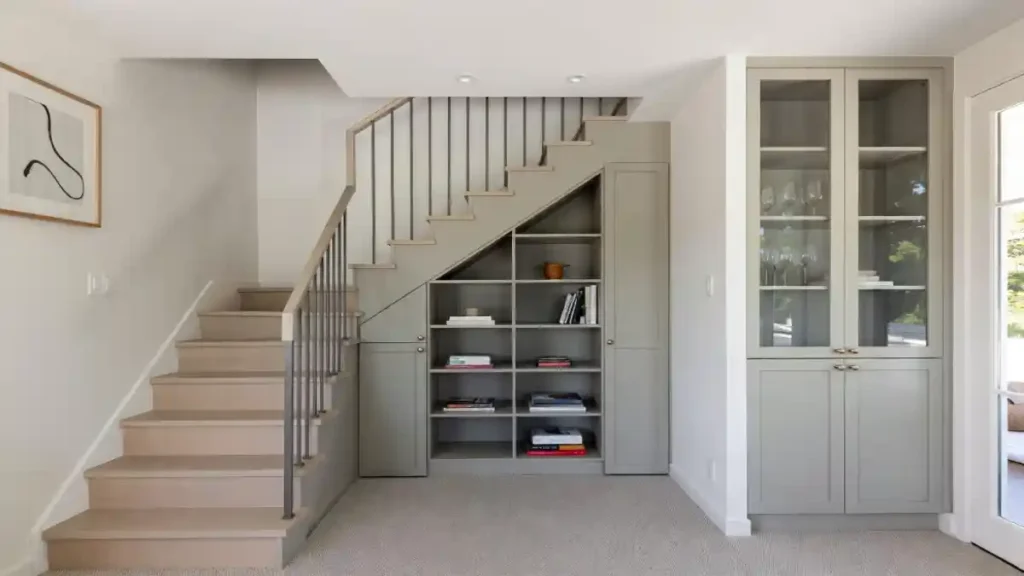
Books and heirlooms often end up hidden in boxes, but this design gives them a proper stage.
Muted sage-grey joinery creates a sophisticated backdrop that feels more like a custom library than a basement cupboard.
Alternating between open cubbies and tall, closed cabinets allows for a curated display while still hiding the inevitable mess of daily life.
It proves that utility zones can look expensive with the right color choice and layout.
- Curated shelves tell a story. Arranging favorite novels and sculptural bowls in the open grid breaks up the heavy cabinetry, transforming the area into a conversation starter rather than just storage.
- Muted tones add depth. Painting the entire built-in unit in a soft, earthy grey-green distinguishes it from the surrounding white walls, instantly elevating the perceived value of the space.
- Cohesion extends beyond the stairs. Matching the standalone glass-front cabinet to the under-stair unit creates a unified visual language, tying the dining area and hallway together seamlessly.
5. The Ultimate Home Office Hack
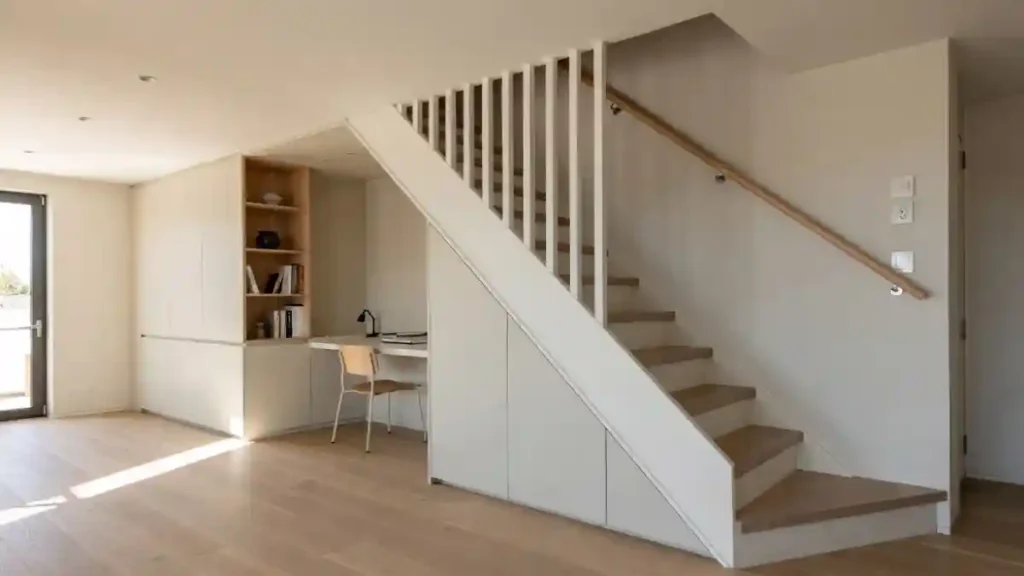
Working from home often means sacrificing the dining table, but this design reclaims personal space.
Tucking a sleek desk and shelving unit beneath the stair landing creates a dedicated zone for focus without encroaching on the living area.
White cabinetry blends with the walls to keep things bright, while natural wood accents add warmth. It transforms a dead corner into a productivity powerhouse.
- Defined zones boost focus. Placing the desk in the deepest part of the recess provides a sense of enclosure, helping to block out household distractions while maintaining an open feel.
- Angled storage maximizes awkward gaps. Custom doors follow the slope of the stairs precisely, ensuring not a single inch of the lower section is wasted on empty air.
- Warm textures prevent sterility. Incorporating an open wooden bookshelf breaks up the expanse of white, tying the workspace to the oak stair treads for a cohesive, designer look.
6. Organized Calm for Busy Hallways

Entrances require a delicate balance between welcoming guests and hiding the mess of daily exits. Combining a central column of open shelving with flanking closed cabinets achieves exactly that.
Specific items like keys or decorative vases get the spotlight in the middle, while bulky coats and shoes disappear behind smooth, matte doors on either side. Soft, earthy tones replace the starkness of standard white storage, adding warmth without darkening the corridor.
It creates a hallway that feels curated rather than cluttered.
- Strategic zoning commands attention. Placing the open display shelves right in the middle breaks the monotony of solid doors, ensuring the unit feels like a deliberate design choice rather than just a wall of cupboards.
- Earthy tones ground the space. Utilizing a soft, matte taupe finish warms up the crisp white surroundings, bridging the gap between the light wood floor and the modern staircase structure effectively.
- Varied storage handles everything. Mixing tall vertical cabinets with smaller, slope-following cupboards ensures that awkward items like vacuum cleaners and small knick-knacks all have a dedicated home.
7. Effortless Shoe Storage That Breathes
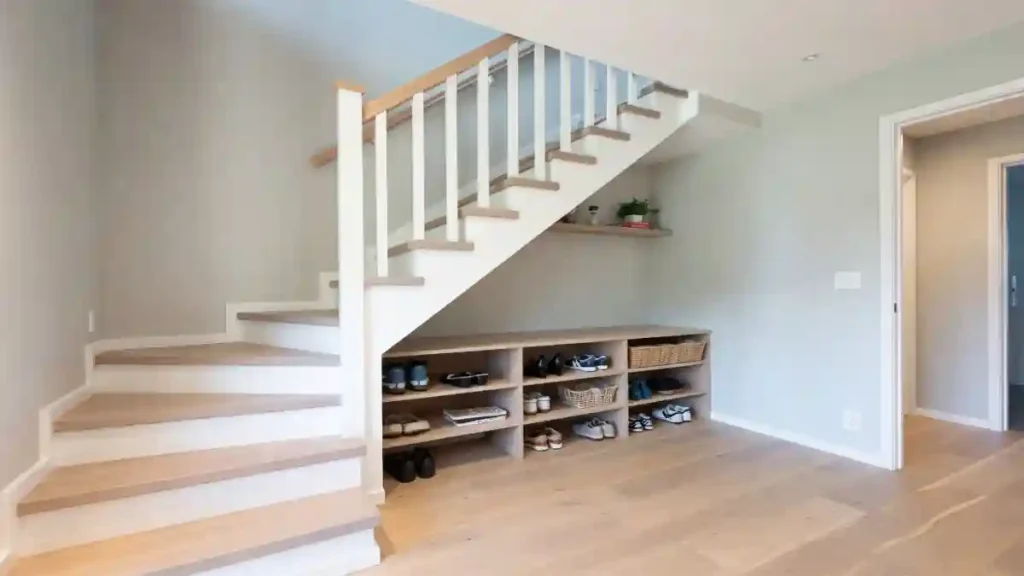
Tripping over sneakers at the front door ruins the mood instantly. Installing a low, open shelving unit beneath the staircase solves the shoe pile-up while keeping the hallway feeling massive and airy.
Blonde wood textures add a layer of warmth to the crisp white walls, creating a welcoming vibe that feels casual yet organized.
Floating shelves above utilize the vertical gap for greenery, turning a utility spot into a cute vignette. Form and function coexist here without heavy cabinetry weighing down the room.
- Low profiles preserve sightlines. Keeping the furniture height minimal ensures the beautiful staircase structure remains visible, allowing light to travel freely across the floor and maintaining a spacious atmosphere.
- Accessibility encourages tidiness. Having open cubbies makes it incredibly easy for kids and adults to slide shoes away immediately, effectively reducing floor clutter without the barrier of opening doors.
- Greenery softens architectural angles. Adding a simple floating shelf for small potted plants breaks up the white expanse, injecting life and color into a corner that would otherwise be purely utilitarian.
8. Warmth Meets Geometric Precision
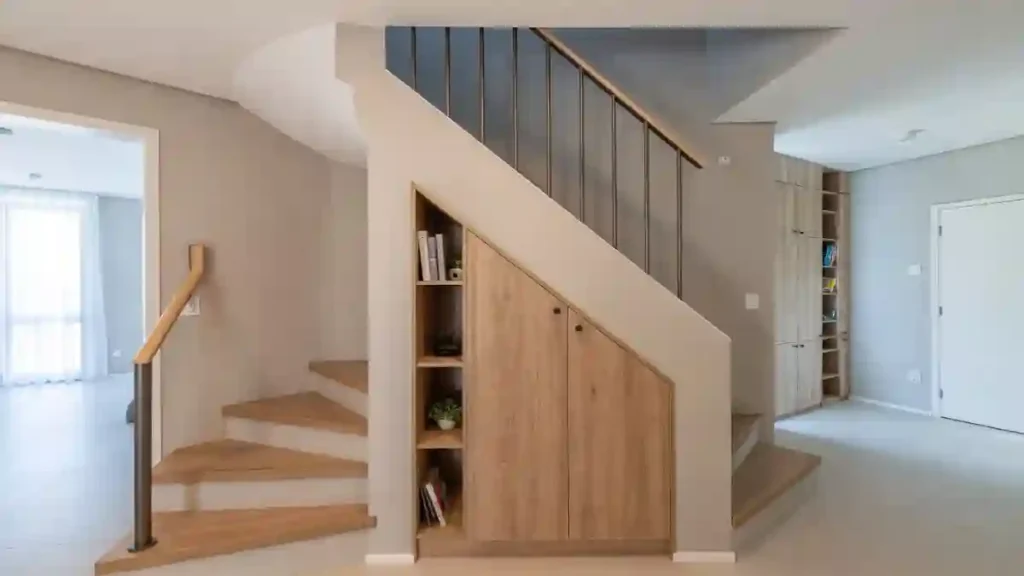
Weird architectural angles often stump homeowners, yet this solution masters the curve. Custom-fitted wooden joinery tucks precisely into the turning staircase, transforming a potential dead zone into a stunning feature.
Rich oak textures contrast beautifully against the cool grey walls, bringing organic warmth to the modern lines. Books get a vertical stage while miscellaneous items vanish behind the angled doors.
It proves that even the trickiest corners can become beautiful assets.
- Custom geometry defines the look. Tailoring the cabinet doors to mirror the staircase’s ascent creates a satisfying visual rhythm that off-the-shelf furniture simply cannot achieve.
- Wood tones inject cozy vibes. Utilizing natural oak finishes prevents the grey hallway from feeling cold, effectively bridging the gap between the wooden steps and the rest of the interior.
- Dual-purpose zones maximize utility. Combining a tall, narrow bookshelf with concealed triangular cupboards ensures that both display-worthy decor and messy household essentials have their own dedicated spots.
9. A Masterclass in Dual-Purpose Design

Balancing heavy storage needs with aesthetic appeal often feels impossible, but this setup creates perfect harmony.
Moody grey cabinetry anchors the bright hallway, offering deep cupboards for hiding unsightly clutter while the honey-toned wood backing brings organic warmth to the display shelves.
Integrated lighting casts a soft glow over books and plants, turning a standard closet into an architectural feature. It proves that practical organization can still look incredibly high-end.
- Lighting elevates the ordinary. Recessed LED strips within the open shelving instantly draw the eye to curated decor, ensuring the corner feels like a deliberate gallery rather than a dark storage pit.
- Contrast defines the character. Pairing the cool, slate-grey paint with warm wood accents inside the niches creates a rich visual depth that complements the dark stair treads beautifully.
- Hybrid layouts maximize utility. Combining solid doors for messy overflow with open cubbies for styling objects allows for a space that is easy to keep tidy without looking sterile or closed-off.
10. Classic White Deep-Dive
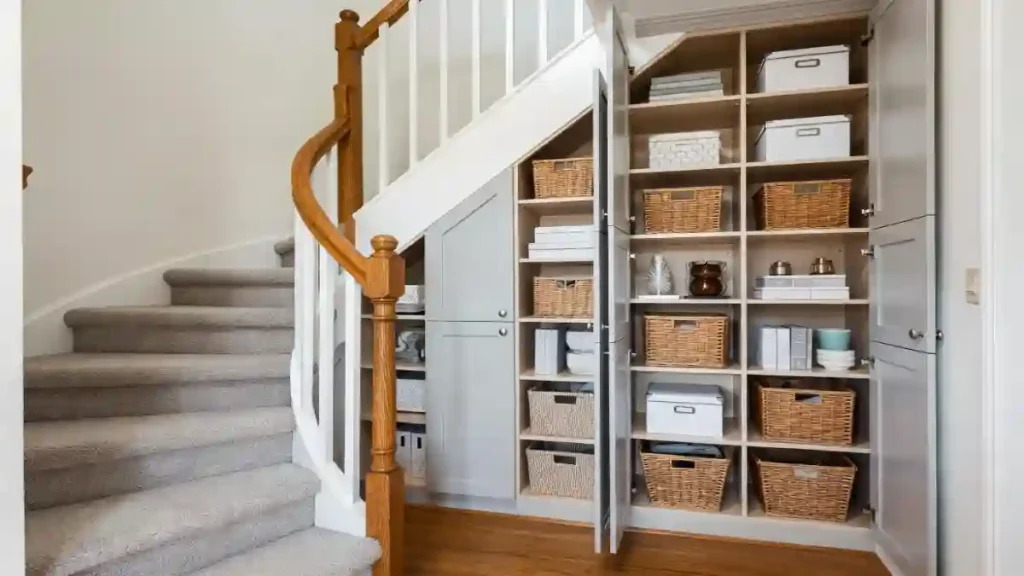
Deep storage often becomes a black hole where items vanish. Opening these tall white doors reveals a different story: a structured grid where every basket has a home.
It functions like a walk-in pantry tucked neatly under the treads. Utilizing the full depth of the staircase ensures that even bulky seasonal items fit comfortably without cluttering the main living space.
Organization enthusiasts will find pure joy here.
- Full-depth utilization changes the game. Standard cupboards barely scratch the surface, but these shelves extend far back, providing ample room for oversized bins that standard furniture simply cannot accommodate, making it a storage powerhouse.
- Uniform textures reduce visual noise. Wicker baskets slide easily onto the wooden shelves, grouping loose items together while adding a layer of organic warmth that contrasts pleasantly with the crisp white joinery.
- Tall doors offer complete access. Swinging the floor-to-ceiling panels wide open exposes the entire contents at once, eliminating the frustration of rummaging through dark, hard-to-reach corners.
11. Grey and Maple Organization Powerhouse
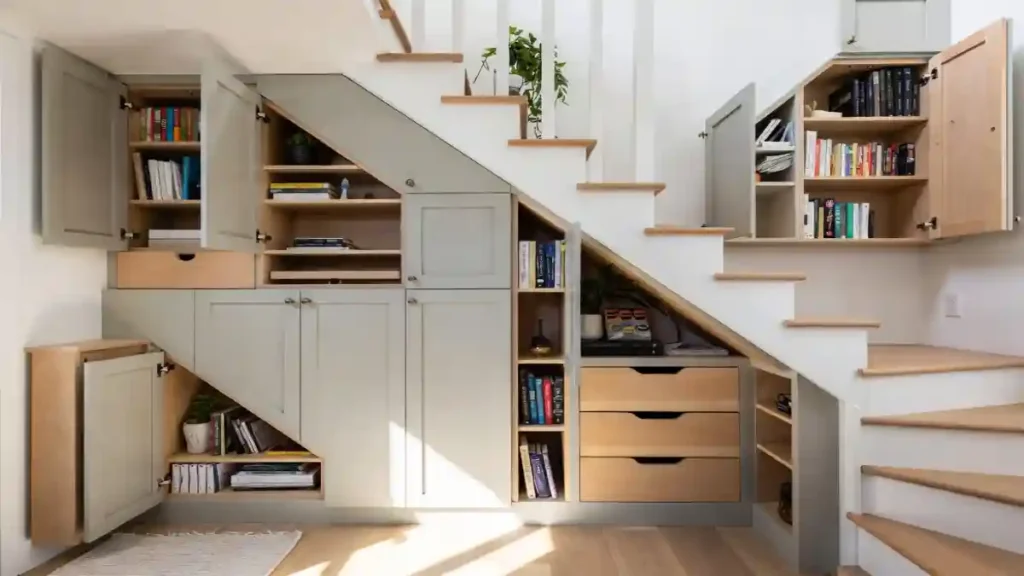
Maximizing efficiency often means sacrificing style, but this unit refuses to compromise.
Soft grey facades open up to reveal warm wooden interiors, creating a delightful contrast every time a door swings wide. It acts like a transformer, hiding an entire home office’s worth of supplies—from files to fiction—within a compact footprint.
Keeping clutter concealed behind matte finishes ensures the living area remains peaceful, even if the drawers inside are bursting with activity.
- Two-tone surprises delight the senses. Cool grey exteriors maintain a modern, airy hallway aesthetic, while the honey-toned wood interiors provide a secret burst of organic warmth whenever a cabinet is accessed.
- A place for absolutely everything exists here. Combining diverse storage types—from pull-out drawers for files to open nooks for decor—creates a dynamic system that adapts to changing household needs effortlessly.
- Geometry becomes a functional asset. Fitting cabinetry into the tightest triangular recesses ensures that even the tiny, unusable corners near the floor become valuable pockets for stashing small essentials.
12. Storage with a Storybook Twist

Standard cupboards serve a purpose, but injecting a little personality makes organization delightful.
Shaping the internal shelving like a miniature house creates a charming surprise hidden behind simple white doors. It creates a dedicated “home” for shoes and bags that feels playful rather than strictly utilitarian.
Nestling a cushioned bench right next to the storage unit transforms the area into a cozy multi-use zone for reading or getting ready.
- Geometric details spark joy. Framing the central shelves with a peaked top mimics a traditional roofline, turning a standard shoe rack into a cute architectural feature that utilizes the stair slope creatively.
- Seating invites moments of pause. Tucking a low, upholstered bench into the lowest part of the eave offers a comfortable spot to put on boots, effectively bridging the gap between storage and living space.
- Hidden visuals reduce chaos. Keeping the playful interior structure behind solid doors ensures the hallway remains calm and uncluttered when not in use, reserving the visual excitement for when you need it.
13. A Cozy Reading Corner with Classic Charm
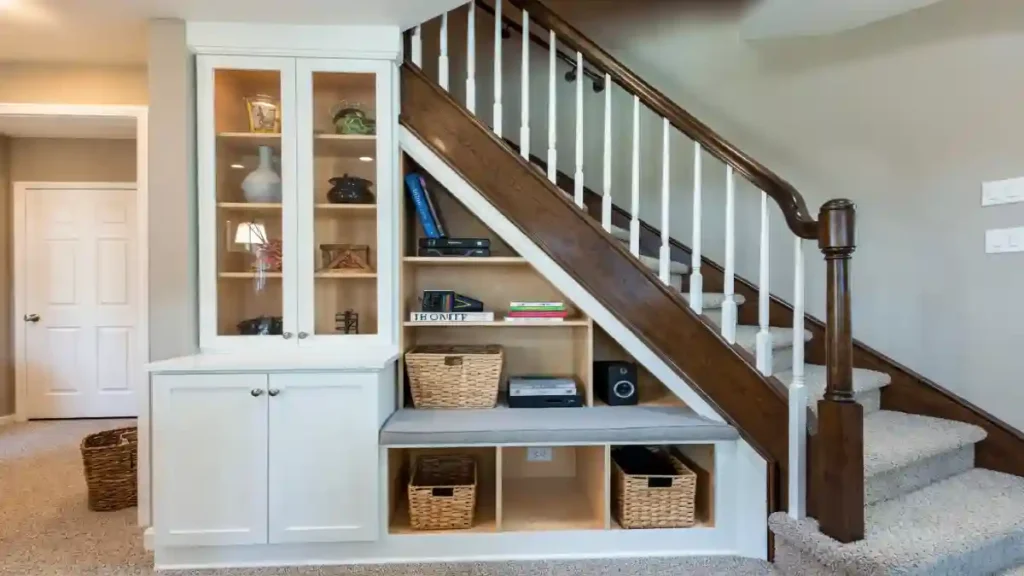
Relaxing afternoons find a perfect home here. Built-in cabinetry anchors the staircase with a mix of elegant display space and casual seating.
A tall glass cabinet highlights decorative vases, while the cozy bench tucked under the slope creates an inviting spot to pause with a favorite novel.
Dark wood treads contrast sharply with the crisp white woodwork, grounding the design in traditional elegance.
- Vertical display elevates the aesthetic. Glass-fronted upper cabinets provide a dust-free zone for showcasing collectibles, keeping fragile items safe while adding visual height to the room.
- Integrated seating maximizes comfort. Adding a plush grey cushion transforms the low-clearance area into a functional reading nook, turning awkward geometry into a cozy asset.
- Texture adds rustic warmth. Woven wicker baskets slide neatly into the base cubbies, introducing natural fibers that soften the clean lines of the white painted wood.
14. A Playful Spin on Utility
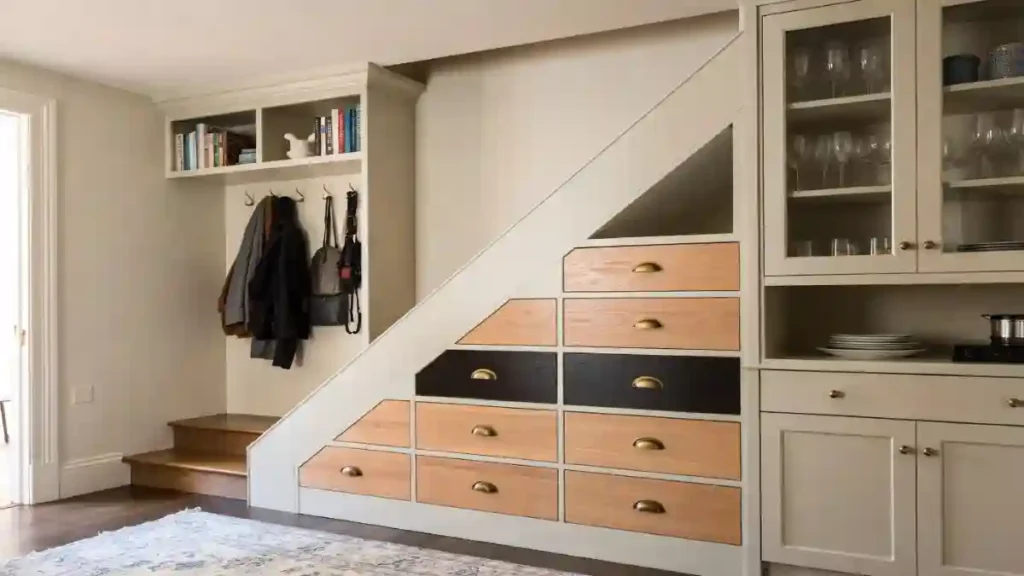
Standard white built-ins are safe, but mixing finishes adds so much more character. Combining natural wood grain with bold black accents on the drawer fronts turns a simple storage wall into a statement piece.
It functions as a hardworking mudroom on the lower end, capturing coats and bags immediately upon entry, while transitioning smoothly into a dining console further up.
Such a design proves that practical entryway furniture can be fun and unexpected.
- Contrasting fronts define the drawers. Alternating between light oak and matte black faces creates a unique, patchwork effect that breaks up the monotony of the large unit.
- Open zones grab daily clutter. Carving out a niche for coat hooks and a small bench at the lowest point creates an instant drop zone, keeping jackets off the backs of chairs.
- Glass doors bridge the gap. Integrating a tall, glass-fronted cabinet on the right side shifts the function from mudroom utility to elegant dining storage, blending the two zones seamlessly.
15. A Collector’s Dream Under the Stairs
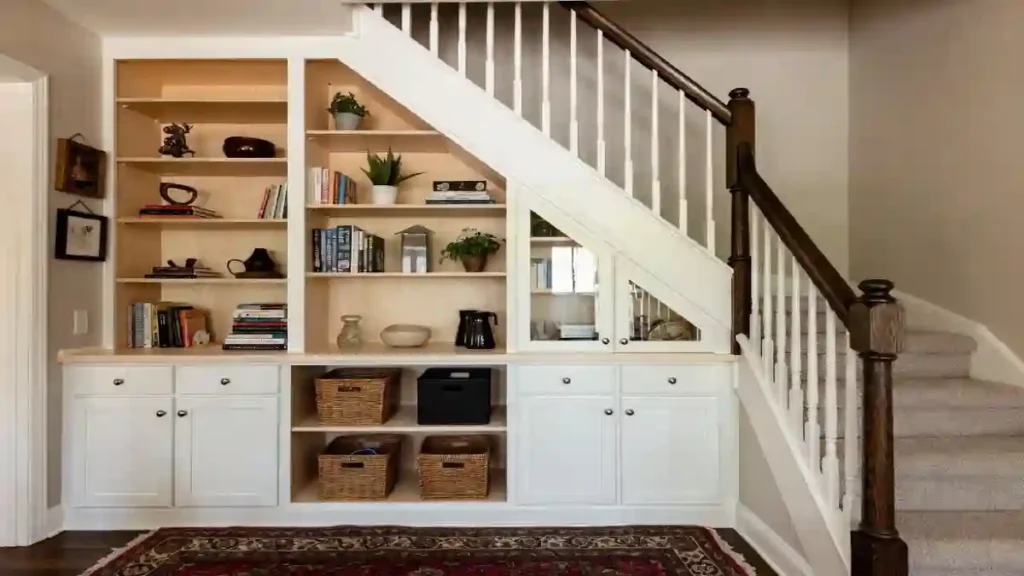
Cherished mementos deserve better than a dark cardboard box. Framing the staircase with a combination of open shelving and glass-fronted cabinets creates a personal museum right in the living room.
Light wood interiors glow against the crisp white face frames, offering a warm backdrop for books and pottery without overwhelming the space.
It balances the practical need to hide clutter in lower cabinets with the desire to showcase beautiful things, turning a structural necessity into the room’s highlight.
- Angled glass protects treasures. Custom-cut glass doors follow the slope precisely, keeping delicate items dust-free while maintaining an open, airy feel that solid doors would block.
- Woven textures ground the design. Sliding natural wicker baskets into the lower open cubbies adds a rustic touch that prevents the large white unit from feeling too formal or clinical.
- Wood backing adds depth. Leaving the interior of the shelves in a natural wood tone creates a subtle two-tone effect that ties the unit to the staircase handrail and the floor, creating visual harmony.
16. Secret Drawer Sanctuary
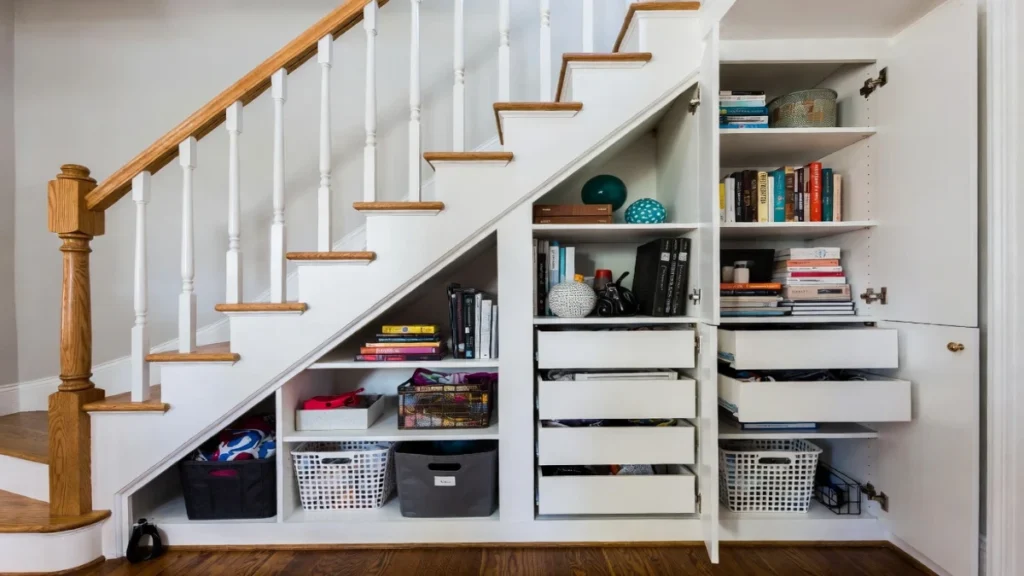
Standard shelves often become messy piles, but this unit hides a secret weapon: internal drawers.
Opening the tall white door reveals a stack of smooth-gliding compartments perfect for organizing papers, linens, or toys that usually clutter the living room.
It represents a masterclass in density, proving you don’t need a massive room to store a massive amount of stuff.
Everything has a designated zone here, from the lowest basket to the highest book, making organization feel automatic rather than a chore.
- Internal drawers change everything. Instead of stacking items precariously on deep shelves, these pull-outs bring the back of the cabinet right to you, ensuring nothing gets lost in the shadows.
- Every angle works hard. Utilizing the lowest part of the slope for open bins provides an easy-access zone for kids’ shoes or toys, effectively keeping the floor clear without requiring complex joinery.
- White framing brightens the bulk. Keeping the entire unit crisp white prevents this massive amount of storage from feeling heavy, allowing the warm wood stair treads to remain the visual star of the hallway.
17. The Budget-Friendly Storage Hero

Custom built-ins often break the bank, but effective organization doesn’t require a contractor. Sliding adjustable wire shelving units into the recess creates an instant, highly functional warehouse for household overflow.
Clear plastic bins make identifying “Holiday Decor” or “Winter Clothes” effortless, eliminating the need to dig through opaque boxes. It proves that utility can be satisfyingly neat without requiring a single power tool.
- Transparency speeds up retrieval. Using see-through containers means finding that specific box of ornaments takes seconds, saving time and frustration during stressful holiday setups.
- Adjustability offers freedom. Chrome wire racks allow for changing shelf heights, accommodating everything from tall boots to flat document boxes as family needs evolve over time.
- Modularity suits renters. Unlike permanent cabinetry, these standalone units can be moved or reconfigured easily, making this the perfect solution for temporary living situations or growing families.
18. Sleek Storage That Grounds the Room

Modern interiors rely on clean lines, and this design masters the art of subtraction. Tucking a low-slung console beneath the floating treads creates a dedicated zone for books and media without crowding the visual flow.
Deep charcoal cabinetry anchors the bright, airy space, offering a striking contrast to the white walls while hiding clutter behind tall doors.
Open shelving keeps the lowest point accessible and styled, turning a dark corner into a sophisticated display feature.
- Visual weight balances openness. Pairing the airy, floating staircase with a solid, dark storage block creates a satisfying architectural contrast that makes both elements stand out more effectively.
- Low profiles maintain airiness. Stopping the shelving height well below the stair stringer ensures that the beautiful open risers remain the star of the show, allowing light to filter through uninterrupted.
- Zoning creates versatility. Dedicating the tall section to concealed storage and the low section to open display allows the unit to function simultaneously as a closet and a living room focal point.
19. Deep Storage with a Modern Edge
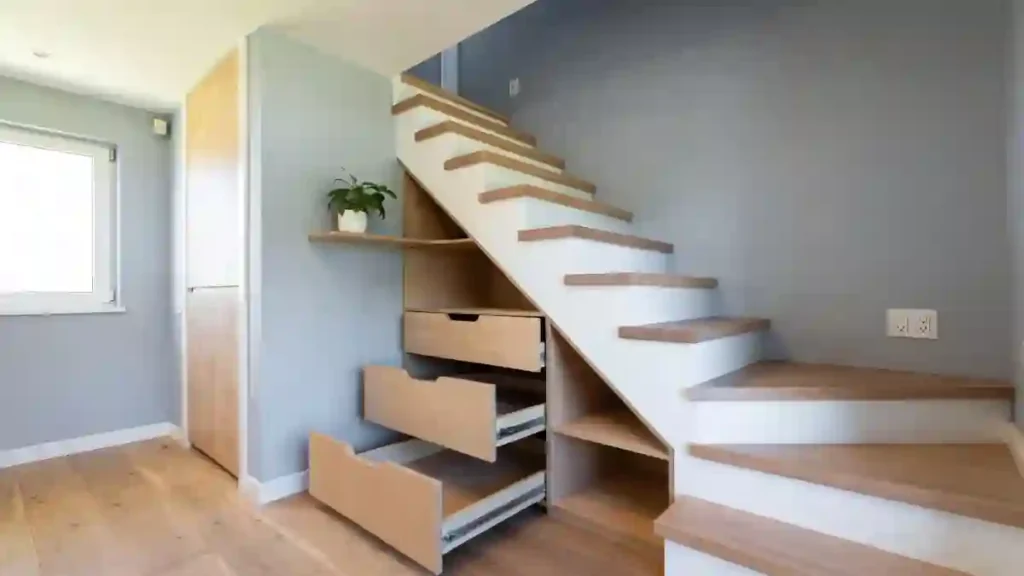
Hardware often ruins a clean look, but these cutout handles solve that problem elegantly. Blonde wood drawers slide out to reveal massive amounts of space for linens or games, keeping the exterior looking sleek and flush.
It feels like a custom piece of furniture designed specifically to calm a busy home.
Combining hidden compartments with open nooks creates a dynamic layout that serves every possible storage need while adding a touch of architectural interest.
- Cutout handles maintain flow. Skipping bulky knobs keeps the profile completely flat, preventing snagged clothes and maintaining a streamlined, modern aesthetic that feels incredibly satisfying to use.
- Deep tracks swallow clutter. Extending the drawers fully into the deep recess of the stairwell utilizes space that usually goes to waste, providing room for bulky blankets or board games that standard cabinets can’t hold.
- Wood warms the grey. Natural plywood tones pop beautifully against the cool grey wall paint, adding a layer of organic texture that prevents the modern design from feeling cold or sterile.
20. White & Oak Space-Saver

Multi-functional spaces are the holy grail of modern design. Integrating a dining banquette seamlessly with under-stair storage turns a transient hallway into a destination.
White cabinetry dissolves into the background, allowing the warm oak recessed shelves and stair treads to pop as design features.
It solves the problem of “where do we put the extra linens” while simultaneously creating a cozy corner for morning coffee.
- Banquette seating maximizes flow. Pushing the dining area against the wall opens up the center of the room, creating a spacious feel that standalone chairs simply cannot offer in tight quarters.
- Material continuity creates harmony. Using the same oak finish for the stair treads, the open shelving, and the cabinet door ties the entire architectural element together for a polished, high-end look.
- Hidden volume remains accessible. Incorporating a tall, discreet white closet provides ample space for taller items like brooms or ironing boards, keeping utility items close at hand but completely out of sight.
21. Under-Stair Display with Timeless Charm
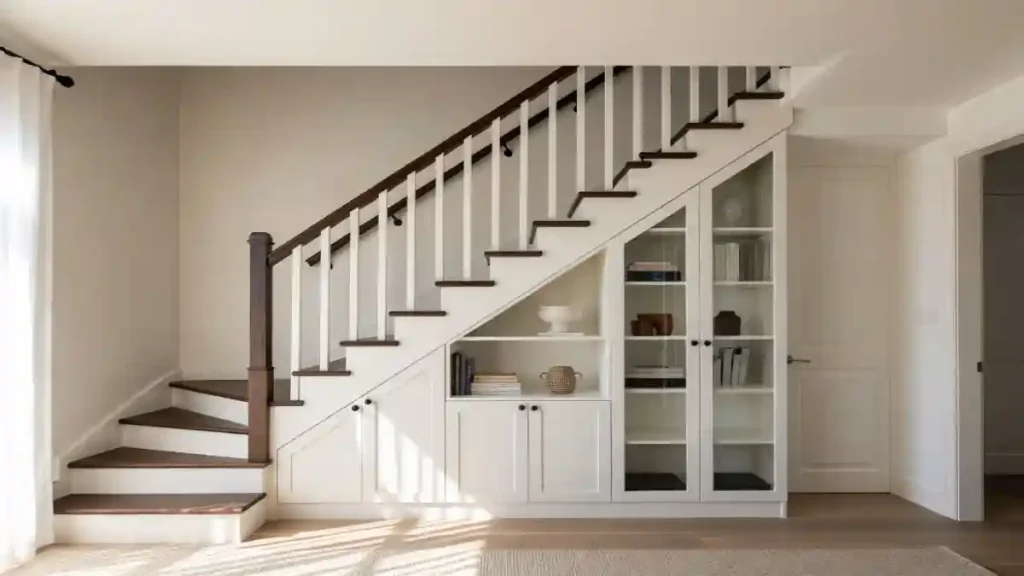
Sophisticated design often lies in the details. Integrating glass-fronted cabinetry alongside solid doors creates a beautiful balance between showing off treasures and hiding clutter.
Dark wood stair treads provide a stunning contrast to the crisp white joinery, grounding the look in traditional elegance.
It turns a standard storage wall into a refined display case suitable for fine china or beloved books, elevating the entire hallway.
- Transparency adds visual depth. Using glass doors prevents the large unit from feeling like a solid block, reflecting light and allowing the eye to travel through to the objects within.
- Mixed storage offers versatility. Combining a central open niche with closed cupboards ensures there is a specific place for everything, from decorative vases to messy paperwork that needs to be concealed.
- Contrast anchors the aesthetic. Dark wooden steps and handrails stand out sharply against the white painted wood, creating a classic, high-end look that feels custom-made for the home.