
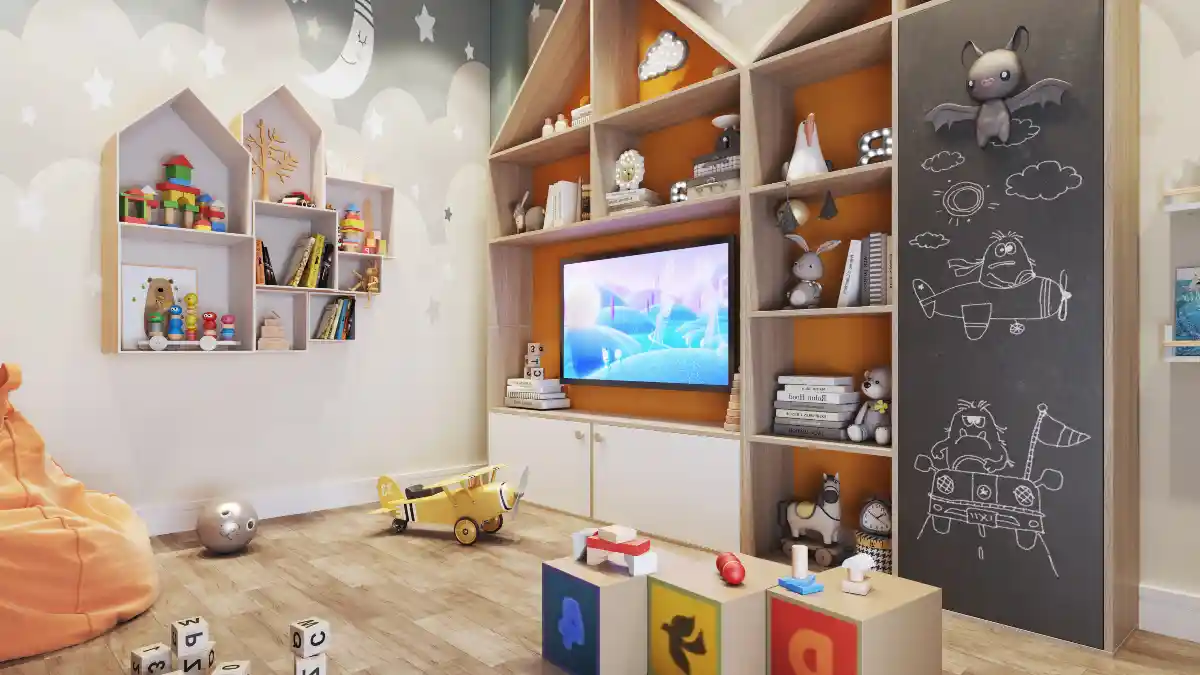
Stepping on a stray building block at 2 AM isn’t just a physical injury; it is a glaring signal that your dedicated play zone has reached critical mass.
Most parents assume a cramped corner implies drowning in toy chaos, yet square footage rarely dictates functionality. A lack of organization and neglected vertical space usually causes that claustrophobic feeling.
Small footprints actually offer the best opportunities for cozy, focused adventure nooks that sprawling basements miss completely.
By swapping bulky bins for clever wall-mounted solutions and utilizing optical illusions, even a closet-sized area can transform into a boundless creative haven. You don’t need a new zip code to find more room, just a few smarter design choices.
1. Embrace Low-Profile Shelving and Vertical Storage
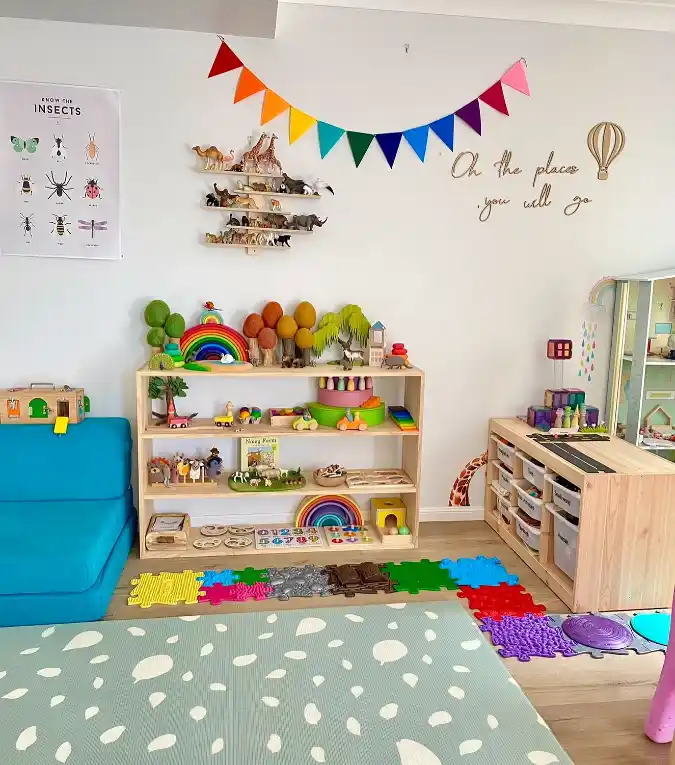
Strategically placed low furniture is crucial for maximizing perceived space in compact areas. This example utilizes short, open wooden shelving that keeps the visual field unobstructed across the room. Maintaining clear sightlines ensures the area never feels boxed in or overly crowded with heavy furniture pieces.
Furthermore, capitalizing on empty wall space is one of the best tiny playroom ideas for smart storage.
Notice how tiered floating shelves manage collections of small animal figures without taking up an inch of floor real estate. This approach leaves ample room below for larger interactive elements like the colorful sensory path mats.
Ultimately, maintaining order is essential for keeping small zones feeling grand. Woven baskets and clear bins neatly corral loose parts and art supplies within a secondary shelving unit. A tidy environment with bright accents, such as the colorful bunting, always feels bigger than a cluttered one.
2. Floor-to-Ceiling Adventure Corner
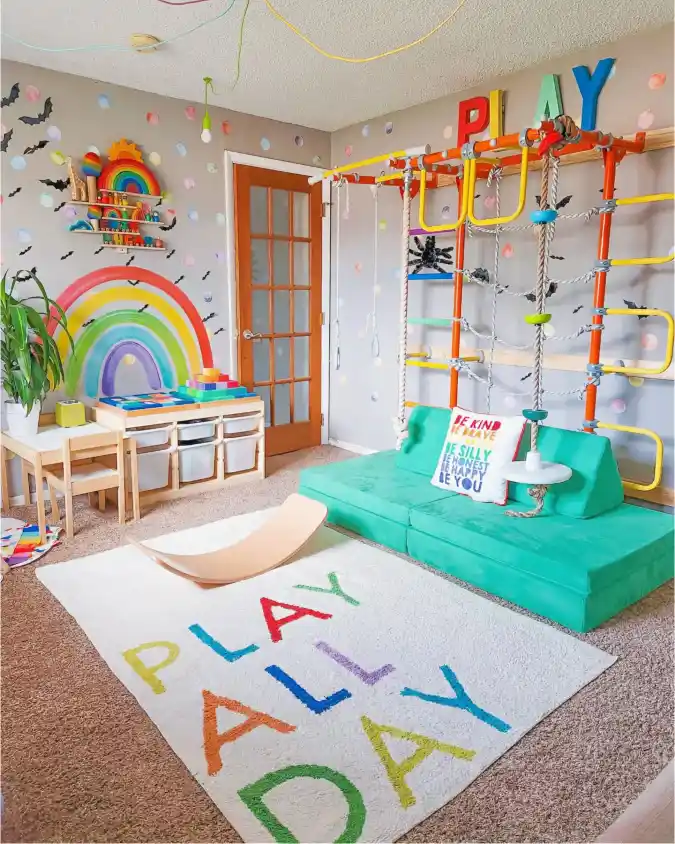
Harnessing verticality is an absolute game-changer for restricted square footage, as clearly demonstrated by this vibrant and active setup.
Rather than allowing bulky toys to consume valuable floor area, this design installs a multi-level climbing frame and jungle gym directly onto the wall surfaces. Consequently, incorporating these upward-focused elements is among the smartest tiny playroom ideas for maximizing every inch of perceived space.
Visually, the room employs bold, cheerful colors to actively combat a cramped or dark feeling that small rooms often have.
A sweeping rainbow mural draws the viewer’s eye upward, creating a strong illusion of greater height, while the bright white “PLAY ALL DAY” rug bounces light around the lower levels. These intentional design choices ensure the area feels energetic and welcoming rather than closed in.
Functionality remains paramount through clever furniture selections like the versatile green modular couch and the combination art-and-storage table tucked in the corner.
By integrating necessary storage solutions directly into essential furniture pieces, daily clutter stays manageable and completely out of the main traffic flow. There is ample room left over for active movement on the wooden balance board.
3. Embrace the Eaves with Attic Architecture
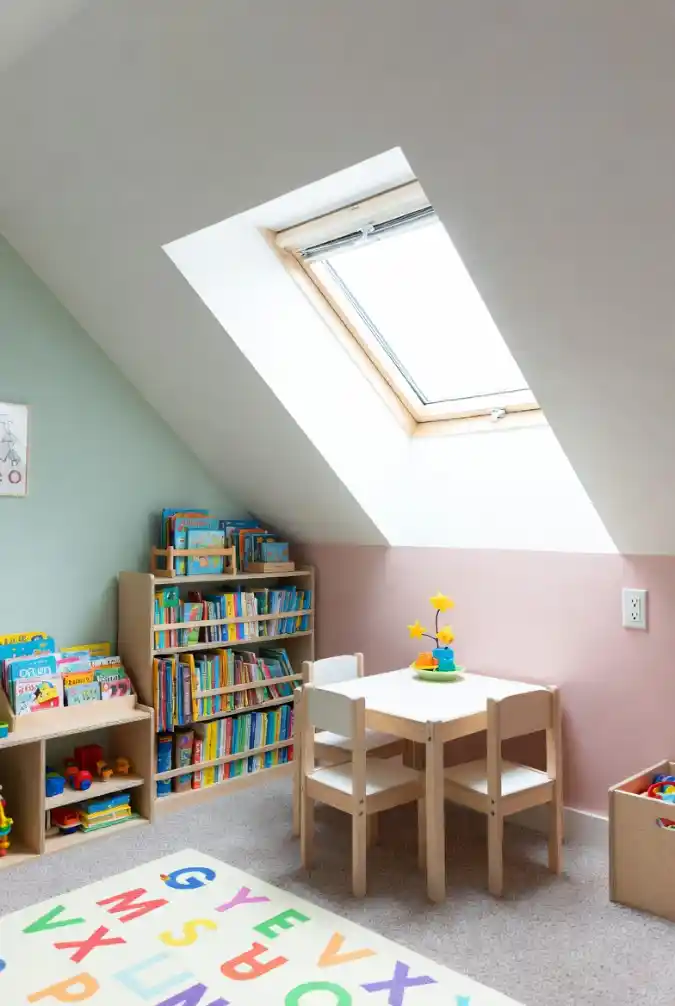
Slanted ceilings often create unused “dead zones” in a home’s architecture, but they offer unique opportunities for children’s spaces.
This cozy attic nook cleverly utilizes the low knee walls for essential book storage. By placing short shelving units against those shortest walls, the central floor area remains open for varied activities on the colorful alphabet rug.
Illuminating the room naturally, that large skylight is the undisputed hero feature in this design. Bright light draws the eye upward and outward, immediately making the tight quarters feel significantly airier than they actually are.
Many successful tiny playroom ideas rely heavily on strategic color blocking, seen here with mint green and blush pink tones, to visually define zones without adding physical bulk.
Scaling down essential furniture is crucial for maintaining a surprisingly spacious feel in cramped quarters like this one. That small wooden table and chair set is sized correctly for the room’s limited footprint, leaving ample circulation space. Furthermore, utilizing organized bins and forward-facing bookshelves keeps toys accessible to children yet visually tidy when not in use.
4. Multi-Level Activity Loft
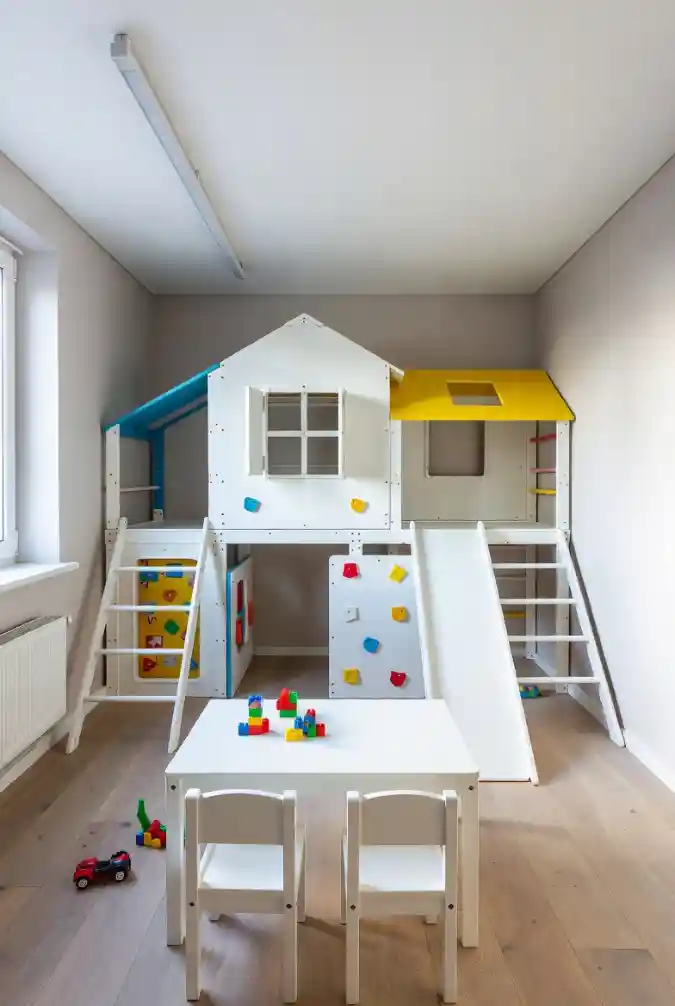
Elevating the play area is a brilliant strategy when faced with limited square footage in compact homes. This impressive structure successfully combines a sleeping or lounging loft above with an active zone directly underneath it.
By utilizing vertical height rather than sprawling outward, you free up valuable floor space for other necessary activities, such as the art table area shown here.
Ingeniously, this design integrates multiple distinct features into a single footprint, including a fun slide, sturdy climbing ladders, and a colorful mini climbing wall.
The sheltered area beneath the loft serves as a versatile cozy nook for quiet reading, imaginative play, or essential toy storage. A small, sleek table and chair set placed nearby extends the functional play space without cluttering the room’s overall flow.
Transforming a cramped corner into a dynamic adventure zone is much easier with multi-functional furniture pieces like this one.
This specific approach is among the most effective tiny playroom ideas because it draws the eye upward, away from the limited floor area. The final result is a room that feels surprisingly open and airy despite holding such a large, comprehensive piece of furniture.
5. Compact Wooden Climbing Corner
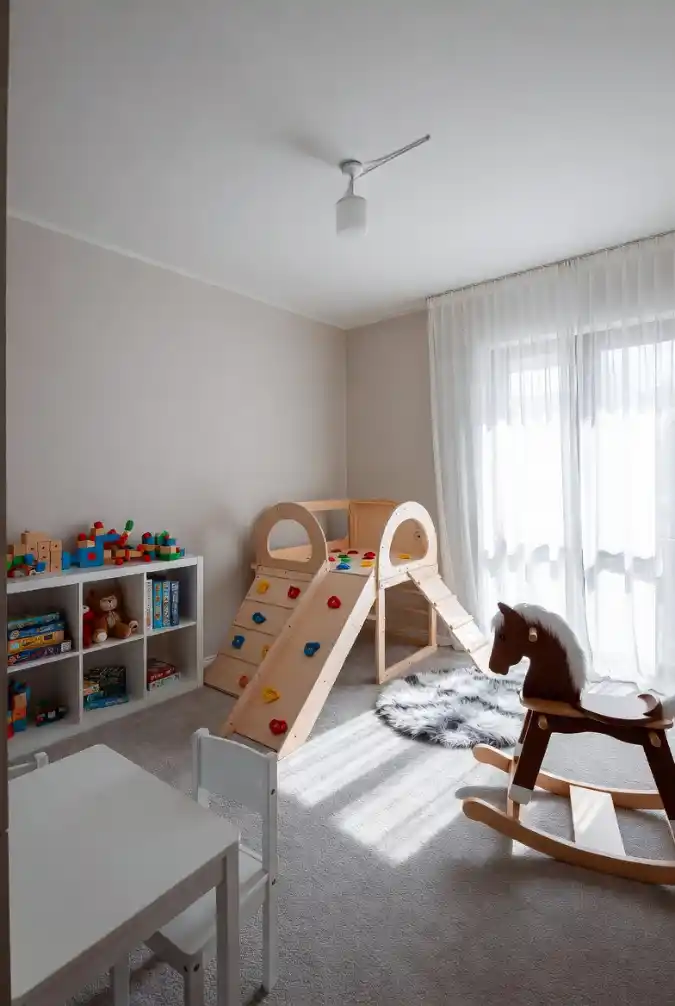
Seldom do homeowners maximize vertical area effectively when dealing with cramped quarters.
This image showcases a multi-functional wooden climbing arch and ramp system that provides significant physical play value without consuming the entire floor plan. Integrating elevated structures like this is among the best tiny playroom ideas that feel surprisingly spacious because it draws the eye upward and utilizes unused air space.
Ample natural light floods through large sheer curtains, making the modest square footage feel significantly airier and less confined.
White open shelving neatly organizes colorful building blocks and board books, keeping necessary items accessible for toddlers yet visually tidy. A miniature white table and chair set offers a dedicated spot for quiet crafts or snacks without blocking essential traffic flow through the room.
Choosing light wood tones for the large equipment helps it blend into the neutral beige walls rather than standing out as bulky furniture.
Even with a classic rocking horse added to the mix, the central rug area remains clear for movement on the floor. Smart layouts like this demonstrate that small zones can successfully host active adventures without feeling cluttered.
6. Utilize Vertical Space with Floor-to-Ceiling Shelving
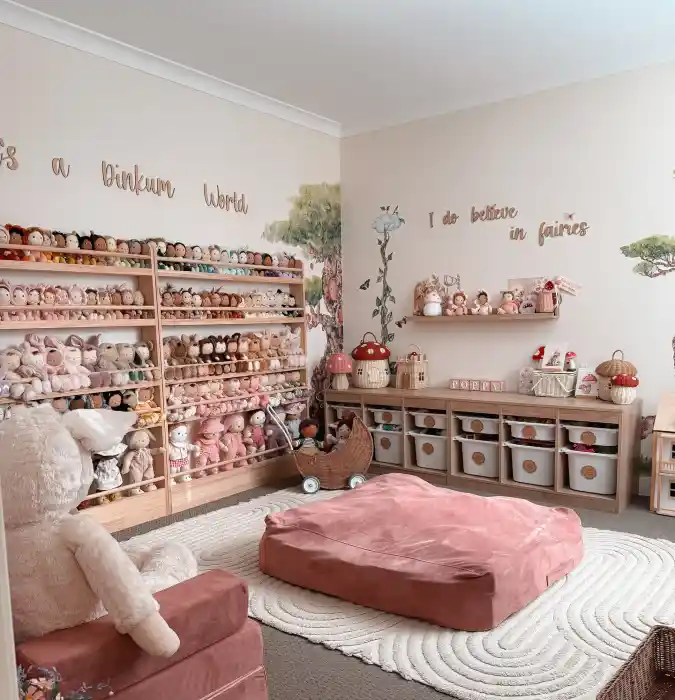
Ingenious storage solutions are key for maximizing a small area, and this room is a prime example. A massive, custom wooden shelving unit dominates one wall, providing an organized home for an impressive collection of dolls and soft toys. By taking storage upwards, valuable floor space remains open for active play.
Beneath the whimsical fairy-themed wall decals and wooden script, a large, plush pink floor cushion offers a cozy spot for reading or relaxing.
This movable seating option is one of our favorite tiny playroom ideas, as it can be easily tucked away when not in use. A low-profile wooden storage console filled with labeled white bins keeps other toys tidy and out of sight.
Functionality meets charm in this beautifully curated space. The light color palette of the walls, textured rug, and furniture enhances the feeling of openness. Every element, from the high wall shelves to the mushroom-shaped baskets, contributes to a room that feels surprisingly spacious and inviting.
7. Vertical Dollhouse Wall Unit
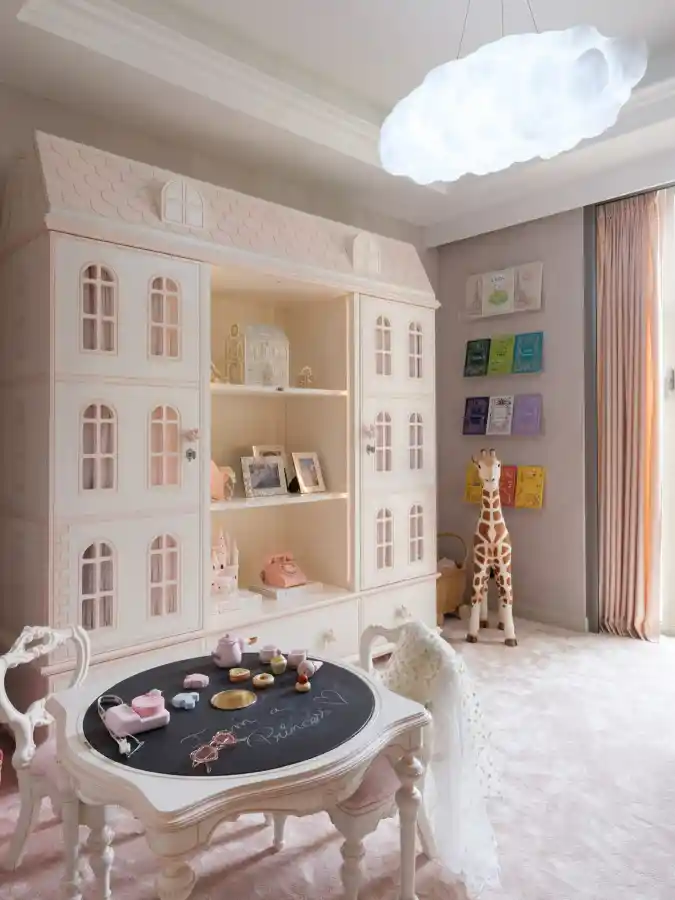
Utilizing vertical space is crucial when dealing with limited square footage in a child’s area. This massive, custom-built unit resembles a whimsical dollhouse, acting as both primary storage and a dominant decorative focal point.
This approach demonstrates smart tiny playroom ideas by drawing the eye upward and keeping the main floor clear for active play.
Scaled-down furniture is another essential element for maximizing perceived space in compact rooms.
A petite activity table with a clever chalkboard surface sits centrally, offering a dedicated spot for creativity without dominating the available floor plan. Choosing pieces that fit the child’s size ensures the room never feels overcrowded with bulky items.
Employing a light color palette reflects sunlight and enhances the feeling of spaciousness significantly.
Soft pinks, bright whites, and natural wood tones create an airy atmosphere, aided by unique lighting fixtures like the overhead cloud lamp. Even large stuffed animals, like the giraffe in the corner, don’t feel intrusive when the surrounding environment is kept bright and heavily organized.
8. Define Zones with Floor Mats
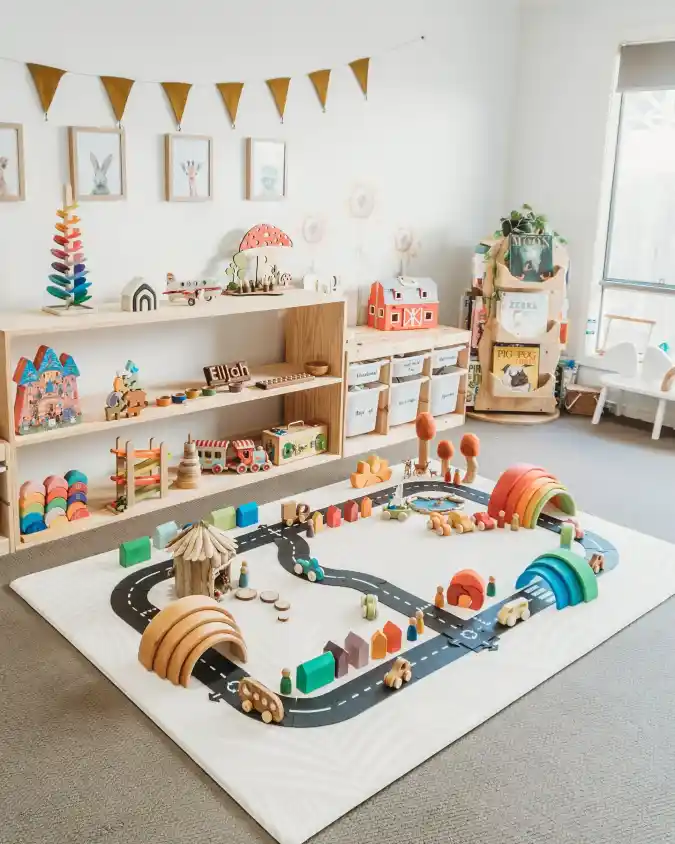
Utilize a large rug or play mat to anchor the primary activity area, just like in this bright example. This simple trick visually frames the play space, stopping toys from sprawling across the entire room. It creates a dedicated spot for building and imagining without needing physical walls.
Paired with low, accessible shelving, the mat encourages children to keep their current project contained. Open shelves allow for easy cleanup once playtime ends, returning order to the room quickly. This setup proves that even small areas can handle plenty of toys if organized well.
Embrace vertical space with wall art and tall bookshelves to draw the eye upward, enhancing the sense of height. Natural light from the window further opens up the corner, making it feel airy. Implementing strategies like these are excellent tiny playroom ideas that feel surprisingly spacious.
9. Clever Closet Alcove
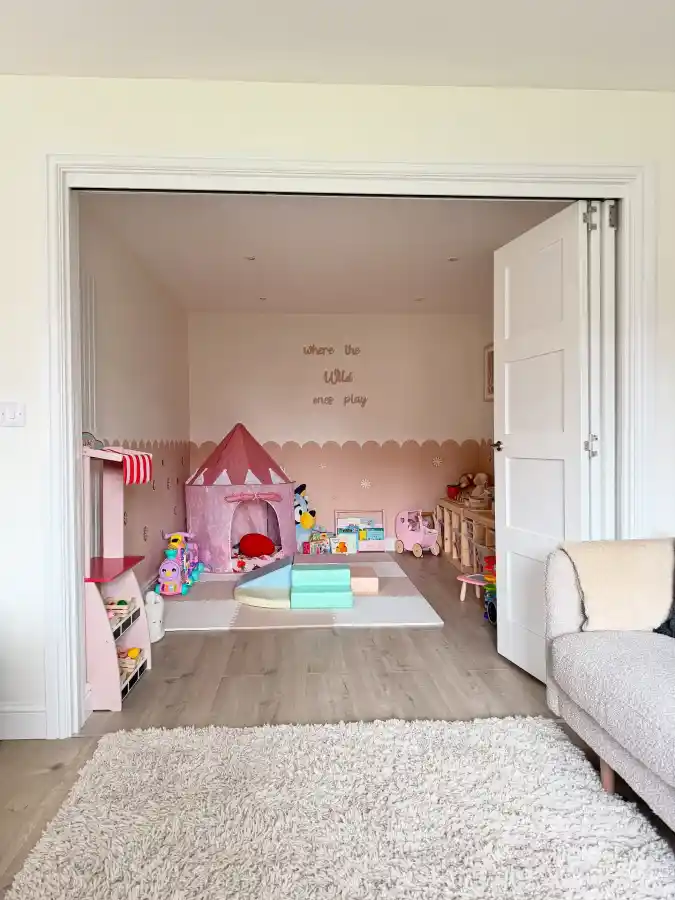
Utilizing existing architecture is a brilliant strategy for creating small play spaces. This charming example demonstrates how to turn a simple closet into a magical retreat.
It’s one of the best tiny playroom ideas that feel surprisingly spacious because it doesn’t encroach on the main living area. By tucking the play zone away, the surrounding room maintains its open feel and clean lines.
Ingeniously, the design uses a soft pink color palette and clever storage to maximize the area. A small tent provides a cozy hideaway, while open shelving keeps toys organized and accessible without adding bulk.
The use of vertical space for the “where the wild ones play” sign draws the eye upwards, increasing the sense of height and airiness.
Remarkably, leaving the large bi-fold doors open integrates the nook smoothly with the larger room. This connection allows light to flow in, preventing the space from feeling cramped or dark. The result is a dedicated play area that feels open and inviting, proving that limited square footage doesn’t mean limited fun or style.
10. Prioritize Vertical Book Storage
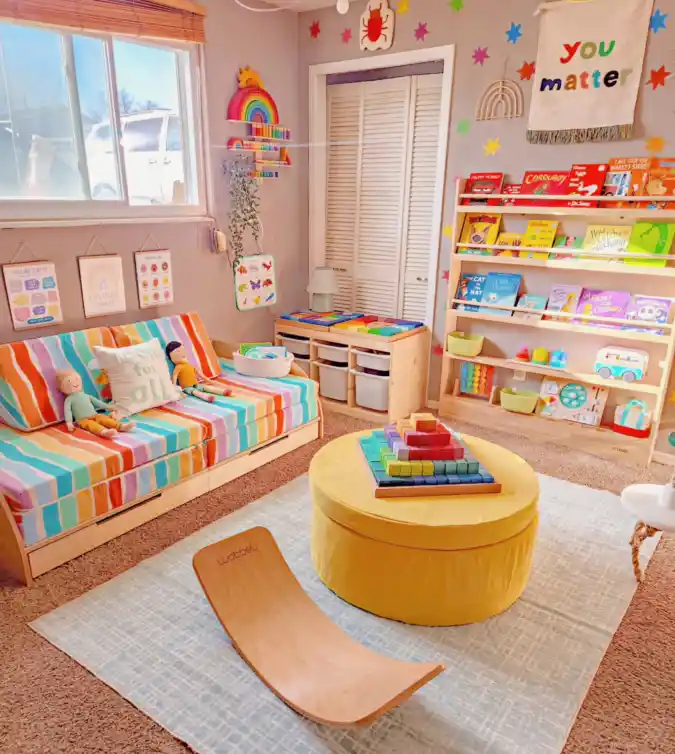
How much floor space traditional bookcases consume until we try to fit one into a small room. This image showcases an excellent alternative using tall, shallow shelves that display books cover-facing out. It turns a library into vibrant wall art while keeping the footprint minimal.
Cleverly chosen furniture is crucial when executing tiny playroom ideas effectively. A streamlined daybed provides ample seating without blocking the natural light from the window. Furthermore, the central round ottoman acts as a soft play table that is easy to move around.
Vibrancy is key here, using bright colors to make the compact area feel energetic rather than closed in. Rainbow accents and striped fabrics draw the eye upward and across the room. Open bins on lower shelves ensure toys are accessible but easy to tidy up quickly.
11. Modular Soft Play Sets
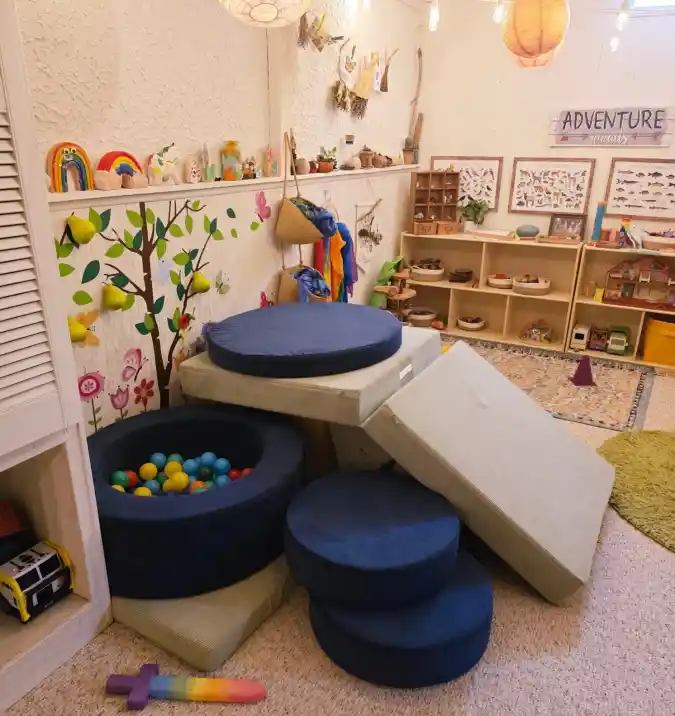
Multifunctional furniture is essential when dealing with limited square footage in a home. This image showcases large, soft foam blocks in blue and textured sage green, currently stacked into a makeshift climbing fort near a decorated wall.
By utilizing vertical space for storage or building temporary structures, these modular pieces help keep the main floor area clear when children are not actively using them for physical play.
Adjacent to the soft blocks sits a compact blue ball pit filled with brightly colored spheres, offering sensory play without completely dominating the room’s available footprint.
The surrounding area features clever, shallow wall storage shelves and whimsical nature decals, drawing the eye upward away from the floor and effectively expanding the perceived space through vertical design elements.
Surprisingly, big play items like these don’t always clutter a small room if they serve multiple purposes or stow away easily into a corner stack.
This cozy setup proves that even substantial play equipment belongs in effective tiny playroom ideas that feel surprisingly spacious when organized thoughtfully and balanced with open areas.
12. Go Vertical with a Climbing Wall
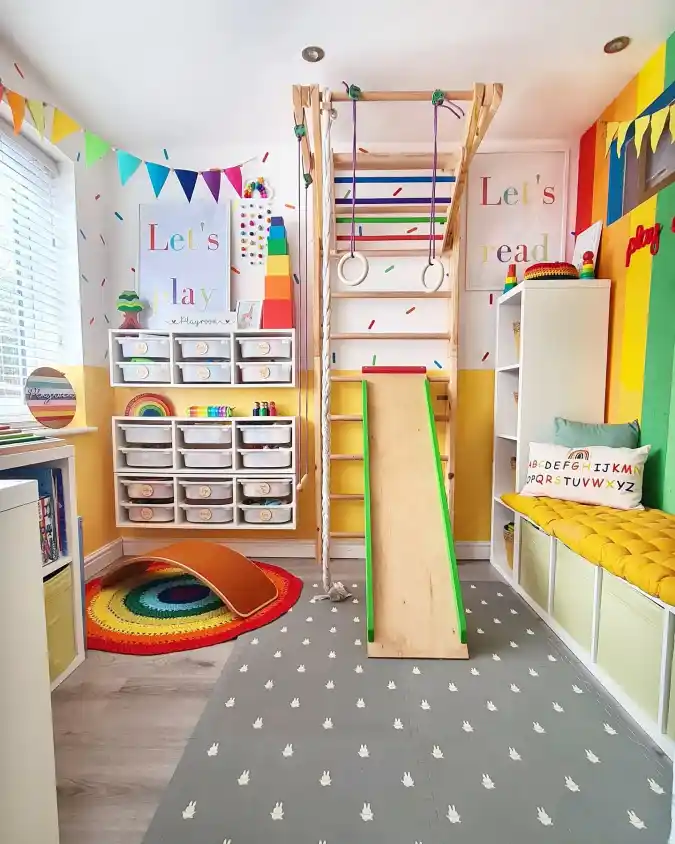
Challenging as it may seem, creating a fun zone in a tiny playroom is totally possible. This bright space shows how to use every inch by building up instead of out. A wooden climbing frame with a slide and gymnastic rings becomes the room’s centerpiece, offering hours of active fun without cluttering the floor.
Instead of bulky toys, this vertical structure provides a grand adventure in a compact footprint. The slide can even be removed to free up more space when not in use. It’s a smart way to include big-ticket items that kids love while keeping the area feeling open.
Clever storage solutions like the wall-mounted bins keep toys organized and off the ground. The colorful decor and rainbow theme draw the eye upward, making the room feel larger than it is. This playful retreat proves that a tiny playroom can be bursting with energy and style.
13. Utilize Vertical Cube Storage for Defined Zones
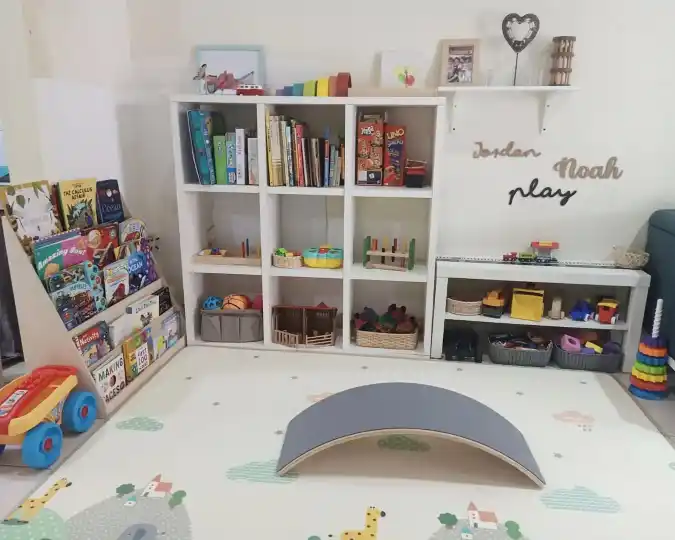
Strategic placement of tall white cube organizers totally transforms cramped quarters into functional areas. This unit acts as both a central storage hub for varied toys and a subtle room divider that defines the space without blocking essential light.
By going vertical with colorful books and puzzles, valuable floor real estate opens up significantly for active movement on the large patterned mat.
Further maximizing the footprint is a forward-facing bookshelf that makes selecting bedtime stories incredibly easy for little hands to manage independently.
Beside it sits a low white activity bench serving a practical dual purpose as a flat surface for wooden trains and a home for several sorting baskets tucked neatly underneath. This smart, layered approach ensures nearly every available inch has a specific function without feeling chaotic.
Aesthetically pleasing decor choices, such as the personalized wooden wall script and a high floating shelf, draw the eye upward to enhance the perceived room height.
The consistent use of bright white furniture against light walls reflects illumination effectively, making the cozy corner feel airy rather than boxed in. The simple addition of a grey wobble board provides necessary active play opportunities without taking up permanent residence on the floor.
14. Embrace Low-Profile Organization
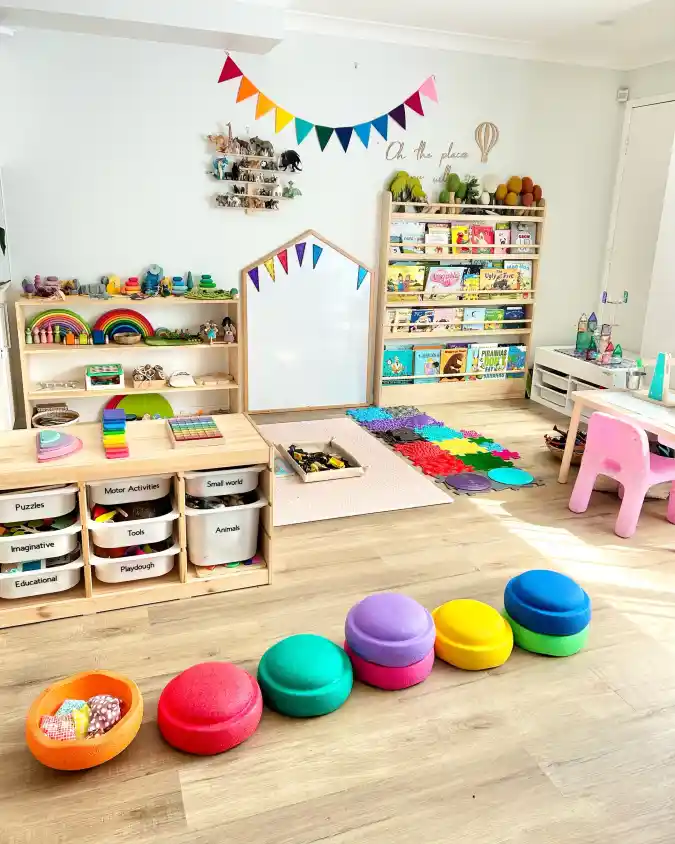
Maximizing perceived square footage often requires rethinking furniture height. The example above illustrates how low-slung wooden shelving units maintain open vertical sightlines, which prevents a compact room from feeling boxed in.
By keeping heavy storage near the floor, the upper walls remain clear and contribute to a sense of airiness.
Aesthetically pleasing organization further enhances this spacious illusion. Clear, labeled bins—seen here for “Puzzles,” “Tools,” and “Playdough”—contain clutter efficiently. This system makes it simple for children to access toys and, crucially, return them to their designated spots once playtime ends.
Strategic splashes of vibrant color against neutral backgrounds also play a role in expanding the space visually. Elements like the rainbow stepping stones and the forward-facing bookshelf add cheer without creating visual chaos. It is a practical blueprint for balancing fun and function in tight quarters.
15. Create Distinct Play Zones
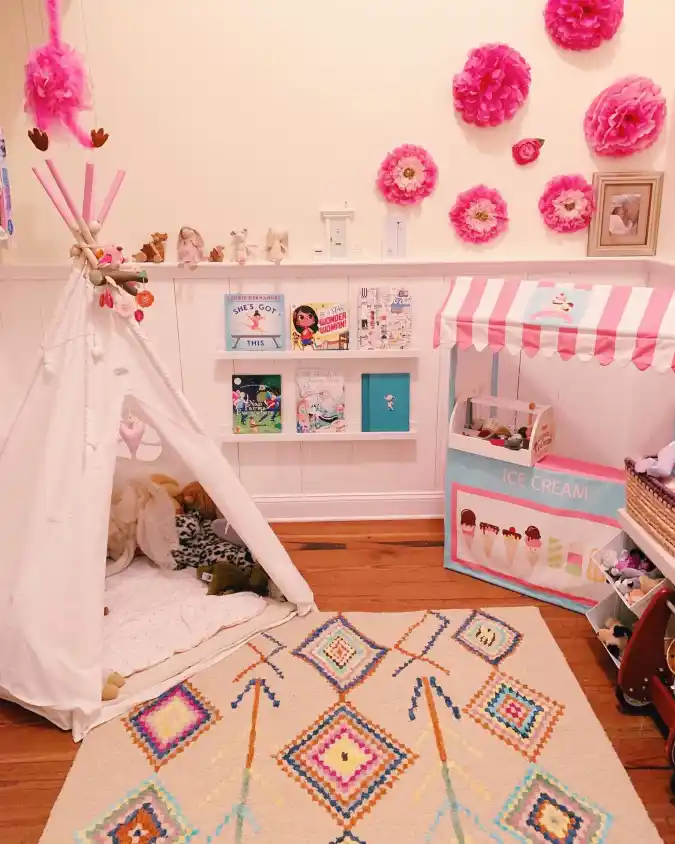
Utilizing vertical space is a clever strategy for making the most of limited square footage in a small area.
This charming setup demonstrates how effective tiny playroom ideas can be when you think upwards. Bookshelves keep stories organized and off the floor, while the walls are adorned with cheerful pink pom-poms that draw the eye up and add character without clutter.
Erecting a cozy teepee in the corner provides a dedicated spot for quiet time, reading, or imaginative adventures without overwhelming the room’s footprint.
Next to it, a compact ice cream stand offers hours of pretend play. These distinct areas show that you don’t need a massive room to create magical and functional experiences for your little ones.
Strategic placement of furniture and toys, like the items shown here, helps maintain an open and airy feel. Choosing light colors for the walls, the teepee, and the rug also contributes greatly to the overall sense of spaciousness. Even with several play options, the room remains uncluttered and inviting for endless fun.
16. Utilize Vertical Shelving in Nooks
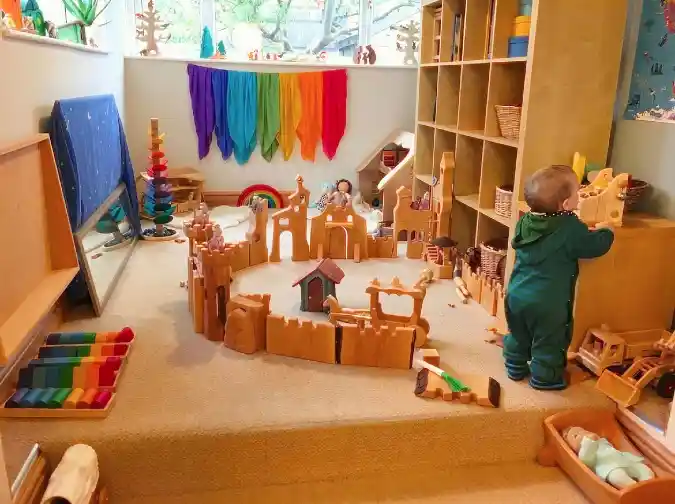
Maximizing limited square footage often requires smart organizational strategies. This image demonstrates how effective vertical storage can be when implementing tiny playroom ideas in compact homes. Tall, open shelving units draw the eye upward and keep floor space clear for active play.
Embracing natural materials, such as the wooden castle blocks and shelving seen here, adds warmth without visual clutter.
The strategic placement of a large mirror against the wall reflects light from the window, instantly making the narrow area feel much larger. Light-colored walls and carpet further enhance this airy effect.
Observing the toddler comfortably interacting with the shelves highlights the importance of accessibility in small spaces.
By creating distinct zones, like the building area on the rug and the quiet corner near the rainbow silks, the room serves multiple functions efficiently. This setup proves limited space does not mean limited fun.
17. Rainbow Canopy Corner
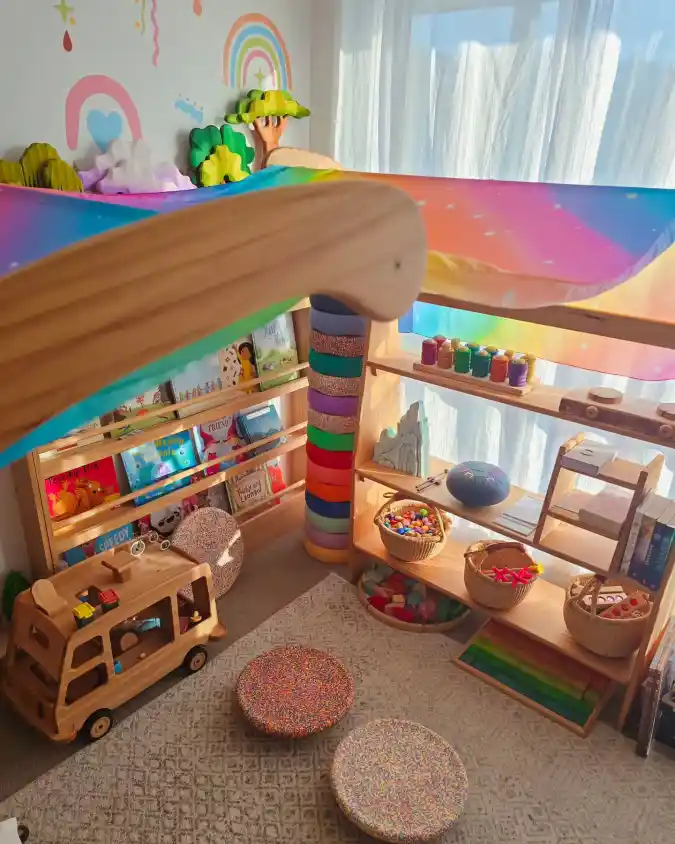
Utilizing vertical space is crucial when exploring tiny playroom ideas, and this setup uses height effectively with a draped wooden structure.
The rainbow silk adds vibrant color without visual bulk, drawing the eye upward and making the tight corner feel significantly taller. It creates a clearly defined zone for imaginative play that doesn’t encroach on the limited floor area available.
Furthermore, the open wooden shelving keeps essentials accessible yet remarkably tidy beneath the colorful canopy.
Baskets serve to corral smaller loose parts, while books are displayed face-out to entice young readers. This highly organized approach prevents the visual clutter that often shrinks small spaces and makes them feel cramped.
Consequently, the floor remains relatively clear, with cushions offering flexible seating that can be stacked aside when more active movement is required. Bright natural light from the adjacent window further enhances the overall sense of spaciousness. This corner proves that smart organization and good lighting are key elements of successful tiny playroom ideas.